
The General Went to Kyiv. He Came Back With a Warning.
Stay Updated on News and Events
◉
Stay Updated on News and Events ◉
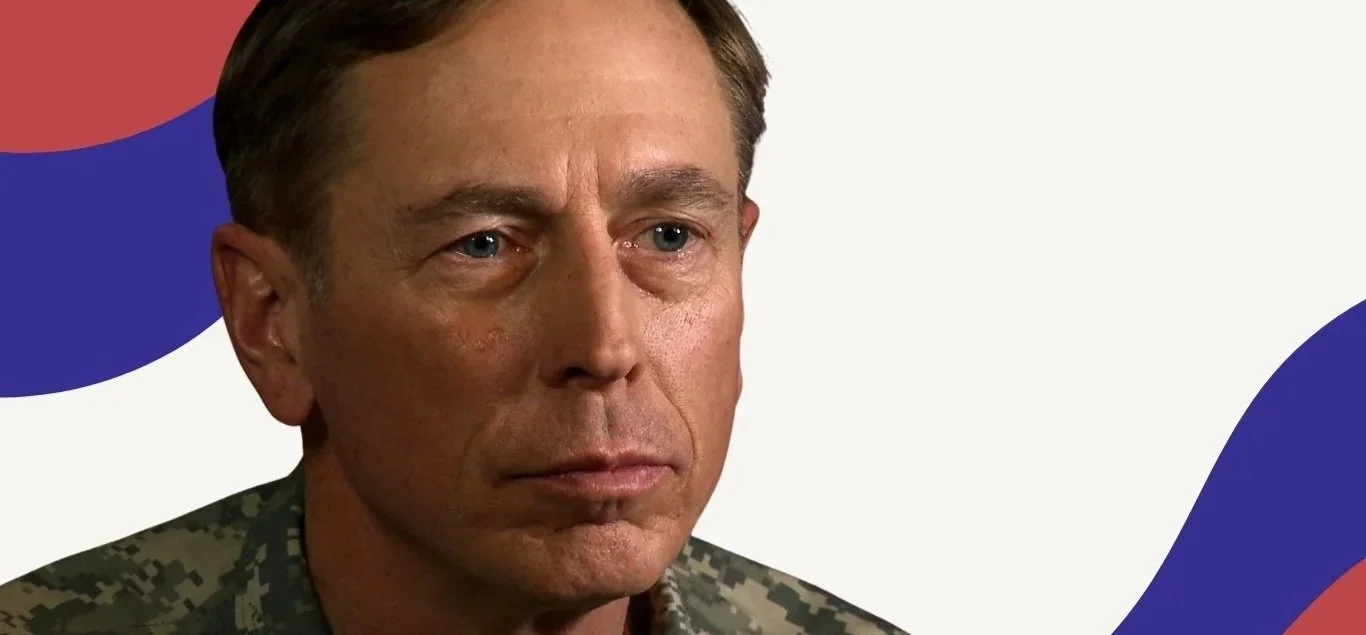
David Petraeus has commanded troops in two wars, led the CIA, and spent decades studying how conflict evolves. When he visits a battlefield, people listen.
Last week, he went to Kyiv. He observed Ukrainian units near the front line. And when he came back, his message was unambiguous: the United States military needs to fundamentally rethink how it fights — and Ukraine is the reason why.
It's Not About Drones. It's About Everything Around Them.
The headline from Petraeus's visit is easy to reduce to one word: drones. But that misses the point entirely.
What impressed the former CIA Director wasn't simply that Ukraine flies a lot of unmanned aircraft. It was how those aircraft are woven into a broader system - surveillance, targeting, and strike capabilities unified into a single digital platform that gives Ukrainian commanders a near real-time picture of the battlefield across vast distances.
That platform is called Delta. And it represents something Western militaries are still struggling to replicate in training exercises, let alone in combat.
The integration is the innovation. The drone is just the tip of it.
"Scrap the Armored Battalions."
Petraeus didn't soften his assessment for Western audiences.
Some NATO countries, he noted, believe that modernization means handing fifty drones to an existing armored battalion. Ukraine has already moved past that thinking - by building dedicated unmanned systems forces from the ground up, structured around the new reality rather than retrofitted onto the old one.
His prescription for Western militaries was blunt: don't add drones to old structures. Build new ones around drones entirely. That is a significant statement from a man who spent his career commanding some of the most sophisticated conventional forces in the world.
What's Coming Next
Petraeus didn't stop at the present. He looked ahead - and the picture is both extraordinary and sobering.
The next generation of drones, he said, will be algorithmically piloted. They won't rely on human operators in real time, which means they can't be jammed the way current systems can. Autonomous machines executing missions defined by human commanders could be a reality within just a few years.
Ukraine is already scaling production of low-cost first-person view drones at a pace that outstrips most Western nations. The industrial logic of this war - cheap, fast, replaceable - is reshaping what military production even means.
And current defense systems, he warned, are not yet capable of effectively countering drone swarms. The gap between the threat and the defense is real, and it is growing.
Why This Matters Beyond the Battlefield
There is a geopolitical dimension to everything Petraeus observed that goes beyond military doctrine.
Ukraine is not just defending its territory. It is running the world's most consequential live experiment in 21st-century warfare - under real conditions, against a real adversary, at real cost. The lessons being generated on those front lines are worth more than any training exercise or defense think tank report.
Supporting Ukraine, in this light, is not simply a matter of values or alliance obligations. It is an investment in understanding what the next conflict will look like - before it arrives on someone else's doorstep.
And that investment is directly undermined every time economic pressure on Russia is eased. Every dollar Russia earns from oil, gas, and sanctions loopholes funds the adversary that is simultaneously teaching the world's militaries their most important lessons.
The Warning Is for Everyone
Petraeus came back from Kyiv with urgency.
"We need to learn a lot more, much more rapidly than we are," he said.
That urgency applies to military doctrine. It applies to defense production. And it applies to the political will to maintain the pressure that keeps Russia's war machine constrained while Ukraine continues to fight - and innovate - on behalf of all of us.
Sanctions are not a side issue. They are part of the same picture.
Sanctions on Russia must remain in place until there is full accountability for its ongoing aggression against Ukraine and respect for international law.
We urge decision-makers to:
Maintain all existing sanctions on Russia
Reject any premature easing of restrictions
Continue coordinated international pressure
Stand firmly in defense of Ukraine's sovereignty
Now is not the time to weaken resolve. Sanctions must stay.
Resources & Sources
🗞 Kyiv Post — Ex-CIA Director Says US Must Learn 'New Concept of Warfare' From Ukraine 👉 https://www.kyivpost.com/post/73441
🔴 Do Not Lift Sanctions on Russia: 👉 https://www.amukr.org/do-not-lift-sanctions-on-russia#/45/