
How Did Russia Turn Air-Defense Missiles Into a Strike Arsenal?
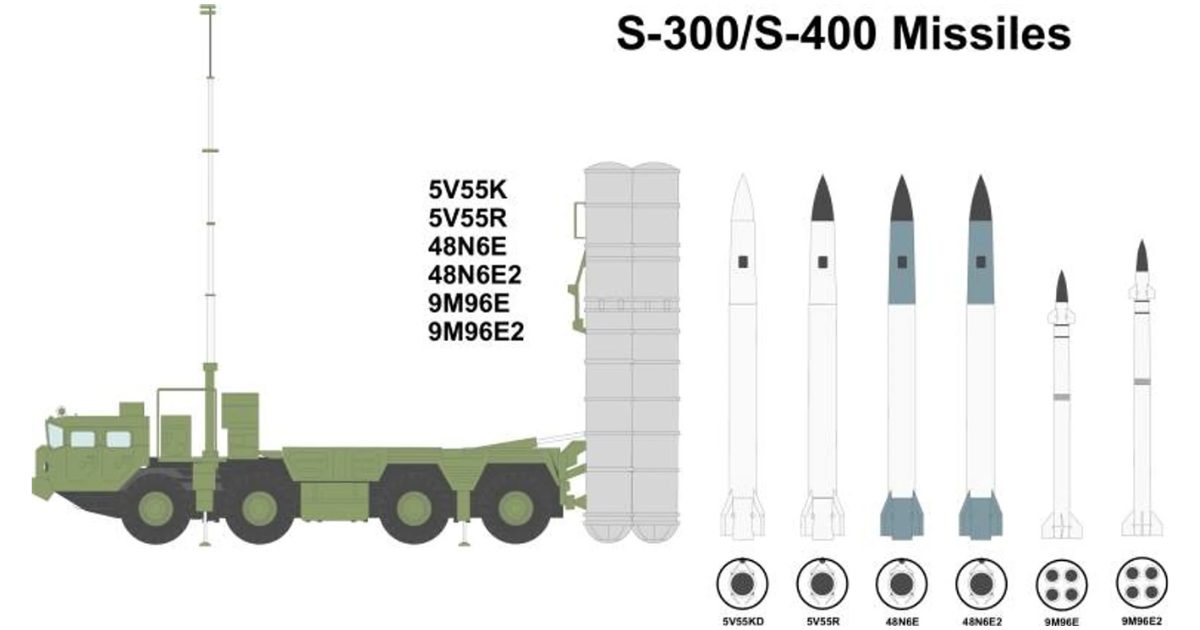
On the night of August 5, Russia fired 24 ballistic missiles that Ukraine's Air Force placed in a single category: "Iskander-M / S-400." The main axis was the Kyiv region. Because interceptors for the Patriot system are in short supply, not one of these targets was brought down.
The detail that matters is this. The S-400 was built to shoot missiles and aircraft out of the sky, a defensive system. Russia has put its missiles on a production line, reached Kyiv with them, and measurably widened its offensive reach. Understanding how a defensive weapon became an instrument of terror against cities explains both the threat and where the pressure on Russia has to fall.
From interceptor to short-range ballistic weapon
Russia did not improvise this after 2022. As early as May 2011, three Russian anti-aircraft regiments trained at the Telemba range, firing S-300 missiles at ground targets. A polygon result, where coordinates are known in advance, cannot be compared directly with a long-range strike under combat conditions, but it confirms that the mode existed and was practiced.
In 2022, Russia began hitting front-line cities with old S-300 missiles. Newer 48N6 missiles, compatible with both late S-300 and S-400 systems, followed. The names "S-300" and "S-400" are often used as shorthand for a munition, but each is a large family of systems, including radars, command posts, launchers, and several missile types. A recovered 48N6 fragment does not, by itself, identify which system launched it.
The physics are consistent across these variants. The older 5V55R weighs roughly 1.66 tonnes and carries a warhead of nearly 130 kg. The newer 48N6 weighs about 1.8 tonnes, with a warhead cited between 143 and 180 kg. Both were designed to destroy targets in the air.
Their guidance uses inertial and radio-command control for part of the route; at long range, correction from a ground radar is limited by the radio horizon, after which the missile continues by inertia. This is how a 48N6DM could cover more than 200 km, striking Kyiv, and it explains the combination of very high speed with low accuracy over distance.
Speed is the weapon, not precision
By Ukrainian estimates, the 48N6DM can accelerate to roughly 2.5 km/s, so a 200 km flight takes only a few minutes. Warning systems do not always have time to react. That is not because the missile is invisible; it is because the flight is short, and because it is difficult to determine quickly whether an S-300 or S-400 launch is defending airspace or striking the ground.
Calling these weapons "ballistic" needs a caveat. A 5V55 or 48N6 does not become a full analog of the Iskander-M's 9M723. It flies much of its route on a ballistic-like trajectory and falls toward a target area at the end. There is no open, verified data on the circular error of such strikes, so the precise figures that sometimes circulate lack sufficient confirmation.
Fragments, not penetrators - that does not make them safe
These warheads produce a heavy spray of fragments but lack a penetrator to breach concrete or buried structures. Against a hardened point target, they underperform. Against an apartment block, that limitation disappears: high speed, the mass of the missile itself, and the fragment radius create a large lethal zone even with a relatively modest warhead.
The record is concrete. On September 30, 2022, Russia fired 16 S-300 missiles at Zaporizhzhia and its outskirts; four struck the area of a car market and a column of civilian vehicles, killing 32 people and injuring 118. On October 23, 2022, an S-300 hit a five-story residential building in Mykolaiv. On April 14, 2023, eight S-300 missiles struck Sloviansk, killing 15 and wounding 24. On October 21, 2023, missiles hit a Nova Poshta terminal near Kharkiv, killing eight and wounding 15.
When the S-400 reached Kyiv
On January 14, 2023, the Ukrainian command reported a strike on Kyiv from the north with S-400 missiles; fragments were identified as 48N6DM, with a probable launch area in the Bryansk region, a reasoned Ukrainian assessment rather than a fully confirmed fact. The distance exceeded 200 km.
In the summer of 2026, the S-400 returned regularly to the reports alongside the Iskander. On July 2, the Air Force logged 24 missiles in the joint "Iskander-M / S-400" category and intercepted four. On July 6 there were 23. On August 1, one of 27 was brought down. On August 5, none of 24 were.
All four attacks were aimed mainly at Kyiv or the surrounding region. The share of S-400 missiles inside those totals cannot be determined from open data, but material confirmation exists: after the July 14 attack, a warhead and fragments of an S-400 missile were recovered in Kyiv's Darnytskyi district.
The low interception rate follows from trajectory, speed, and a limited number of suitable anti-missile assets. Against these targets, Ukraine needs Patriot or systems of a comparable class, such as SAMP/T. That creates an uncomfortable asymmetry: even a relatively inaccurate missile forces a choice between risking a protected site and spending a scarce interceptor.
RM-48U: recycling turned
into a production line
After the combined attack of January 20, 2026, Ukraine publicly displayed fragments marked RM-48U for the first time, a missile produced by reprocessing old 5V55 or 48N6 rounds once their service life ends, launched from related S-300 and S-400 systems. In January, Ukrainian military intelligence described them as training missiles. By June, the same intelligence referred to "strike missiles RM-48U" intended for ground targets, which suggests different configurations or uses within one family.
The scale is the point. By intelligence estimates, output exceeded 200 units in 2025, the plan for 2026 is above 480, and the current pace reaches up to 50 missiles a month. For an air-defense crew, the difference between a live missile and a decoy becomes clear too late: a fast target cannot be safely ignored on the assumption that it may carry no warhead. It still has to be tracked, assessed, and answered. That is why the RM-48U has military value even as a decoy.
Not a replacement for the Iskander, a second strike echelon
Using S-300 and S-400 missiles against ground targets has a clear logic for Russia. It draws on accumulated Soviet stocks nearing the end of their service life and uses launchers already positioned near Ukraine. The RM-48U adds an organized program that turns retired rounds into strike weapons or imitators. None of this equals the Iskander in accuracy, warhead mass, or ability to breach hardened structures. Its value is different: it raises the density of a salvo and introduces another type of target, one that cannot be met with the tools used against drones or cruise missiles.
The threat is industrial.
So is the answer.
Read one way, missiles pulled from aging stockpiles look like scarcity. They aren't. Russia has stood up a parallel, serial industry that converts retired air-defense rounds into strike weapons at up to 50 a month, with a 2026 plan above 480. Serial production of the RM-48U shows the threat will not fade as old 5V55 stocks run down, it has already moved from spending inventory to a standing production line.
A production line runs on two inputs: money and components. Russia's war budget is carried by energy exports, and its missile and drone programs are reinforced by foreign partners. New batteries alone cannot answer a threat that is being manufactured; the manufacturing itself has to be made more expensive.
Ukraine's response needs faster launch detection, timely alerts, dispersal of people and critical production, and strikes on the launchers, radars, and enterprises inside Russia's missile program. It also needs pressure that Patriot rounds cannot apply: cutting the revenue and the supply networks that keep the line moving.
Source: Arkadiy Dotsenko, "Oboronka" (Mezha)