
Military Update: Moscow's Starlink Copy Is Losing Altitude and Time

Russia has spent the past year trying to build its own version of Starlink. The program is called Rassvet, and it was supposed to give Russian forces secure, constant satellite connectivity over Ukraine.
As of the end of August 2026, the numbers tell a different story. Two batches of satellites have been launched. Only a minority of them are working at a usable altitude. The rest are drifting lower, losing time, and in at least two cases heading back into the atmosphere.
Here is what happened, and why it matters well beyond the space industry.
A Second Launch, A Second Setback
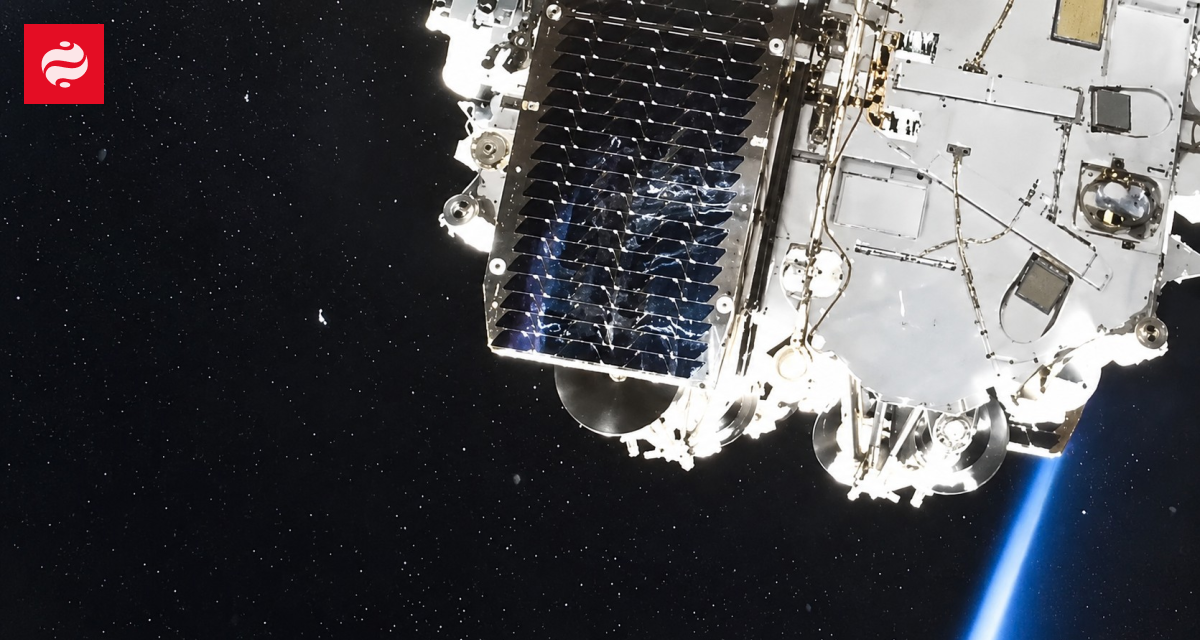
Russia launched 16 Rassvet satellites on July 19. According to public tracking data, not one of them had reached its expected altitude of 550 kilometers by August 31.
Many are settled between 300 and 400 kilometers. Several are already experiencing orbital decay, and at least two are reportedly on course to reenter Earth's atmosphere.
Altitude is not a technical footnote here. Satellites in lower orbits face far more atmospheric drag, burn through fuel faster, and simply do not last as long. Even the satellites that survive at these altitudes will fall short of the operational life Russia planned for them. The intended working altitude for the system is 870 kilometers, which puts the gap in perspective.
The first batch, launched on March 24, performed better but not well: 12 of 16 satellites reached roughly 550 kilometers and remain there. Those 12 reportedly give Russian forces about two connectivity windows per day over Ukraine, up to an hour and a half each. Useful, but nowhere near a functioning constellation.
Losing Starlink Forced Moscow to Move Faster Than It Could
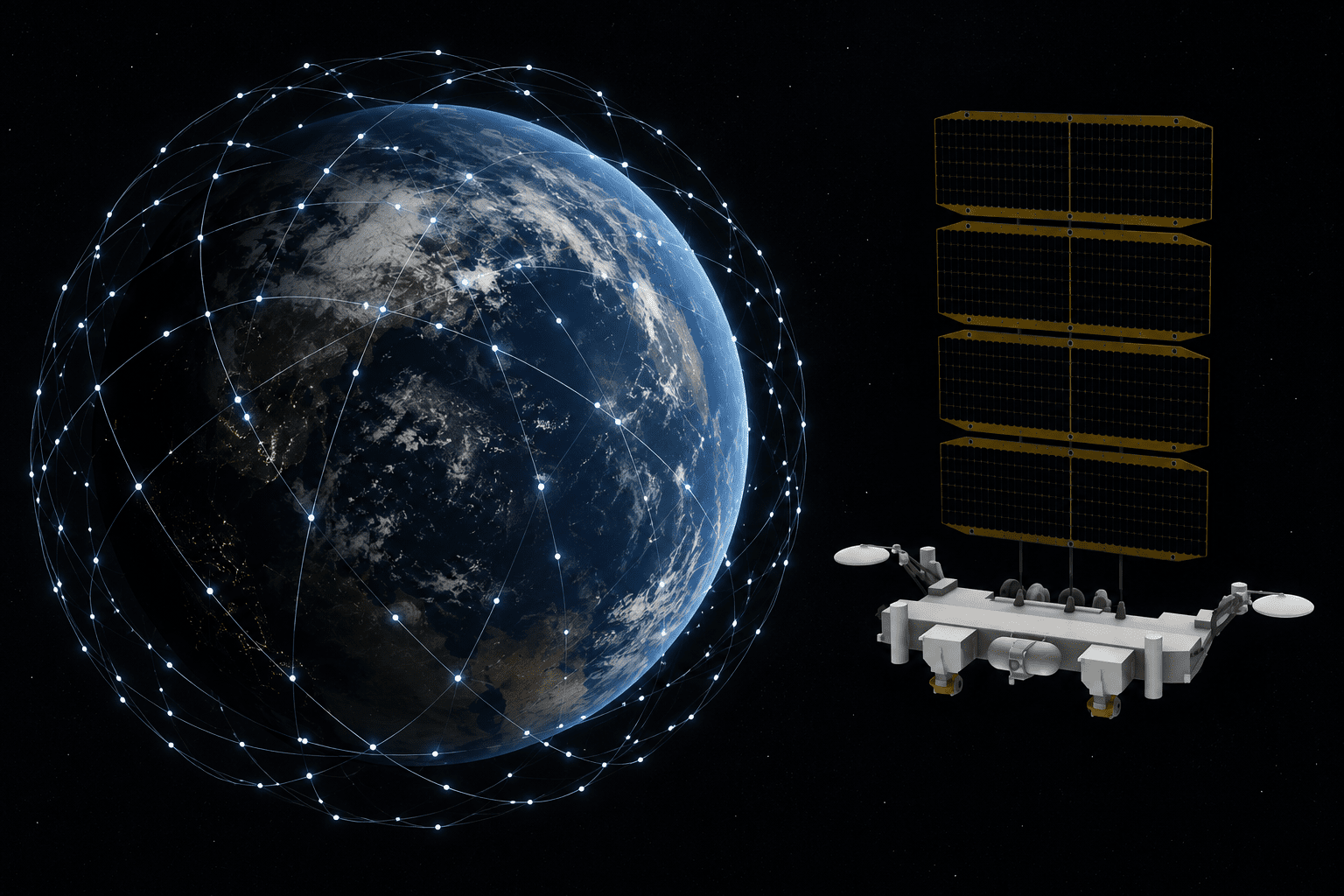
The urgency behind these launches has a clear origin. When Russian access to Starlink communications was shut down on February 1, Moscow lost a capability it had been relying on and had no ready replacement for.
Rassvet went from a long-term project to an immediate operational requirement. That is the most likely explanation for what we are now seeing.
A program built for a slower timeline was pushed to launch at a pace its industrial base could not support, and the second batch is the result. This is worth naming plainly: the pressure worked, and it worked in a domain where Russia expected to have room to maneuver.
The Arithmetic
Does Not Support the Ambition
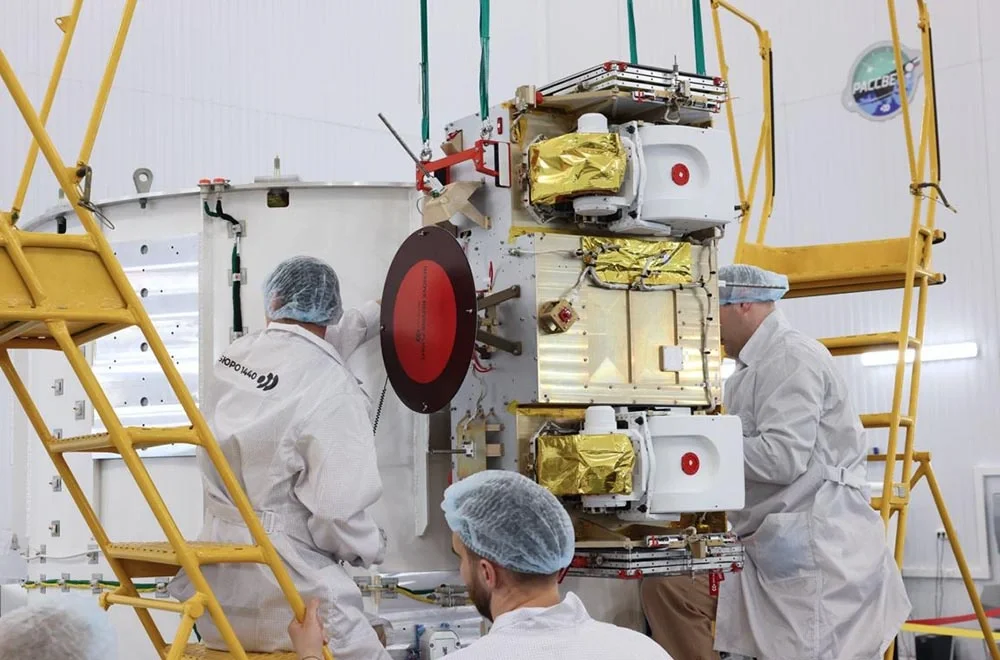
Bureau 1440, the Russian aerospace company developing the satellites, has said Russia plans dozens more launches carrying hundreds more satellites.
Set that against what Russia can actually do.
Ukrainian presidential advisor on defense technologies Serhiy Beskrestnov assessed in May that stable, round-the-clock coverage over Ukraine would require at least 200 to 300 satellites in orbit. Delivering them depends on the Soyuz-2.1b medium-class launch vehicle, which is both expensive and scarce. Since 2022, Russia has reportedly conducted only six to eight launches with it across all missions, space and commercial combined.
At that tempo, the ceiling is roughly 128 Rassvet satellites over four years, and there is no guarantee they would all work. So far, only 37.5 percent of launched Rassvet satellites have reached a sustainable operational altitude. Russia also cannot dedicate every available Soyuz-2.1b to this one program, because the same vehicle carries other payloads, including navigation satellites.
The stated goal and the available hardware are not in the same range.
Ukraine Can Now
Reach the Launch Chain Itself
The constraint is not only industrial. It is increasingly physical.
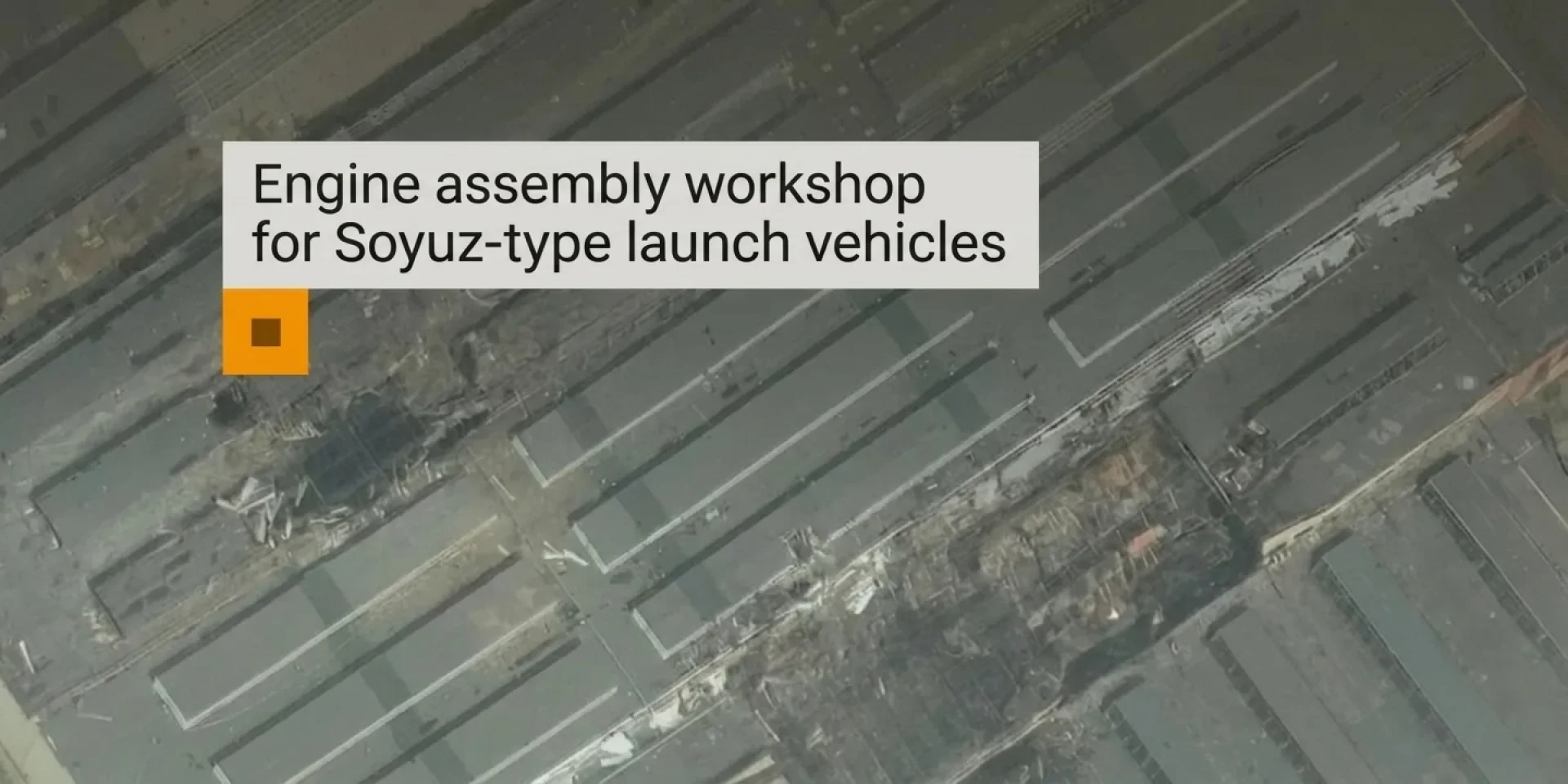
Ukrainian forces struck the Progress Space Rocket Center, a facility that produces Soyuz-type launch vehicles, overnight on Aug. 14 to 15.
On August 23, Ukraine attempted a strike on the Plesetsk Cosmodrome, two days before a Soyuz-2.1b launch from that site. Both batches of Rassvet satellites were reportedly launched from Plesetsk.
This is the part of the story that has received the least attention and deserves the most. Russia's satellite program has two narrow points of failure: a small supply of launch vehicles and a small number of sites capable of putting them into orbit. Ukraine has now demonstrated it can put pressure on both. A program already running behind schedule does not recover quickly when its production and launch infrastructure are also at risk.
Why This Matters for American Readers
None of this makes the existing constellation harmless.
Even limited connectivity windows allow Russian forces to guide remotely operated systems more precisely and to coordinate strikes with better accuracy.
Partial success still translates into risk for Ukrainian cities, energy infrastructure, and front-line positions.
That is the practical takeaway. This is not an abstract space race between two governments. It is a direct line between Russia's technological capacity and the accuracy of the weapons it uses against civilians.
Every month Russia spends unable to field a working constellation is a month of degraded targeting, and that margin is being created by two things working together: sustained restrictions on Russia's access to technology and revenue, and Ukraine's ability to reach the facilities that matter.
Both of those depend on decisions made in Washington.
Sanctions pressure is what keeps Russia dependent on scarce, aging launch systems it cannot replace at scale. Weakening that pressure now, at the exact moment the constraints are visibly binding, would hand Moscow the resources to solve a problem it currently cannot solve.