
Sanctioning Russia Act of 2026: What Changed and Why Does It Matter?
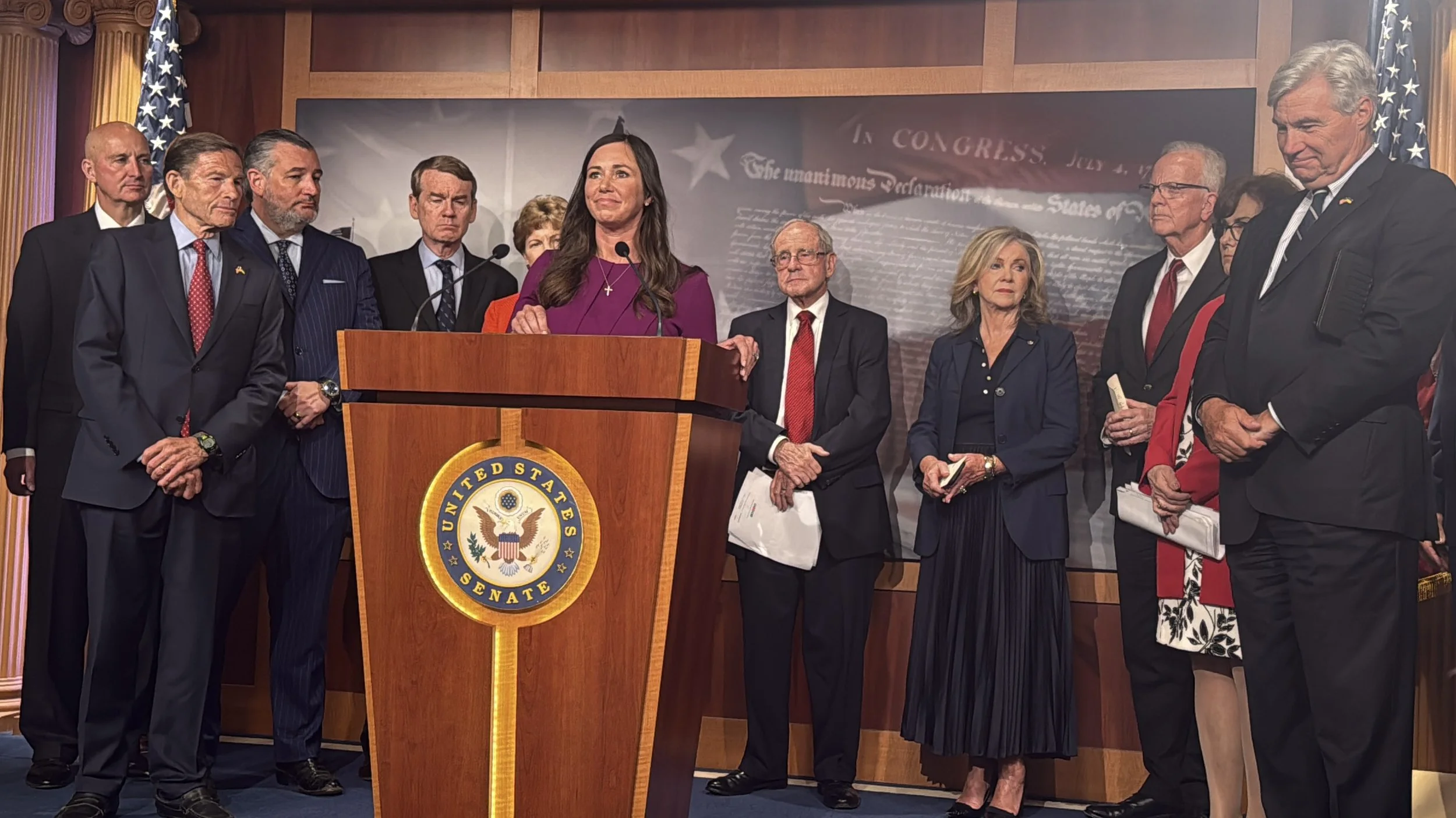
On July 14, 2026, a bipartisan group of U.S. senators introduced the Sanctioning Russia Act of 2026, a revised package of sanctions and tariffs aimed at squeezing Moscow's war finances while overcoming the concerns that had stalled earlier versions of the legislation. The bill has already gathered more than 26 bipartisan co-sponsors, and supporters expect that number to grow quickly.
The legislation carries profound significance. It was the result of months-long negotiations led by the late Senator Lindsey Graham, who reached a breakthrough on the bill shortly before his sudden death.
Just one day before his passing, Senator Graham announced that lawmakers had reached an agreement with the White House on key provisions, and he had returned from meeting President Zelenskyy in Kyiv only days earlier. Lawmakers from both parties now describe swift passage as the most fitting tribute to his legacy of standing with Ukraine.
The American Ukraine Committee welcomes this landmark legislation and urges Congress to pass it without delay. Here is what the new bill does, and how it differs from its 2025 predecessor.
At a Glance: 2025 vs. 2026
| Provision | Sanctioning Russia Act of 2025 (S. 1241) | Sanctioning Russia Act of 2026 |
|---|---|---|
| Trigger | Conditional — required a presidential determination that Russia refuses peace, violates an agreement, or invades again | Mandatory — sanctions must take effect within 30 days of enactment |
| Tariffs on Russian energy buyers | 500% on all countries purchasing Russian oil, uranium, or petroleum products | Up to 100% on the top five purchasers of Russian oil and gas; exemption for countries reducing Russian imports |
| Shadow fleet | Not directly addressed | Comprehensive mandatory sanctions on vessels and facilitators evading sanctions |
| Sanctioned persons | Senior officials, military command, state banks, state-owned entities | Expanded: broader military coverage, foreign suppliers to Russia's defense industrial base, oligarchs, major LNG projects |
| Waiver authority | One-time 180-day national security waiver | Waiver retained, but with mandatory congressional notification and justification |
| Existing sanctions | Not codified | Codifies executive-order sanctions into law, hardening them against reversal |
| Length | 31 pages | 61 pages |
| White House position | Stalled amid negotiations | Written support secured |
From Conditional to Mandatory:
A Fundamental Shift
The most important change is structural. The original Sanctioning Russia Act of 2025 (S. 1241) tied sanctions to a presidential "covered determination", penalties would apply only if the President formally determined that Russia was refusing to negotiate peace, violating an agreement, or launching a new invasion.
The 2026 version removes that condition. The legislation compels the President to impose sanctions within 30 days of its passage, making the sanctions mandatory, compared to the 2025 version that made them contingent on Russia's refusal to engage in negotiations with Ukraine. This shift likely reflects a growing conviction in Washington that the Kremlin does not negotiate in good faith. The legislation also codifies sanctions already imposed through executive orders, making it much more difficult to terminate them outright in the future.
Smarter, More Enforceable Tariffs
The 2025 bill proposed a blanket 500% tariff on any country purchasing Russian oil, uranium, or petroleum products, a provision that drew concern from allies over its sweeping breadth. The new bill takes a more targeted, implementable approach: rather than a blanket 500 percent tariff on countries buying Russian energy, the new version authorizes tariffs of up to 100 percent targeting the top five purchasers of Russian oil and natural gas, a group that sponsors said includes China and India.
The bill also includes secondary sanctions on countries that facilitate sanctions evasion or purchase significant amounts of Russian oil or gas, and provides an exemption for countries taking significant steps to reduce their Russian gas imports, a smart incentive structure that rewards moving away from Russian energy.
Comprehensive Shadow Fleet Sanctions
For the first time, the legislation directly confronts one of the Kremlin's key evasion tools. The bill broadens sanctions against Russia's so-called "shadow fleet" of aging, reflagged oil tankers used to circumvent existing restrictions on Russian energy exports. It provides for mandatory sanctions on unmarked or reflagged oil tankers that evade Western sanctions. The draft also imposes sanctions on major Russian liquefied natural gas projects and broader financial sanctions.
Wider Scope of Sanctioned
Persons and Entities
The new bill significantly expands who falls under U.S. sanctions. It would impose mandatory sanctions on Russian political and military leaders, including President Putin, as well as oligarchs, state-owned enterprises, and foreign companies that support Russia's defense industrial base. The expanded text is double the length of the 2025 bill, 61 pages compared to 31, reflecting a far more detailed sanctions architecture, including provisions covering key energy projects such as Yamal LNG and the Arctic LNG facilities.
Stronger Congressional Oversight
The 2025 bill allowed a one-time, 180-day national security waiver. The 2026 compromise preserves presidential flexibility, a key element of securing White House support, but pairs it with accountability: negotiators secured tighter oversight provisions requiring the administration to notify Congress and justify any sanctions waivers, and the bill requires a report to Congress ahead of any lifting of sanctions, detailing the reasons why. Notably, the White House provided its support for the bill in writing, a decisive breakthrough for legislation that had been stalled for over a year.
A Turning Point for Sanctions Policy
This legislation represents a philosophical shift in how America applies economic pressure. The 2025 bill was a deterrent held in reserve; the 2026 bill is an instrument of immediate, sustained pressure with the durability of statute. By codifying sanctions into law, mandating implementation on a fixed timeline, and building in congressional oversight, Congress is ensuring that pressure on the Kremlin does not depend on any single political moment.
Equally important is what this bill demonstrates about American politics: with more than 26 co-sponsors from both parties, written White House support, and calls from Senate leadership in both parties for swift action, support for Ukraine remains one of the few issues capable of uniting Washington. Senator Blumenthal expressed confidence, noting the bill has been negotiated painstakingly over almost two years, and that supporters believe they have the votes.
The task now is simple: pass it. Every week of delay is measured in Russian energy revenue, and in Ukrainian lives.
Take Action
The American Ukraine Committee urges you to contact your U.S. Senators and Representative today and ask them to support the swift passage of the Sanctioning Russia Act of 2026, and to keep all existing sanctions on Russia firmly in place until there is full accountability for its aggression.