
The Price You See Is Not the Price That's Real.
Stay Updated on News and Events
◉
Stay Updated on News and Events ◉
Open Google right now and search for the price of oil.
You'll find a number - somewhere around $109 a barrel for Brent crude. Expensive, but manageable. Not the end of the world. Now try to actually buy a tanker full of oil. Delivered today. The price: nearly $145 a barrel. A record. More than double what it was before the United States and Israel attacked Iran on February 28.
That gap - $109 versus $145 - is the difference between the financial markets and physical reality.
And it tells you something important about the world we're living in right now.
Two Prices, One Crisis
The $109 figure is a futures price. It reflects what traders think oil will be worth in a month or two. It is, in essence, a bet on the future. The $145 figure is the spot price — the cost of actual oil, on actual ships, being delivered to actual refineries today. And right now, that oil is extraordinarily hard to get.
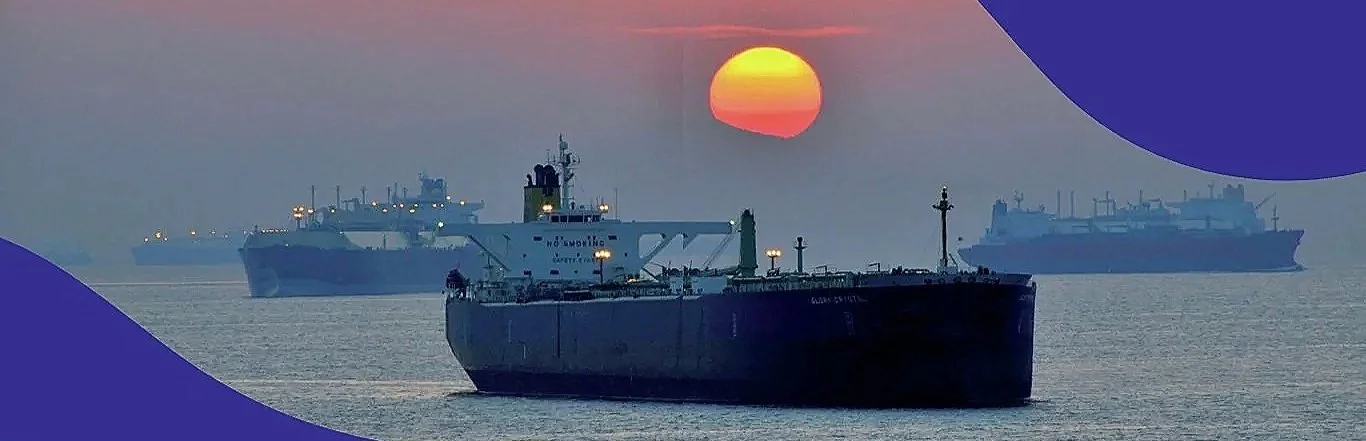
The reason is the Strait of Hormuz. The narrow waterway between Iran and the Arabian Peninsula carries roughly one-fifth of the world's oil supply. Since the war began, shipping companies have largely stopped sending vessels through it. Too dangerous. Insurance costs have exploded. The risk is real.
Estimates suggest that companies have effectively taken 10 percent or more of the world's oil supply offline since the conflict started. Gas stations in Vietnam and Thailand have turned away customers. Sri Lanka declared every Wednesday a public holiday to conserve energy. Countries across Asia — heavily dependent on Persian Gulf fuel - are scrambling.
"The futures market is not representing the on-the-ground and on-the-water reality of oil at all," said Vikas Dwivedi, global energy strategist at Macquarie Group. "It's quite broken."
Who Benefits When Oil Markets Break?
There is one actor that benefits enormously from global oil disruption - and it is not the United States, not Europe, and certainly not Ukraine.
Russia.
When global supply tightens, Russian oil becomes more valuable. When the world is desperate for alternative supplies, buyers who were previously wary of Russian crude - for legal, reputational, or sanctions-compliance reasons - suddenly become more willing to take the risk.
This is not a coincidence. It is a strategic windfall. And the Trump administration's decision to temporarily ease sanctions on Russian oil - framed as a response to rising energy prices caused by the Iran conflict - handed Moscow a gift worth billions at precisely the moment it needed it most.
Senator Adam Schiff called it "rewarding Russia." Senator Chuck Grassley said it was "the wrong move." Ukrainian President Zelensky estimated that the sanctions relief alone could provide Russia with up to $10 billion for its war effort.
That money does not sit in a bank account. It buys weapons. It funds soldiers. It pays for the missiles falling on Ukrainian cities.
One War Should Not Cancel Another
There is a temptation - understandable, perhaps - to see the Iran conflict and the war in Ukraine as separate crises competing for the same attention and resources. The logic goes: we can't fight two wars at once. Something has to give.
But that logic misunderstands the nature of the threat.
As analyst Ron Wahid put it clearly: this isn't just Iran. It's Iran plus Russia. The drone systems Iran has used to attack U.S. forces in the region are the same systems Russia has industrialized and iterated upon. The supply chain runs in both directions. Ukraine has been destroying nodes of that network for over 1,500 days - drone factories, missile infrastructure, energy terminals that fund the whole operation.
Treating Ukraine as a side issue while negotiating with Iran is not strategic prioritization.
It is strategic blindness.
You cannot neutralize the branch while leaving the root intact.
The physical oil market is broken, as energy executives and analysts freely admit. The cease-fire announcement briefly sent prices lower - but very little has changed on the ground. Shipping companies remain wary. The oil is still largely trapped. The disruption is real and ongoing.
In that environment, the pressure on Russia must not soften. Every dollar Russia earns from its energy exports - whether through shadow fleet tankers, sanctions waivers, or the simple windfall of a disrupted global market - is a dollar that extends this war.
What This Means for You
Energy prices affect every American. The cost at the gas pump, the price of groceries, the cost of heating a home — all of it flows from the same global market that is currently, as one analyst put it, "quite broken."
The solution is not to ease the pressure on the country most responsible for global instability. The solution is to maintain it - and to close the gaps that allow Russia to profit from chaos it helped create. Russia built the shadow fleet precisely to evade the sanctions architecture that the West spent years constructing. It deployed it the moment an opportunity arose. It is profiting from the Iran war while simultaneously supplying the drones that make that war more deadly for American forces.
This is one network. It requires one coherent response.
The Price of Weakness
The futures market, as broken as analysts say it is, is telling us something. Traders believe that in a month or two, things will stabilize. That the cease-fire will hold. That the Strait will reopen. That prices will come back down.
Maybe they're right.
But the spot market — the market of physical reality, of ships and barrels and refineries — is telling a different story. It says that right now, today, the world is experiencing one of the most significant energy supply shocks in decades. And in the middle of that shock, Russia is being handed relief.
That is not a coincidence.
That is a policy choice.
And it can be changed.
Sanctions on Russia must remain in place until there is full accountability for its ongoing aggression against Ukraine and respect for international law. Lifting them prematurely rewards rule-breaking, weakens global security, and undermines the credibility of democratic institutions.
We urge decision-makers to:
Maintain all existing sanctions on Russia
Reject any premature easing of restrictions
Continue coordinated international pressure
Stand firmly in defense of Ukraine's sovereignty
Now is not the time to weaken resolve. Sanctions must stay.
Resources & Sources
🗞 The New York Times — The Oil Shock Is Worse Than You Think
👉 https://www.nytimes.com/2026/04/10/business/energy-environment/iran-oil-prices.html
🔴 Do Not Lift Sanctions on Russia:
👉 https://www.amukr.org/do-not-lift-sanctions-on-russia#/45/
📷 Shipping including oil tankers anchored in the Gulf of Oman at sunset, waiting to travel through the Strait of Hormuz
👉 https://magazines.hachettelearning.com/magazine/wideworld/23/1/energy-from-the-persian-gulf/