
Week of Sep. 1st to 7th — Battlefield Update: Ukraine Closes Russia's Skies, 5 Hybrid Attacks on NATO, & The West Buys Ukrainian Drone Tech
By Volodymyr Larin, AmUkr Congressional Affairs Intern
Compiled September 8th, 2026
In our top news this week, Ukraine's drones shut down Moscow's three airports and took Russia's second- and fourth-largest refineries offline at the same time, Russia ran at least five hybrid operations against NATO members, & Western allies continued to buy into Ukraine's drone industry, while the U.S. Army was questioned by Senators for disbanding the one unit which was learning from it.
Russia Lost Territory in August, Broke September Ceasefire to Zero Net Gains
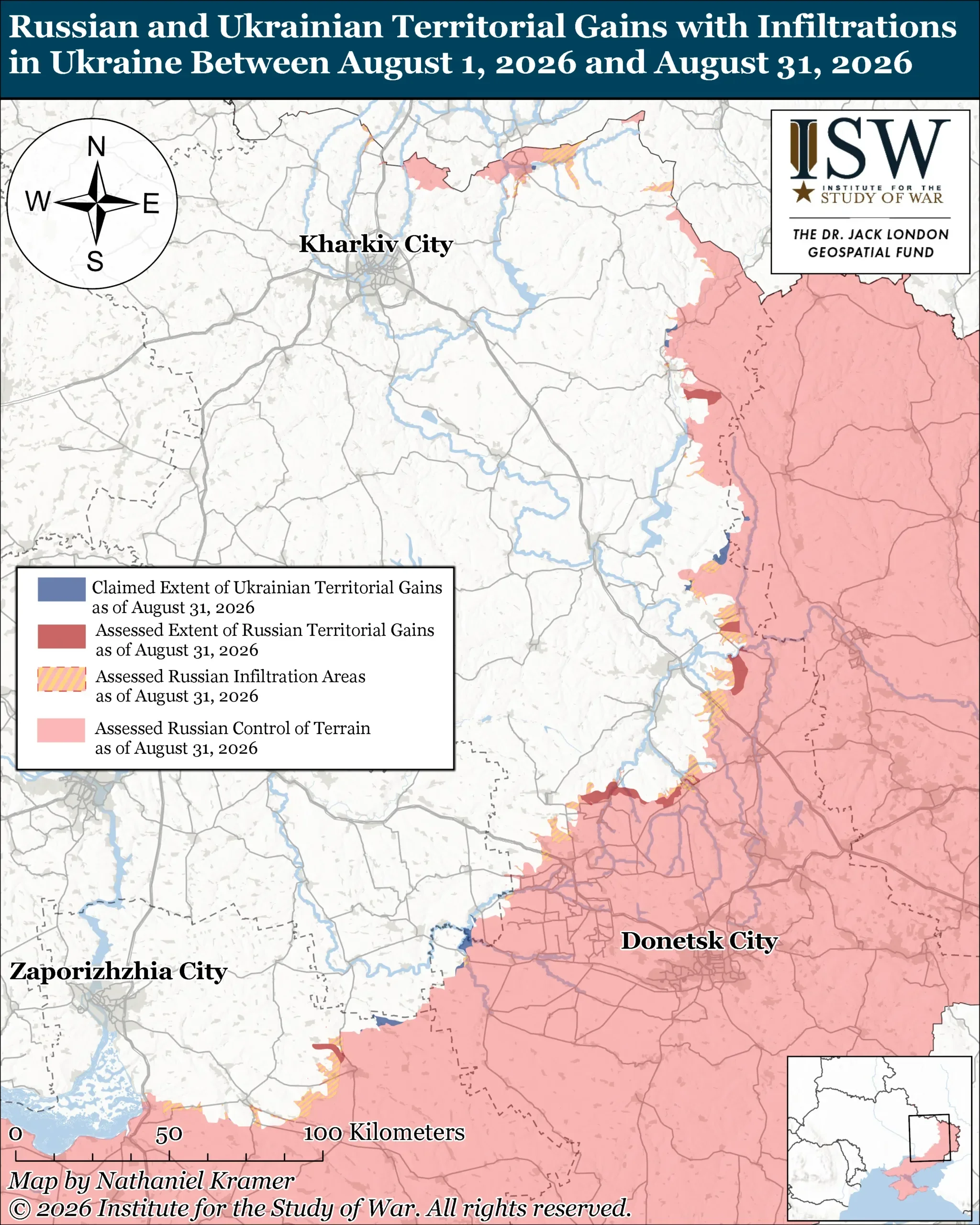
In August, Ukraine Liberated More Square Kilometers than Russia Was Able to Seize
The Institute for the Study of War calculated that Ukraine liberated at least 129.81 square kilometers in August, more than the 90.35 square kilometers which Russian forces established stable control over. [1] Ukraine's General Staff put Russian losses for the month at 42,020 killed and wounded, another consecutive month in which losses topped a record 40k.
In the critical Kupiansk district for example, the 23rd Assault Regiment "R.U.G." of the Khartia Corps cleared 4 square kilometers between Dvorichna and Zapadnyi. [2]

Russia Refused to Honor Ceasefire Throughout Frontline During Witkoff-Kushner Visit, Limited to Kyiv Alone
Ahead of Steve Witkoff and Jared Kushner's first visit to Kyiv, Head of the Office of the President of Ukraine Budanov announced on Saturday that Ukraine had sent a Sep. 5-8th frontline ceasefire proposal to Russia. [3] He emphasized that the original proposal concerned not only strikes on Kyiv but also hostilities on the front lines.
After midnight on September 5, the Russians continued to use drones and ballistic missiles to strike Ukraine. [4]
Russia Escalates Hybrid Warfare: 5 Incidents Against NATO in Seven Days
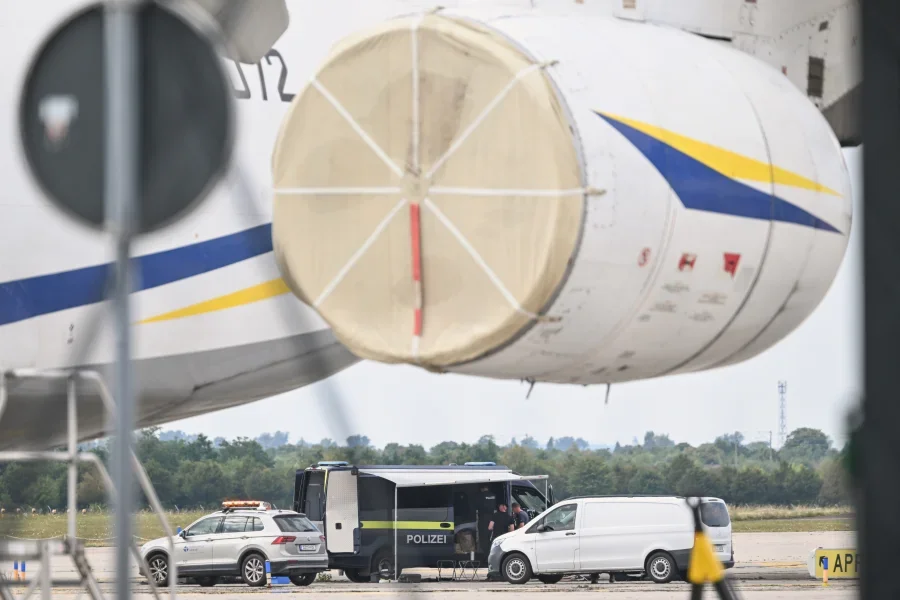
Germany Formally Accused Russia of Leipzig Airport & Dormaggen Explosives Planting
On September 1, Berlin formally attributed the August 4 explosive drone attack on a Ukrainian Antonov An-124 at Leipzig/Halle Airport to Russia, closing Russia's consulate general in Bonn and terminating the lease of the Russian House in Berlin. [5] In Dormaggen, another object was discovered at an electrical substation that police are treating as another detonator for a sabotage attempt.[6]
In response to these, Germany will deliver thousands of attack drones and IRIS-T interceptors to Ukraine in September, and is weighing support in developing target coordinates for Ukrainian strikes inside Russia. [7]
Drones Crossed Into Estonian, Latvian, Finnish and Polish Airspace in Aggressive Set of Breaches by Reconnaissance Aircraft
In the early hours of September 1, drones crossed into Estonian airspace and triggered alerts across eight counties, scrambling Turkish F-16s on NATO's Baltic mission, an orange alert in Latvia's Alūksne district, and Finnish air and maritime restrictions over the eastern Gulf of Finland — though officials have not yet identified the drones' origin. [8]
In a separate case, Finland's Border Guard also identified a drone recovered near Porvoo on September 1 as a Russian-made Geoscan 701, a model built by a sanctioned manufacturer used for Russian reconnaissance in Ukraine, and opened an investigation into a possible territorial violation. [9]
On September 3, Polish fighters intercepted a Russian Il-20 reconnaissance aircraft flying off the Polish coast with its identification equipment switched off, the tenth such intercept this year and the second in four days. [10]
Strategic Unmanned Systems Partnership Act: Mandates DoD collaboration with Ukraine to co-produce battle-tested Ukrainian unmanned systems (like FPV and Magura naval drones) right here in the U.S.
Congress Questions Army for Disbanding Battalion Learning From Ukrainian Drones, While Allies Buy Ukrainian Drone Technology
Sen. Jeanne Shaheen (D-NH), Sen. Thom Tillis (R-NC), Sen. Angus King (I-ME), and Rep. Mike Turner (R-OH) wrote to Army leadership asking why a roughly 600-soldier battalion in the 173rd Airborne Brigade was ordered to stop specializing in drone warfare, stating "deep concerns" that the decision limits the Army's ability to learn from Ukraine's armed forces. [11] The battalion was built to develop and test unmanned tactics drawn from Ukraine's war before acting Army Chief of Staff Gen. Christopher LaNeve returned it to conventional airborne infantry, a decision defense analysts criticized on the grounds that Ukraine remains a live battle lab for how drones are reshaping modern combat.
On September 5, Leonardo CEO Lorenzo Mariani said the Italian state-controlled group is using its new Kyiv subsidiary to pursue partnerships, investment, and acquisitions among Ukraine's defense startups. [12] And Poland's state defense group PGZ, having signed a non-disclosure agreement with a Ukrainian partner in August, is negotiating joint production of unmanned ground vehicles under the Build with Ukraine framework. [13]
The Fast Tracking European Investment in Ukraine's Defense Act: Cuts bureaucratic red tape to allow NATO allies to instantly purchase and transfer high-volume U.S. munitions to Ukraine without drawn-out approvals.
Ukraine's Long-Range Strikes Shut Down Russia's Skies, Oil, and Industry

The Skies
On September 1, Zelensky warned airlines, insurers, and foreign governments that Russian airspace would be "de facto closed" by the scale of Ukrainian drone operations, and within two days Sheremetyevo, Domodedovo, and Vnukovo had suspended operations across consecutive nights as airlines dropped Moscow services. [14]
On September 6–7, Ukrainian drones struck the Taganrog military airfield roughly 40 kilometers from the border, with NASA FIRMS satellite monitoring detecting a fire in the aircraft repair area. [15] On the night of September 4, drones hit two fuel depots and S-300/S-400 positions near Sirius, with Russian authorities confirming the depot fire and saying nothing about the air defense site. [16]

The Oil
Satellite imagery published on September 3rd confirmed damage to the AVT-1, AVT-4, and AVT-5 primary distillation units and to secondary vacuum gas oil processing at the Kstovo refinery, Russia's fourth-largest and its second-largest gasoline producer. [17]
On September 2nd the Kirishi refinery in Leningrad Oblast, Russia's second largest at about 6.6% of national refining capacity, and 900+ kilometers from the border halted crude processing entirely. [18] With Kstovo down for the fifth time in under five months, every major Lukoil refinery in Russia is now out of action alongside Perm and Volgograd. [19]
The War Industry
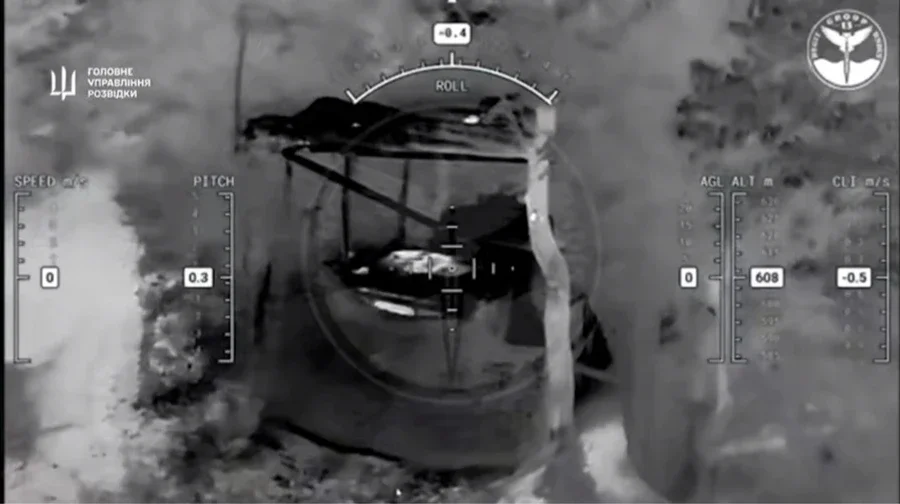
On September 4, Ukraine's Defense Intelligence released footage of its Group 13 unit striking a Russian Bastion coastal missile system in occupied Crimea, the launcher Russia used to fire P-800 Oniks and 3M22 Zircon missiles at Ukrainian cities, along with two fuel tankers and a command-and-staff vehicle. [20]
On September 2, a fire consumed roughly 2,100 square meters of a workshop at Proton-PM near Perm, the Roscosmos plant that assembles RD-191 engines for the Angara launch family more than 1,500 kilometers from Ukraine, with no cause established by Russian authorities. [21] Ukrainian forces also struck an industrial facility in Belgorod with missiles on September 1 . [22]
What Congress Can Do
Ukraine's long-range campaign is currently the only sanctions regime against Russia operating at scale, run by Ukrainians, at Ukrainian expense, against targets American sanctions law has not reached in four years.
Russia's answer to failing on the battlefield has been to escalate against NATO members, not against the Ukrainian front line.
And it took a letter from three senators and a House member to keep the U.S. Army learning from the most experienced drone force on earth, the same week that Italy, Poland, and Germany moved to institutionalize exactly that access.
Contact your Representative and Senators →
First, Sanction Russia:
Co-sponsor and accelerate the passage of the Lindsey Graham Sanctioning Russia and Act of 2026 to starve the Russian military of revenue while they are economically vulnerable.
Second, Fund U.S.-Ukraine Cooperation:
Let Ukraine's technological prowess shine for the benefit of global security.
Strategic Unmanned Systems Partnership Act: Mandates DoD collaboration with Ukraine to co-produce battle-tested Ukrainian unmanned systems (like FPV and Magura naval drones) right here in the U.S.
The Fast Tracking European Investment in Ukraine's Defense Act: Cuts bureaucratic red tape to allow NATO allies to instantly purchase and transfer high-volume U.S. munitions to Ukraine without drawn-out approvals.
Already took action? Take it again — repeated voices are what move a bill to the floor.
