
Why Is Ukraine Reshuffling Its Government in the Middle of a War?
On July 13, President Volodymyr Zelenskyy announced changes to Ukraine's government, the second major reshuffle in a year. A cabinet shake-up during wartime inevitably raises questions abroad: Is this instability? Is this a crisis?
Political science, and a closer look at the facts, suggests a different reading. What Ukraine is demonstrating is a functioning constitutional mechanism operating under the most extreme pressure any European democracy has faced in generations. Here is what is actually happening, what options the president had, and why the chosen path matters for Ukraine's partners in Washington.
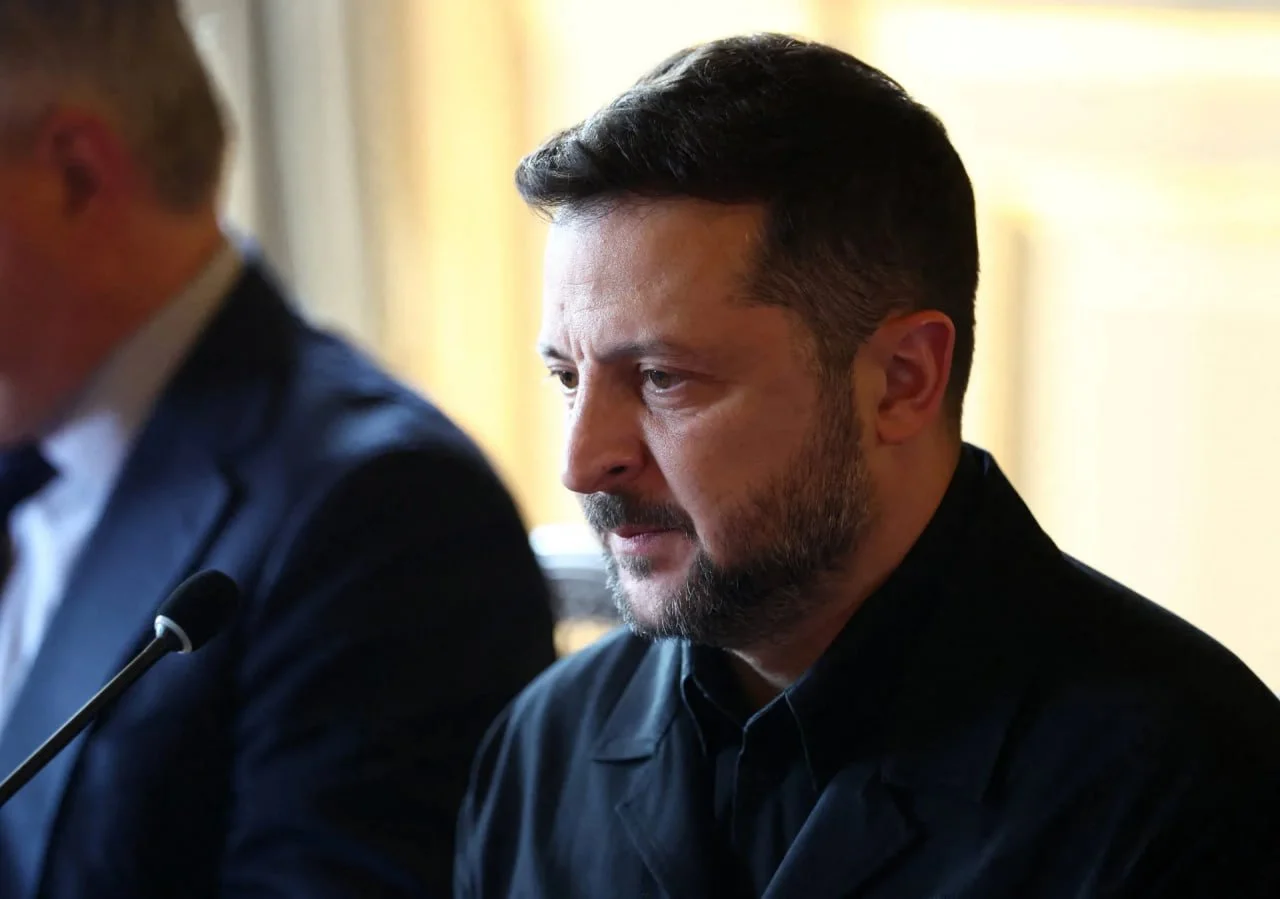
Pool photo by Tom Nicholson via AFP/Getty Images
What Triggered the Reshuffle
According to POLITICO, the immediate catalyst was an investigation involving Ukraine's Ambassador to the U.S., Olga Stefanishyna, conducted by the National Anti-Corruption Bureau (NABU) and the Special Anti-Corruption Prosecutor's Office (SAPO). The ambassador has denied any wrongdoing and has publicly stated she is fully cooperating with investigators, stressing she has "no reservations" about the Bureau's work. No official charges have been filed.
At the same time, Ukrainian officials confirmed to POLITICO that a broader government renewal had been in preparation for months: several ministerial posts, justice and digitalization among them, remained vacant, and changes in education, infrastructure, and veterans' affairs were long anticipated. The investigation did not create the reshuffle; it accelerated a process already underway.
One structural fact deserves emphasis before any analysis: Ukraine's independent anti-corruption institutions are investigating officials at the highest level, during a full-scale war, without exemptions for rank or proximity to power. Very few states under existential threat tolerate this degree of institutional independence. Ukraine does. That is precisely the institutional architecture Ukraine's Western partners have supported building since 2014 — and it is visibly operational.
What Political Science
Says About Wartime Reshuffles
Cabinet reshuffles are among the most studied instruments in comparative politics, and the literature identifies several distinct functions they serve — all relevant here.
Accountability signaling.
In democratic systems, personnel changes are the standard mechanism through which executives respond to institutional findings, public expectations, or performance concerns. Scholars of cabinet politics note that the willingness to rotate senior officials, rather than shield them, is a core marker distinguishing accountable governance from patronage systems. A government that never changes composition is not a stable government; it is often an unaccountable one.
Adaptive governance under crisis.
Research on wartime and crisis cabinets, from coalition governments of the World War era to modern emergency administrations, consistently shows that effective crisis governments restructure around the dominant challenge of the moment. Priorities shift; portfolios must shift with them. A government optimized for one phase of a war is rarely optimized for the next.
Coalition and legitimacy management.
In parliamentary and semi-presidential systems, a cabinet's authority rests on sustained legislative confidence. POLITICO reports that members of parliament had been voicing dissatisfaction with the current government's performance for some time. In such conditions, a managed renewal preserves the working relationship between the executive and the legislature, the alternative is gradual erosion of the government's ability to pass wartime legislation.
The rally-versus-renewal dilemma.
Political scientists have long observed that wartime leaders benefit from "rally-round-the-flag" effects that reduce short-term pressure to change anything. This makes wartime reshuffles analytically interesting: a leader who reshuffles despite that cushion is typically responding to genuine institutional or operational needs rather than to public relations pressure.
The Options on the Table, and Why This One
Analytically, any executive facing this configuration of circumstances has four broad options.
Option one: do nothing.
Retain the full cabinet, let the investigation proceed, and absorb the friction. The cost: vacant ministries stay vacant, parliamentary dissatisfaction compounds, and the ambassador's position in Washington, Ukraine's single most important bilateral posting, remains clouded during critical negotiations. In wartime, drift in key posts is not neutral; it is a liability.
Option two: a minimal, targeted change.
Replace only the ambassador. This addresses the immediate issue but leaves the accumulated structural gaps, the unfilled ministries, the long-planned rotations unresolved, guaranteeing a second disruption within months.
Option three: a gradual, minister-by-minister rotation.
Constitutionally possible, but procedurally heavy: each change requires separate parliamentary action, stretching the process across weeks of votes and prolonging uncertainty inside the government apparatus.
Option four: a full constitutional reset.
As a Ukrainian official explained to POLITICO, the resignation of the prime minister triggers the resignation of the entire cabinet, allowing the president, the new prime minister, and parliament to form a renewed government in a single, consolidated process — "less voting," faster completion, shorter uncertainty.
The choice of option four reflects a standard logic of crisis governance: if renewal is necessary, compress it. Prolonged personnel uncertainty is itself a cost, for ministries, for markets, for allies, and for soldiers who depend on uninterrupted state function. A single consolidated transition minimizes that window. This is not an extraordinary maneuver; it is the constitutional mechanism working as designed.
Reading the Reported Appointments: Strategy, Not Improvisation
Two reported personnel decisions reveal the underlying logic of the renewal.
Washington first.
Prime Minister Yulia Svyrydenko is reported to be the leading candidate for the ambassadorship in the United States. She is the official who, in 2025, helped transform the critical minerals agreement with the U.S. from an unbalanced draft into a partnership beneficial to both nations, and she maintains established working relationships with the current U.S. administration. Assigning a figure of prime-ministerial rank to the Washington embassy communicates an unambiguous ordering of priorities: the U.S. partnership sits at the very top of Ukraine's strategic agenda. Svyrydenko herself has stated she is ready to continue serving Ukraine "to carry out tasks aimed at strengthening Ukraine's positions, protecting national interests, and bringing about a just peace."
Winter second.
Serhii Koretskyi, CEO of the state energy companies Naftogaz and Ukrnafta, is reported to be a leading candidate for prime minister. The logic is operational: Russia continues systematic strikes on Ukraine's gas and energy infrastructure, and the coming winter will again test the resilience of the entire country. Elevating energy-sector expertise to the head of government would align the cabinet's leadership with the state's dominant near-term challenge, a textbook case of the crisis-adaptive restructuring described above.
Whoever is ultimately appointed, the pattern is legible: personnel is being matched to mission.
Ukraine's Take: The Signal That Matters
For Ukraine and for those who support it, the essential message of this episode is institutional, not personal.
First, Ukraine's anti-corruption architecture, built in partnership with the U.S. and EU, functions independently and without wartime exemptions. Investigations proceed regardless of rank. Officials cooperate publicly. This is the accountability infrastructure Western partners asked for, operating in real time.
Second, Ukraine's constitutional mechanisms for government renewal work through parliament, in public, under legal procedure, in the third year of a full-scale invasion. Compare this with the governance model on the other side of the front line, where personnel decisions are opaque, accountability is nonexistent, and institutions serve one man's war. The contrast is the story.
Third, the direction of the renewal, prioritizing the Washington relationship and winter energy resilience, shows a state allocating its best people to its hardest problems.
Democracies confront their problems in the open; that openness is sometimes mistaken for fragility. It is the opposite. A state that can investigate its own officials, renew its own government, and keep fighting, simultaneously, is a state worth backing. Sustained U.S. support for Ukraine is not charity. It is an investment in a partner that holds itself accountable even under fire.
Source: POLITICO