
A New Yalta Is Being Written. What Will America Choose to Sign?
Stay Updated on News and Events
◉
Stay Updated on News and Events ◉
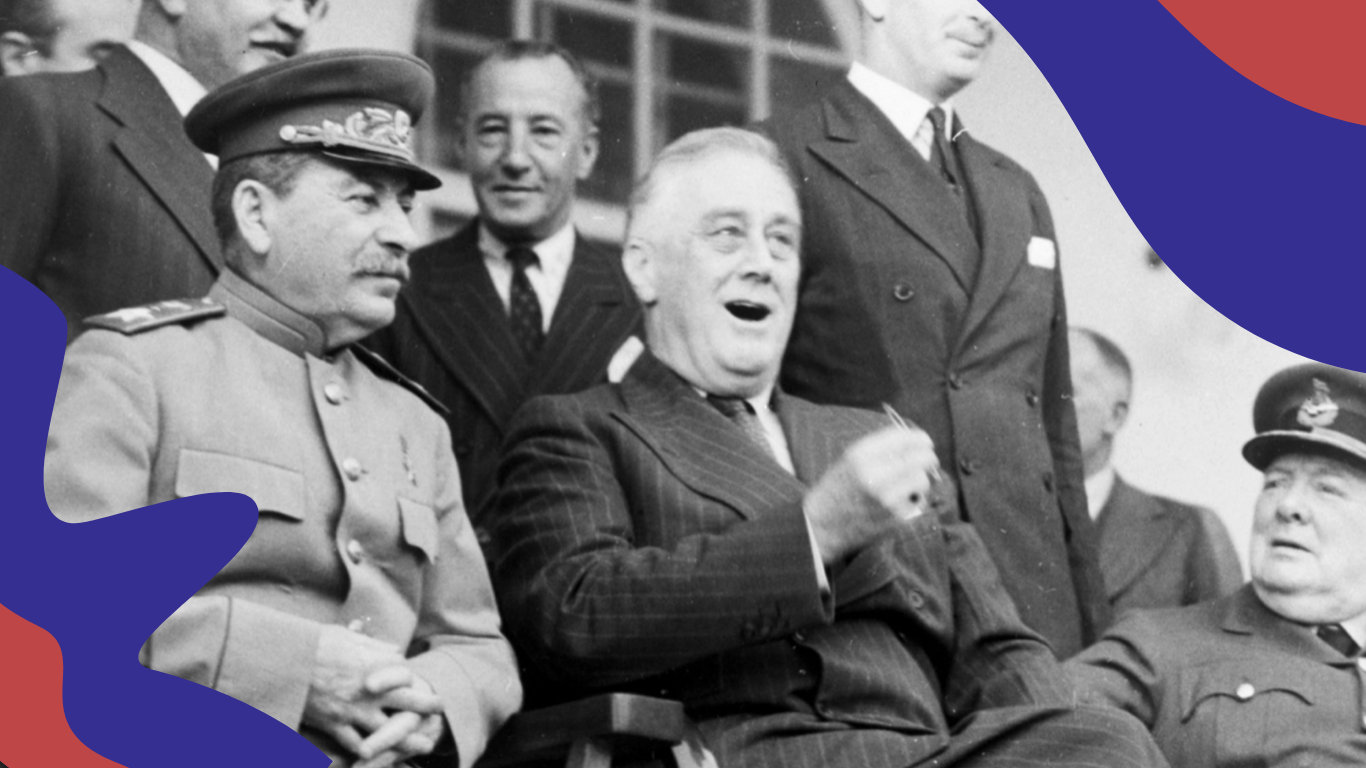
Joseph Stalin, Franklin D. Roosevelt, and Winston Churchill on the portico of the Soviet Embassy during the Tehran Conference, Nov. 28 1943. By US Signal Corps, via Library of Congress and Wikimedia Commons.
Eighty years ago, a set of agreements signed in Crimea reshaped the world.
The Yalta Conference of 1945 was sold as a peace deal. For half of Europe, it became a sentence - nearly 45 years behind an Iron Curtain, with no one asking their permission.
The word "Yalta" still carries weight. It should.
What's Been Happening - In Plain Sight
Consider the last few weeks alone.
On March 26, a Russian government aircraft landed in New York carrying four members of Russia's State Duma - all under active U.S. sanctions for their role in supporting the annexation of Ukrainian territory. They were not smuggled in. They were invited, their sanctions quietly waived, with no public debate and no congressional vote.
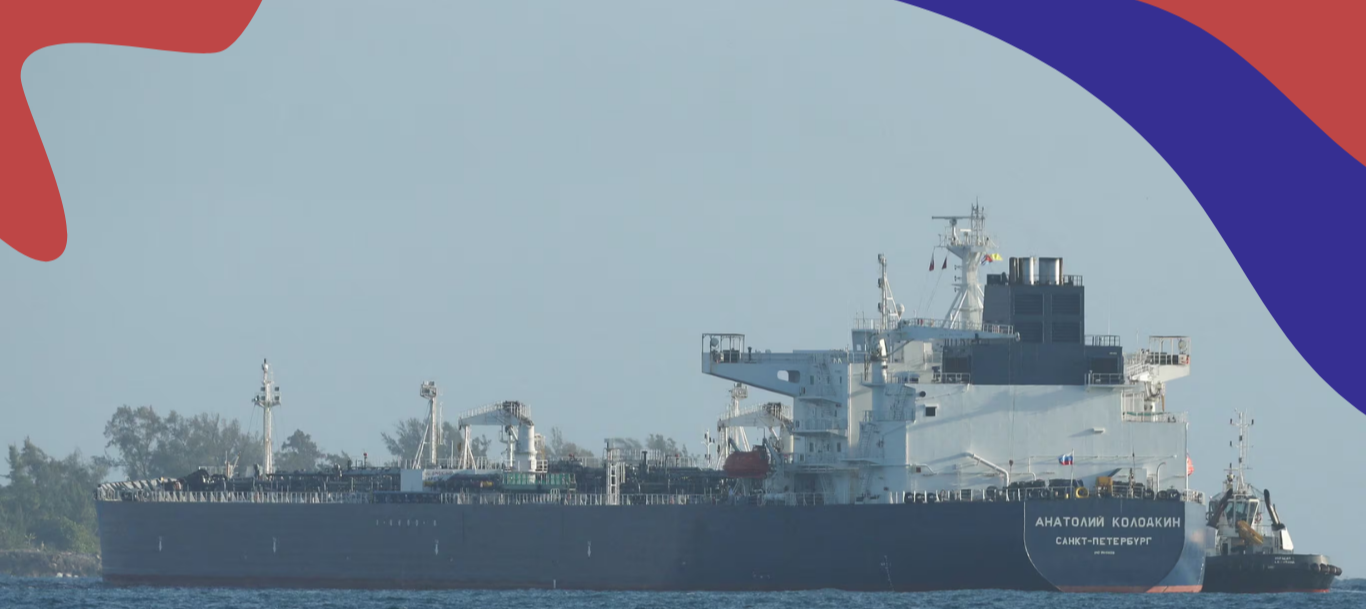
On March 29, a Russian-flagged tanker carrying 730,000 barrels of oil docked in Cuba - the first time in three months that an oil tanker had reached the island. The vessel, the Anatoly Kolodkin, was itself under U.S. sanctions. It was allowed through.
On March 31, the U.S. Treasury quietly removed three more Russian-flagged cargo ships from its sanctions list - including one vessel Ukraine says was used to transport stolen Ukrainian grain to Turkey.
Each of these events came with an explanation. Humanitarian reasons. Routine administrative updates. Ordinary course of business. What they add up to is harder to explain away.
Russia Hasn't Changed. The Pressure Has.
Russia has not withdrawn from Ukraine. It has not returned a single child from its re-education camps. It continues to bomb Ukrainian cities. It continues to occupy Ukrainian territory. It continues to use every tool at its disposal - oil, nuclear energy, grain, diplomacy - to sustain a war that has killed hundreds of thousands of people.
The sanctions architecture the West built was designed specifically for this moment. Not as punishment for its own sake - but as leverage. As the one tool that a rules-based international order holds over a nuclear-armed aggressor, short of direct military confrontation.
The tanker's arrival in Cuba marked the first delivery in three months - and it arrived flying the flag of the country currently bombing Ukrainian apartment buildings. That's not a detail. That's the picture.
The Pattern That Matters
None of these events happened in a vacuum.
In recent months, Western pressure on Russia has visibly softened in multiple directions at once - ships delisted, oil sanctions temporarily lifted, sanctioned officials welcomed, Russian tankers waved through. Meanwhile, the EU's 20th sanctions package remains blocked. And Russia continues to operate its shadow fleet, its nuclear export empire through Rosatom, and its global influence networks largely intact.
Every individual step gets framed as narrow, temporary, and case-by-case. But the cumulative signal is clear - and Moscow is reading it carefully.
History offers a lesson here. At Yalta, the concessions were made under the weight of genuine constraints - armies already on the ground, a war still raging in the Pacific, a world desperate for peace at almost any price. The result was decades of consequences that no one who signed those agreements fully anticipated.
The lesson isn't that engagement is wrong. The lesson is that:
engagement without accountability is not diplomacy - it's concession.
And concessions made before accountability is established don't end conflicts. They reward the behavior that caused them.
What Needs to Happen Now
Sanctions are not a relic of a previous era. They are the primary lever available to ensure that aggression has real, sustained consequences. Every gap in enforcement - every waiver, every delisting, every "temporary" exception - weakens that lever and tells every government watching that patience pays off.
Russia has not earned a single one of these openings. And Ukraine - which has defended itself against a military superpower for over three years — deserves better than to watch its allies quietly lower the pressure while the war continues.
The time to act is now. Not after a deal is signed. Not after the pressure is gone. Now.
Sanctions on Russia must remain in place until there is full accountability for its ongoing aggression against Ukraine and respect for international law.
We urge decision-makers to:
Maintain all existing sanctions on Russia
Reject any premature easing of restrictions
Continue coordinated international pressure
Stand firmly in defense of Ukraine's sovereignty
Resources and Sources:
🗞 Bohdan Nahaylo, Kyiv Post — "A New Mini-Yalta: Trump's Dangerous Gambit in Eastern Europe" https://www.kyivpost.com/opinion/72782
🗞 The New York Times — Russian Oil Tanker Reaches Cuba https://www.nytimes.com/2026/03/29/world/americas/cuba-russian-oil-tanlker.html
📷 Reuters — Russian oil tanker enters anchorage at Cuba's Matanzas port https://www.reuters.com/business/energy/russian-oil-tanker-enters-anchorage-cubas-matanzas-port-ship-data-says-2026-03-31/
📷 Joseph Stalin, Franklin D. Roosevelt, and Winston Churchill — Tehran Conference, Nov. 28, 1943. US Signal Corps, via Library of Congress / Wikimedia Commons
🔴 American Ukraine Committee — Do Not Lift Sanctions on Russia: https://www.amukr.org/do-not-lift-sanctions-on-russia#/45/