
How a Joint US–Ukraine Weapons Production Redefines Allied Defense
On July 8, 2026, a bipartisan group of seven Members of Congress sent a letter to the President, the Secretary of State, and the Secretary of War with a clear message: the United States should conclude a framework agreement with Ukraine and European allies to jointly produce unmanned systems and air defense systems.
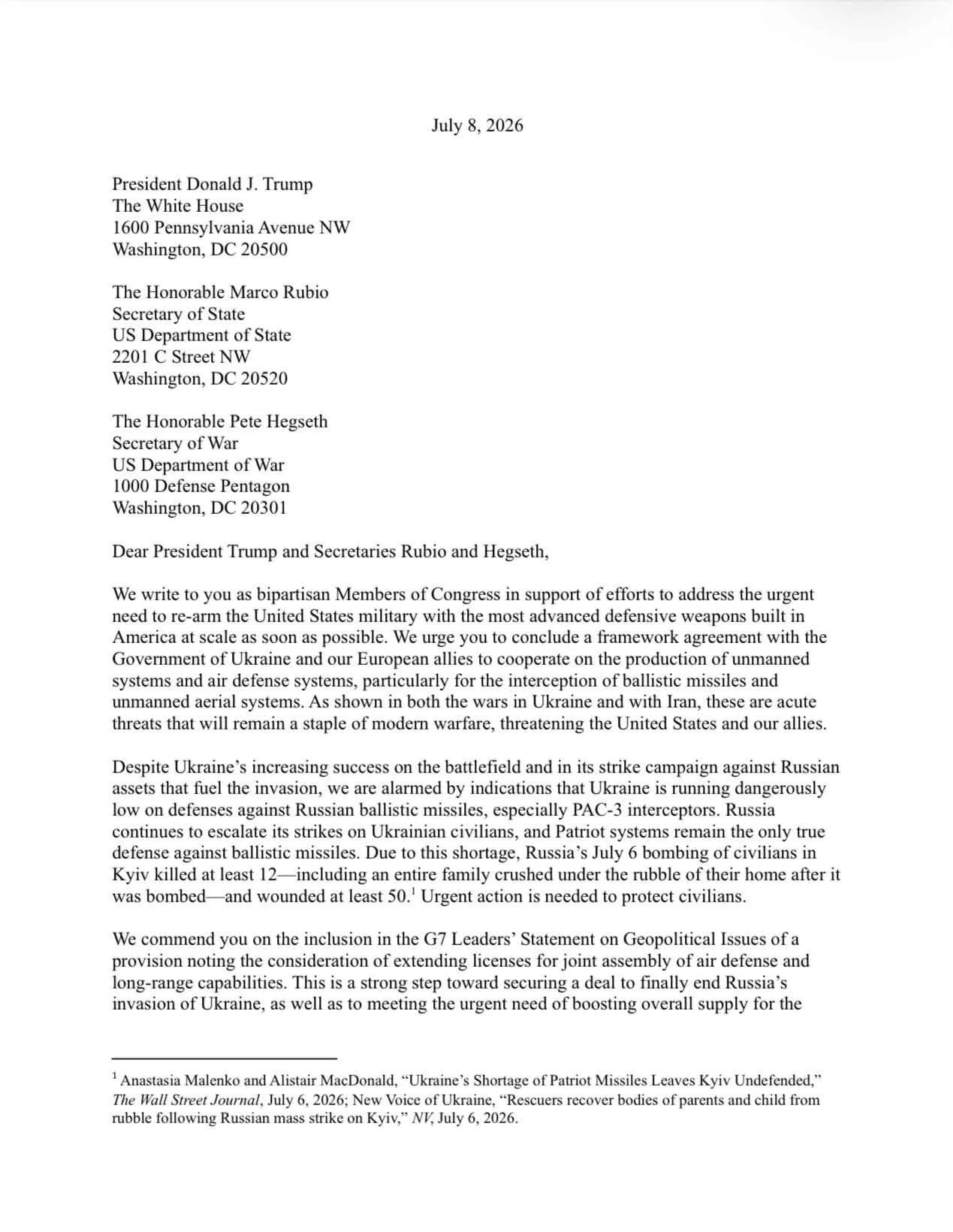
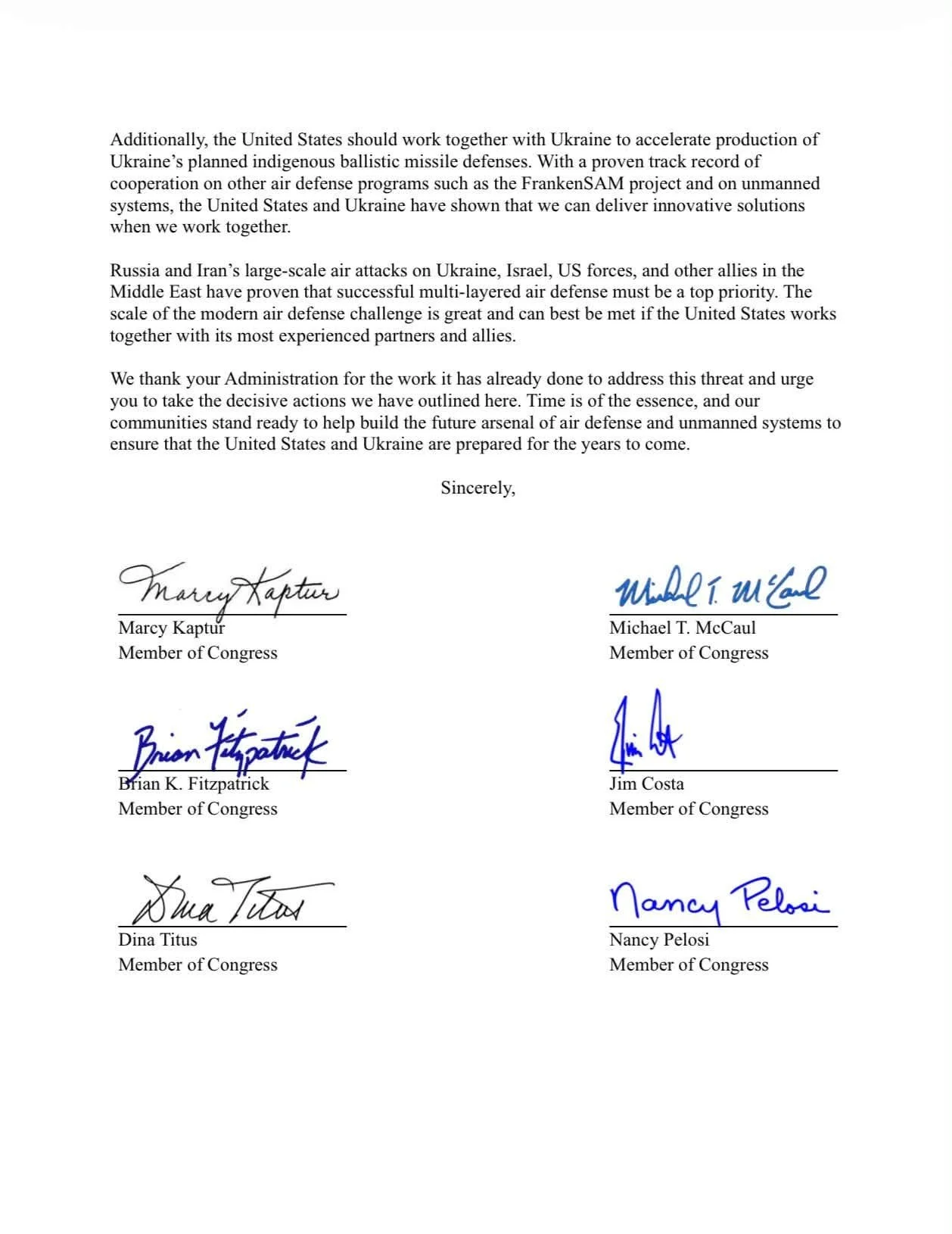

The letter, signed by Representatives Marcy Kaptur, Michael T. McCaul, Brian K. Fitzpatrick, Jim Costa, Dina Titus, Nancy Pelosi, and André Carson, is more than a routine appeal. It marks a significant shift in how Washington frames its partnership with Kyiv: not as assistance, but as strategic co-production that strengthens both nations.
The Urgency: Air Defense Shortages Cost Civilian Lives
The letter points to a critical reality. Despite Ukraine's growing success on the battlefield and in its strike campaign against assets fueling the invasion, Ukraine is running dangerously low on defenses against Russian ballistic missiles — especially PAC-3 interceptors. Patriot systems remain the only true defense against ballistic missile attacks.
The signatories cite the consequences directly: Russia's July 6 bombing of civilians in Kyiv killed at least 12 people, including an entire family crushed under the rubble of their home, and wounded at least 50.
The Numbers:
Why the US Cannot Wait Until 2029
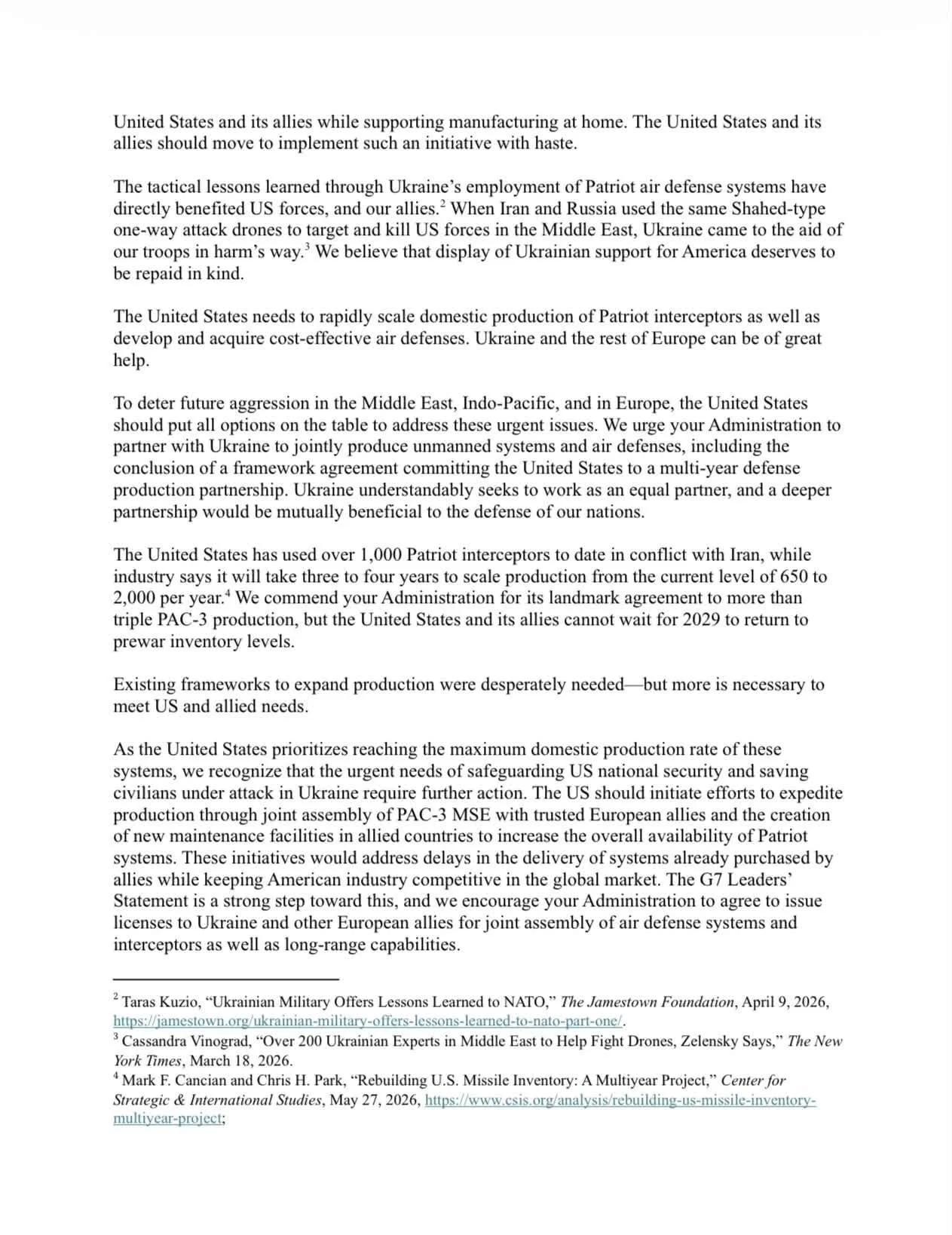
The letter provides a sobering assessment of American stockpiles. The United States has used over 1,000 Patriot interceptors in the conflict with Iran, while industry estimates it will take three to four years to scale production from the current level of 650 to 2,000 interceptors per year.
The signatories commend the Administration's landmark agreement to more than triple PAC-3 production, but they stress that the United States and its allies cannot wait until 2029 to return to prewar inventory levels.
Their proposed solution: expedite production through joint assembly of PAC-3 MSE with trusted European allies and create new maintenance facilities in allied countries.
This would address delivery delays for systems already purchased by allies while keeping American industry competitive in the global market.
The Partnership: Ukraine as an Equal, Not a Recipient
Perhaps the most important element of the letter is its framing. The lawmakers note that Ukraine seeks to work as an equal partner — and that a deeper partnership would be mutually beneficial to the defense of both nations.
The evidence supports this. Tactical lessons from Ukraine's employment of Patriot systems have directly benefited US forces and allies. When Iran and Russia used the same Shahed-type one-way attack drones to target US forces in the Middle East, Ukraine came to the aid of American troops — with over 200 Ukrainian experts deployed to help counter drone threats, according to reporting cited in the letter. As the signatories put it, that display of Ukrainian support for America deserves to be repaid in kind.
The track record of cooperation is already there: the FrankenSAM air defense project and joint work on unmanned systems have shown that the United States and Ukraine can deliver innovative solutions when they work together.
The Momentum:
Building on the G7 Leaders' Statement
The letter commends the inclusion in the G7 Leaders' Statement on Geopolitical Issues of a provision noting the consideration of extending licenses for joint assembly of air defense and long-range capabilities. The signatories call this a strong step toward securing a deal to finally end Russia's invasion of Ukraine — and urge the Administration to move with haste and agree to issue those licenses to Ukraine and other European allies.
They also call for accelerating production of Ukraine's planned indigenous ballistic missile defenses — a step that would give Ukraine long-term security while expanding the allied industrial base.
Our View: A New Model of Allied Security
This letter reflects a deeper strategic insight that deserves attention. Modern warfare, as demonstrated in both Ukraine and the Middle East, has made ballistic missiles and unmanned aerial systems a permanent feature of the threat landscape. No single country, including the United States, can meet this challenge alone at the required scale and speed.
Joint production with Ukraine is not charity. It is the fastest available path to rebuilding allied stockpiles, protecting civilians under attack, deterring future aggression in Europe, the Middle East, and the Indo-Pacific — and strengthening American manufacturing at home. Ukraine brings something no other partner can: real-time battlefield experience with the most advanced air defense systems in the world.
The bipartisan nature of the letter, signed by senior members of both parties, shows that support for this approach crosses political lines. As the signatories write, time is of the essence.
Congress now has an opportunity to reinforce this direction through legislation. The Peace Through Strength Against Russia Act embodies the same principle expressed in this letter: peace is best preserved through strength, unity, and clear consequences for destabilizing behavior.