
Tankers in Flames. Ukraine's Summer Window That Must Not Slip Away

Collage: Andrii Kalistratenko
Over just two days, Ukrainian drones struck a dozen tankers from Russia's so-called "shadow fleet" in the Sea of Azov, vessels delivering fuel to occupied Crimea. According to Ukraine's drone forces, eight sanctioned vessels, each with a deadweight of around 7,000 metric tons, were hit first, followed by two more tankers later the same day, and two others in the same area a day earlier.
A Summer Window That Must Not Be Wasted
The tanker strikes are the maritime dimension of a much broader shift, described in detail in a major new report by Ukrainska Pravda. Ukraine is scaling up a new class of affordable "middle-strike" drones — one-way attack drones with a range of 30 to 200 kilometers, and pushing them down from elite units to regular corps-level drone battalions.
The numbers are striking. From the beginning of 2026 through June, the number of confirmed drone strikes at depths beyond 20 kilometers grew almost 13-fold, and beyond 50 kilometers — 44-fold. Ukraine's Ministry of Defense has launched a competition to produce more than 100,000 middle-strike drones by the end of the year, with a comparable number expected through international assistance — over 200,000 in total.
The strategic logic is the same at sea and on land:
a "logistical lockdown."
If fuel trucks, ammunition carriers, and supply convoys cannot reach Russian positions, whether they travel by road through occupied Donetsk and Zaporizhzhia regions or by tanker across the Sea of Azov, the occupying force weakens from within. In parts of occupied Zaporizhzhia, according to Ukrainska Pravda's sources, strikes on refineries and logistics have already produced fuel and electricity shortages that visibly reduced traffic on the roads.
At the same time, the report is honest about the challenges. Frontline commanders say the effect of middle strikes is not yet felt on the line of contact — that will take until late summer or early autumn.
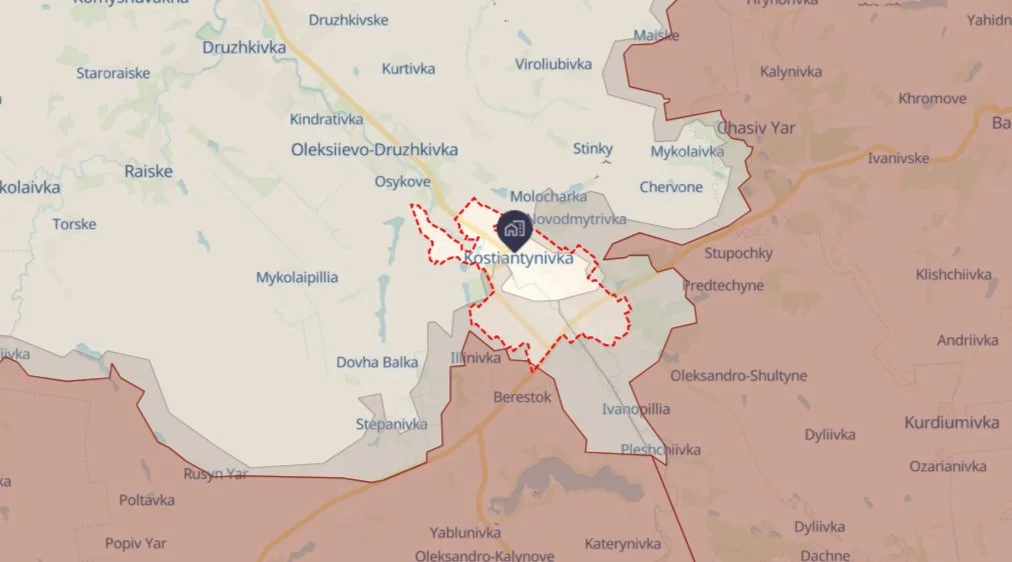
The situation on the ground remains difficult, with Russia continuing offensive pressure on several axes and attempting infiltration tactics around Kostiantynivka.
Analysts describe the current phase carefully: the deterioration has been stopped, but the initiative has not yet been fully seized.
That is exactly why the coming three to four months matter so much. Ukraine has assembled the tools — middle-strike drones, deep strikes on refineries, naval drone campaigns against the shadow fleet — to impose real, compounding costs on the occupier.
But windows of opportunity in this war are short. Each side innovates, and each side eventually adapts. The advantage belongs to whoever moves fastest — in production, in deployment, and in policy.
Why This Matters:
Crimea's Lifeline Is Under Fire
The Sea of Azov is a key supply artery for Russian forces in Crimea and other occupied parts of southern Ukraine. Every tanker that fails to reach the peninsula means less fuel for Russian military logistics, air defense systems, and the daily operations of an occupying force.
The results are already visible. Ukraine's intensified strikes on logistics and energy infrastructure have contributed to fuel shortages so severe that Russian-installed authorities declared a state of emergency in Crimea in late June. Electrical substations, radar systems, and missile installations have also been hit in recent weeks.
Ukraine's top drone commander, Robert Brovdi, told Reuters last month that the goal is to effectively cut Crimea off from Russia through systematic strikes. What we are witnessing now is that pledge being carried out, methodically, target by target, tanker by tanker.
The Uncomfortable Question:
When Sanctions Lists Lag Behind Reality
Here is a detail from the Reuters report that deserves far more attention than it has received: of the seven vessels identified in Tuesday's initial strikes, only two were under international sanctions.
Think about what that means. Five tankers openly serving Russia's war logistics — supplying fuel to an occupied peninsula that serves as a critical hub for Russia's war effort — were operating outside the reach of Western sanctions regimes.
Ukraine has long urged its allies to crack down on vessels that circumvent sanctions to transport Russian oil to international markets. The shadow fleet exists for one reason: to evade the G7+ oil price cap and keep petrodollars flowing to the Kremlin. Every gap in enforcement is a gap the Kremlin exploits.
Ukrainian drones are now doing kinetically what sanctions were designed to do economically.
But drones should not have to compensate for incomplete sanctions lists. The two tools must work together: military pressure at sea, and airtight economic pressure on paper. This is precisely why legislation such as H.R. 7506, which targets foreign entities facilitating transactions in Russian crude oil and petroleum products, matters, it closes the loopholes that allow the shadow fleet to operate in the first place.
The lesson of this week is clear: the shadow fleet is not an abstraction. It is a real, identifiable set of vessels performing a real military function. Sanctions enforcement must move at the speed of the war, not the speed of bureaucracy.
The Bottom Line
Ukraine is doing its part. Its drones are burning the tankers that fuel the occupation of Crimea. Its engineers are scaling the systems that can lock down Russian logistics across the entire occupied south and east.
America's part is to make sure the economic front holds just as firmly.