
Who Is Defending Whom? Ukraine's Question to the Ankara Summit
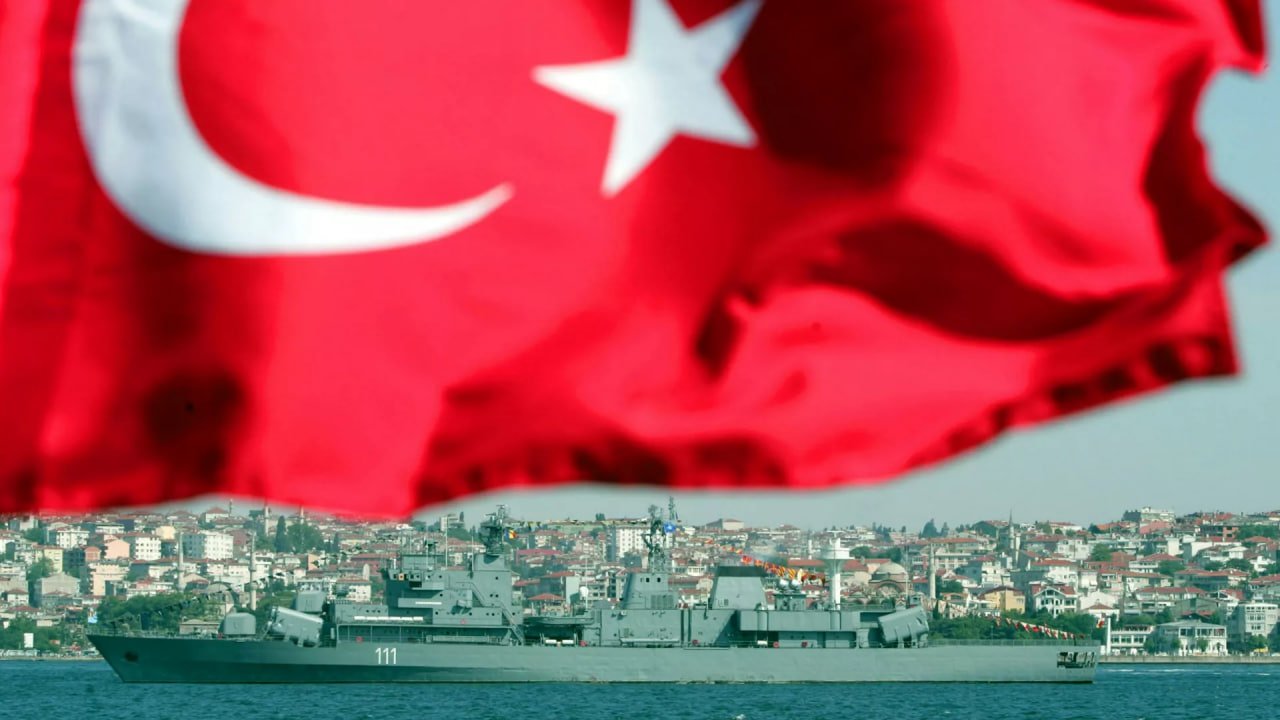
Today, on July 7, 2026, the NATO Summit opened in Ankara, Türkiye.
On paper, the agenda looks familiar: defence investment, defence industry, support for Ukraine. But something in the underlying logic of the Alliance's conversation about Ukraine has quietly shifted — and President Volodymyr Zelenskyy's address, met with a standing ovation, made that shift impossible to miss.
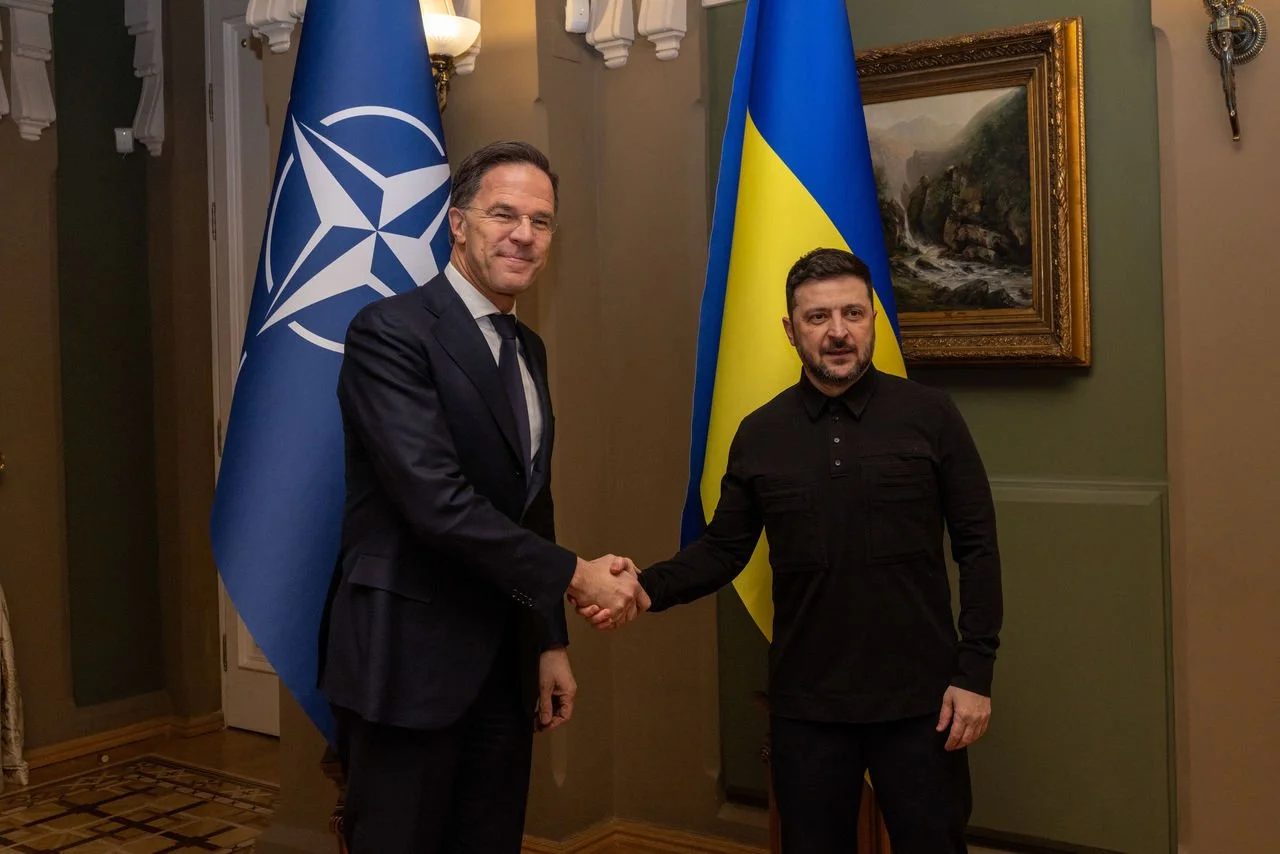
For years, the question in allied capitals was framed as "how much support can we afford to give Ukraine?" Ankara suggests a different question is taking its place: "how much security can Ukraine provide to us?"
This article examines what happened in Ankara, what the numbers behind the speeches actually mean, and why the answer to Europe's defence-industrial challenge may already be operating — under fire — inside Ukraine.
A Standing Ovation, and a Deliberate Reframing
President Zelenskyy's message to the Alliance was disciplined and precise: "We are not Putin. We are not fighting for pleasure or geopolitics. We are defending ourselves."
The line matters not because of its emotional weight, but because of its strategic function. It draws a clean legal and moral boundary: Ukraine's war effort is self-defence under international law — the same principle, Article 51 of the UN Charter, that underpins NATO's own Article 5.
By opening with that distinction, the President positioned everything that followed — the statistics, the requests, the final question — not as an appeal for charity, but as a report from a partner performing a function the Alliance itself considers essential: the defence of the rules-based order on its eastern flank.
The Numbers Behind the Message
The data President Zelenskyy presented in Ankara deserves careful reading, because each figure answers a long-standing question in allied defence planning.
He reported that Ukrainian forces are currently eliminating approximately 30,000 Russian soldiers every month, with video confirmation, and that the majority are being neutralized by drones.
He noted that Ukraine's interception rate against Russian Shahed-type drones has risen to 90 percent, with thousands of drones shot down every week. He stated that Ukraine has effectively dismantled the concept of a Russian "strategic rear" — that there is no oil refinery in the Russian Federation that Ukrainian drones or missiles have not been able to reach.
Read together, these are answers to the three questions NATO planners have debated for a decade:
Can a European force attrit a larger adversary at sustainable cost?
Can affordable air defence defeat mass drone attacks?
Can long-range precision strike hold an aggressor's economic base at risk without escalation spiraling out of control?
Ukraine's answer to all three, demonstrated in practice, is yes — and no other force on the continent can say the same from experience.
At the same time, the President was candid about the gap that remains: Patriot air defence systems are already insufficient, and the need is immediate.
"This cannot wait until 2030 — we need them now."
That timeline — now versus 2030 — is, in essence, the central tension of the entire Summit.
The Alliance's Homework: Turning Pledges into Production
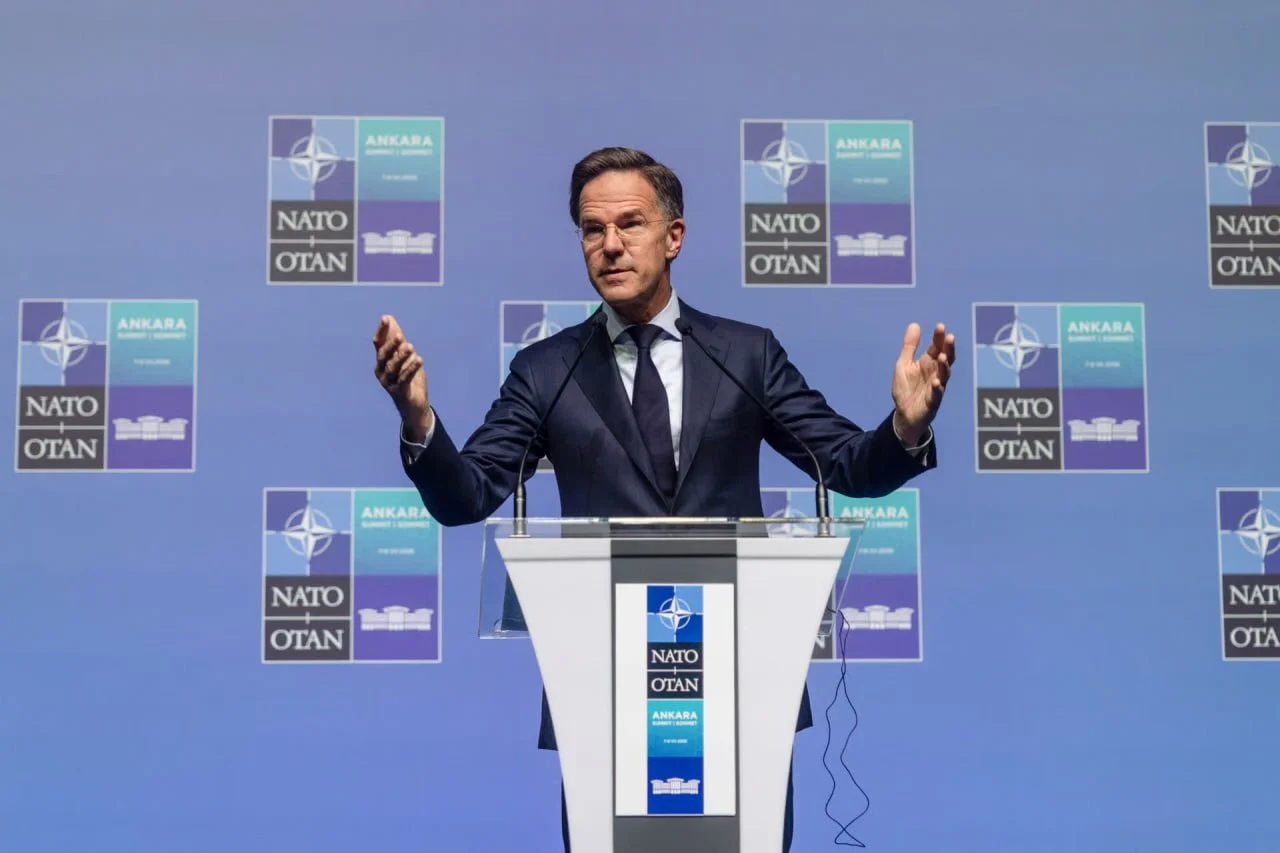
NATO Secretary General Mark Rutte defined the Summit's purpose in one sentence:
"The task ahead is clear: to turn Allied commitments into concrete results. Increased investment, industrial production, and continued support for Ukraine. All of this contributes to a stronger NATO and greater security for all of us."
Following last year's pledge to invest 5% of GDP in defence, European Allies and Canada increased their core defence investment by USD 139 billion in nominal terms in 2025, and some Allies will reach the 5% target in 2026 — far ahead of schedule.
Through the Prioritised Ukraine Requirements List (PURL), Allies have committed more than USD 6 billion for critical U.S.-sourced military equipment for Ukraine, with deliveries underway.
And the NATO Summit Defence Industry Forum (NSDIF26), held in Ankara on July 7, is focused precisely on converting that money into production lines, supply chains, and joint procurement.
Secretary General Rutte's formula for the Forum — "There is no strong defence without a strong defence industry" — is correct. But it invites a follow-up question the Alliance is only beginning to answer: where, exactly, is that industry supposed to scale fastest?
The Question Ukraine Left on the Table
President Zelenskyy closed his address with a direct question to the members of the Alliance: "Do you really believe it would be right to leave outside NATO a country and a people with such a level of defensive capability?"
For decades, the debate over Ukraine's place in NATO was conducted in the vocabulary of risk: what admitting Ukraine might cost the Alliance. The President's question inverts the ledger.
It asks the Allies to calculate what excluding Ukraine costs NATO — in combat experience, in air-defence expertise, in the largest and most innovative drone warfare ecosystem in the world, in a battle-tested force that is already, in practice, degrading the military capacity of the Alliance's primary strategic challenge.
This is the analytical core of Ankara 2026: Ukraine is no longer presenting itself as a consumer of Euro-Atlantic security, but as a producer of it.
Why Investing in Ukraine's Defence Industry Is Investing in NATO Itself
Here the Summit's three agenda items — investment, industry, Ukraine — converge into a single policy logic that deserves to be stated plainly.
NATO's central industrial problem is speed.
The Alliance has money (USD 139 billion in new annual investment), demand (the 5% target), and coordination tools (PURL, NSATU). What it lacks is production capacity that can grow at wartime pace and technology that iterates at wartime speed. Ukraine has both.
Ukrainian defence manufacturers redesign drones, electronic warfare systems, and interceptors on development cycles measured in weeks, because the battlefield grades their work in real time. No peacetime industrial base in Europe or North America can replicate that feedback loop.
This means European investment in Ukraine's defence industry is not a parallel track to NATO's rearmament — it is the fastest available track. Every dollar and euro invested in Ukrainian production capacity buys three things simultaneously: immediate capability for Ukraine's defence, surge capacity for the Alliance, and access to the only continuously combat-validated innovation pipeline in the democratic world.
Legislation that removes friction from that investment — such as the Fast Tracking European Investment in Ukraine's Defense Act — should therefore be understood not as an act of assistance, but as an act of Alliance-wide industrial strategy.
The Ankara Summit's stated goal is to turn commitments into concrete results. The most concrete result available is already on the map: it is Ukraine's defence industrial base, and the policy task is simply to let allied capital reach it faster.
Conclusion
Ankara 2026 will be remembered less for its communiqués than for its arithmetic.
Thirty thousand per month. Ninety percent interception. One hundred thirty-nine billion in new investment. Six billion through PURL. Five percent of GDP.
Behind each figure stands the same conclusion: the security of the Euro-Atlantic community and the capability of Ukraine are no longer separable variables. The Alliance said as much itself — "our security is inextricably linked with Ukraine's."
The task now is to act on that arithmetic.
Congress has before it a direct opportunity to do so.
Source: NATO — Overview: 2026 NATO Summit in Ankara