
Pass the Graham Bill — Iran Sanctions and All
The bill is written. The support is there. Now it needs your voice.
We wish Ukraine weren’t a
partisan political football.
In 2022, many Republicans reflexively came out against the Supplemental. Sadly, many Dems are doing the same today. Our role is to advocate for Ukraine in a strategic bipartisan fashion.
Lindsey Graham didn't live to see his last bill become law. That's the part of this story that keeps getting lost in the procedural back-and-forth over tariff percentages and committee schedules, and it's the part that should decide this.
S. 5025 — now formally the Lindsey O. Graham Sanctioning Russia Act of 2026 — started life a year earlier as a much thinner bill, S. 1241, the plain old Sanctioning Russia Act of 2025. Thirty-one pages, one idea: choke off the money Russia makes selling oil and gas to the countries still buying it, and use that leverage to end the war on Ukraine. Graham spent the better part of two years dragging that idea through the Senate, collecting cosponsors, negotiating with a White House that didn't always want to move.
Then he died, and the bill came back bigger. Sixty-one pages now, introduced July 16. It's narrower in one sense — instead of threatening tariffs on anyone buying Russian energy, it targets the five biggest purchasers specifically, and it carves out room for countries actively weaning themselves off Russian supply. The blanket 500% tariff Graham floated originally got cut to 100%. That's not weakness, it's what a bill looks like after it survives contact with people who actually have to vote for it.
And now Iran's in the mix, or might be. Trump wants Iran sanctions attached — reportedly non-negotiable for him. Thune says leadership is "homing in on" it. The person actually pushing hardest for it, though, is Darline Graham, sworn in to fill her brother's seat, who asked Blumenthal directly to get it done because it's what Lindsey wanted. Jeanne Shaheen, one of the lead Democratic negotiators, says she's fine adding it back — it was in an earlier draft anyway, and she frames it around Iran-linked attacks that have killed American service members. So the Iran piece isn't a poison pill bolted on by hawks looking to complicate things. It's closer to unfinished business from the bill's own history, revived by a grieving family member and a Democrat who already agrees with her.
Does that help or hurt the odds of passage?
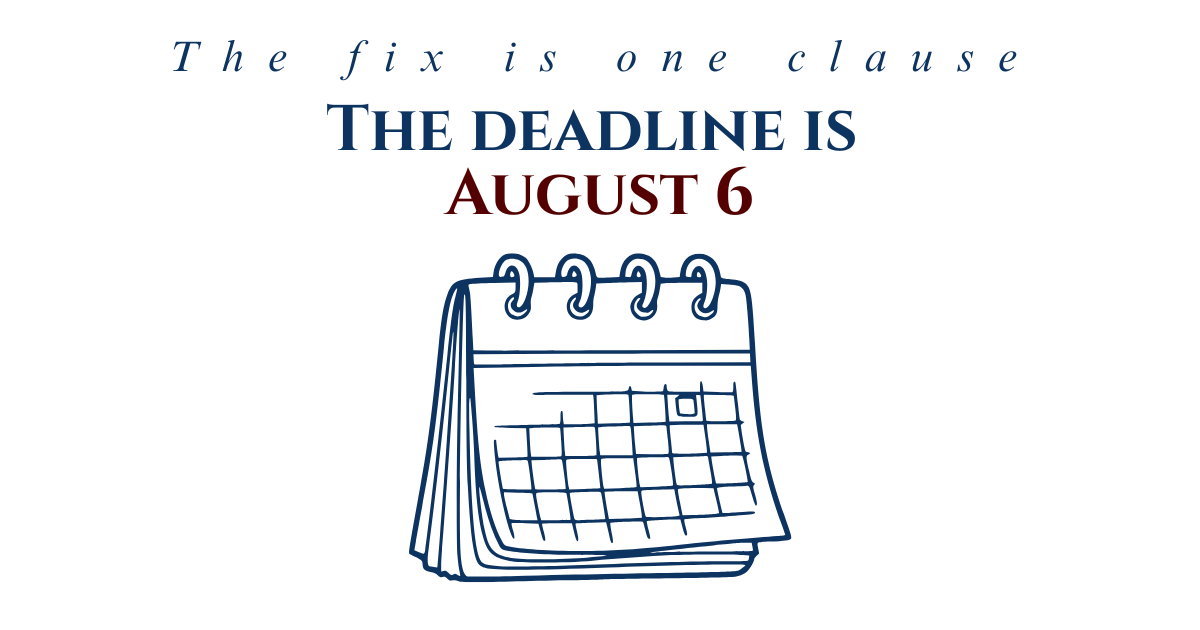
Both, honestly. More than 60 cosponsors is a filibuster-proof number on paper. But paper cosponsorship isn't the same as unanimous consent to fast-track, and fast-track is what this needs — the Senate is staring down an August 6 recess with a DNI nominee, an AG nominee, and a pile of other business ahead of it. Adding Iran sanctions, even popular ones, adds a negotiating variable at the exact moment leadership needs simplicity. Thune hasn't locked down the agreement he needs. Every day this drags is a day closer to it falling off the calendar entirely, which is exactly what happened to earlier versions of this bill more than once.
Here's the thing about the partisan math, though: it isn't really partisan.
Not in the usual sense. The holdouts aren't Democrats who've gone soft on Russia. Warnock and Welch, both on record, aren't objecting to the sanctions. They're objecting to how much power the tariff mechanism hands the president. Warnock called it "giving Trump additional authorities to act on tariffs in a reckless way that he's been doing." Welch went further, saying the language "gives the executive carte blanche to do what he wants for whatever reason he wants," and pointedly noted that's not what he and Graham had actually discussed.
That's a fight about executive authority and how it's constrained, dressed up as a fight over Russia policy. It's a legitimate concern. It's also not a reason to kill the bill, it's a reason to nail down the guardrails while there's still time, which is what Blumenthal says he's doing when he pushes back on the idea that people are working off "a fictional notion of the bill."
None of that changes the bottom line. This bill should pass, Iran language and all. The alternative is Russia sitting on a revenue stream funded by countries that face no consequence for using it, while the Senate lets its best shot in years slip because of a scheduling fight.
Thom Tillis put it about as plainly as anyone has: every straw dropped on the camel's back for Putin counts, and Congress should drop this one. Add the Iran sanctions Shaheen and Darline Graham both want. Tighten the waiver language so Warnock and Welch get a bill that squeezes Moscow without handing the executive a blank check on tariffs generally. Then pass it, before recess, while there's still a bill named after the man who spent his last months building it.
Every week without a vote is another week of oil revenue.
Sources:
The Senate Is Struggling to Pass Lindsey Graham's Last Bill — NOTUS, July 23, 2026
S.5025 — Lindsey O. Graham Sanctioning Russia Act of 2026 — Congress.gov
S. 5025 (Introduced-in-Senate) full text — GovInfo
S.1241 — Sanctioning Russia Act of 2025 — Congress.gov