
Russia's War on Faith: Why Congress Must Pass S. 4379 and H.R. 8433 Now
Russia's full-scale invasion of Ukraine has brought not only territorial aggression but a systematic campaign against religious freedom in occupied territories. The Countering Russia's War on Faith Act (S. 4379 / H.R. 8433) directly addresses this crisis, and the events of June 15, 2026, in Kyiv show exactly why this legislation cannot wait.
What the Bill Does
Mandatory reporting on religious persecution. The legislation requires the Secretary of State and the Secretary of Defense to jointly produce a detailed report on Russia's violations of religious freedom in territories of Ukraine under Russian control, documenting actions that lead to persecution or discrimination against Christians, Jews, Muslims, and other non-Russian Orthodox believers.
Documentation of destroyed religious sites. The report must include a list of religious buildings that have been damaged, destroyed, or repurposed by Russian authorities, as well as an assessment of the number of believers who have faced imprisonment or forced displacement.
Mandatory sanctions on perpetrators. If the President certifies that individuals or entities identified in the report engaged in religious persecution, the bill authorizes the imposition of sanctions, including the freezing of assets and restrictions on financial transactions.
Accountability for clergy persecution. The bill responds to reports that, since the start of the full-scale invasion, Moscow has systematically targeted religious communities by destroying places of worship, killing clergy, and pressuring faith groups to conform to Kremlin-controlled institutions, with hundreds of religious sites damaged or destroyed and clergy detained, tortured, or killed.
Why This Matters Right Now
This legislation is not abstract. On the night of June 14–15, 2026, Russia launched a massive aerial barrage on Kyiv involving dozens of drones and at least 15 ballistic missiles, striking residential buildings across nearly every district of the capital.
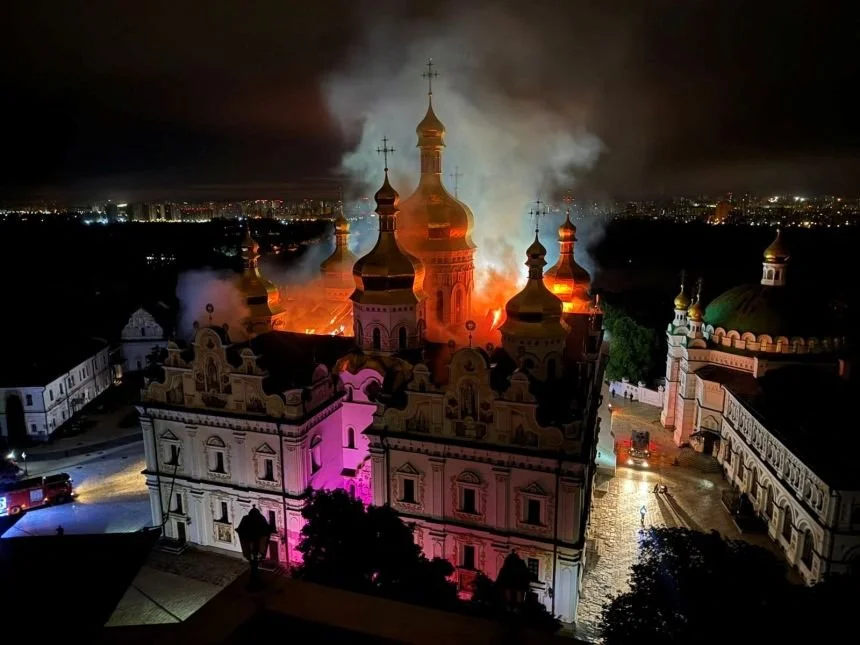
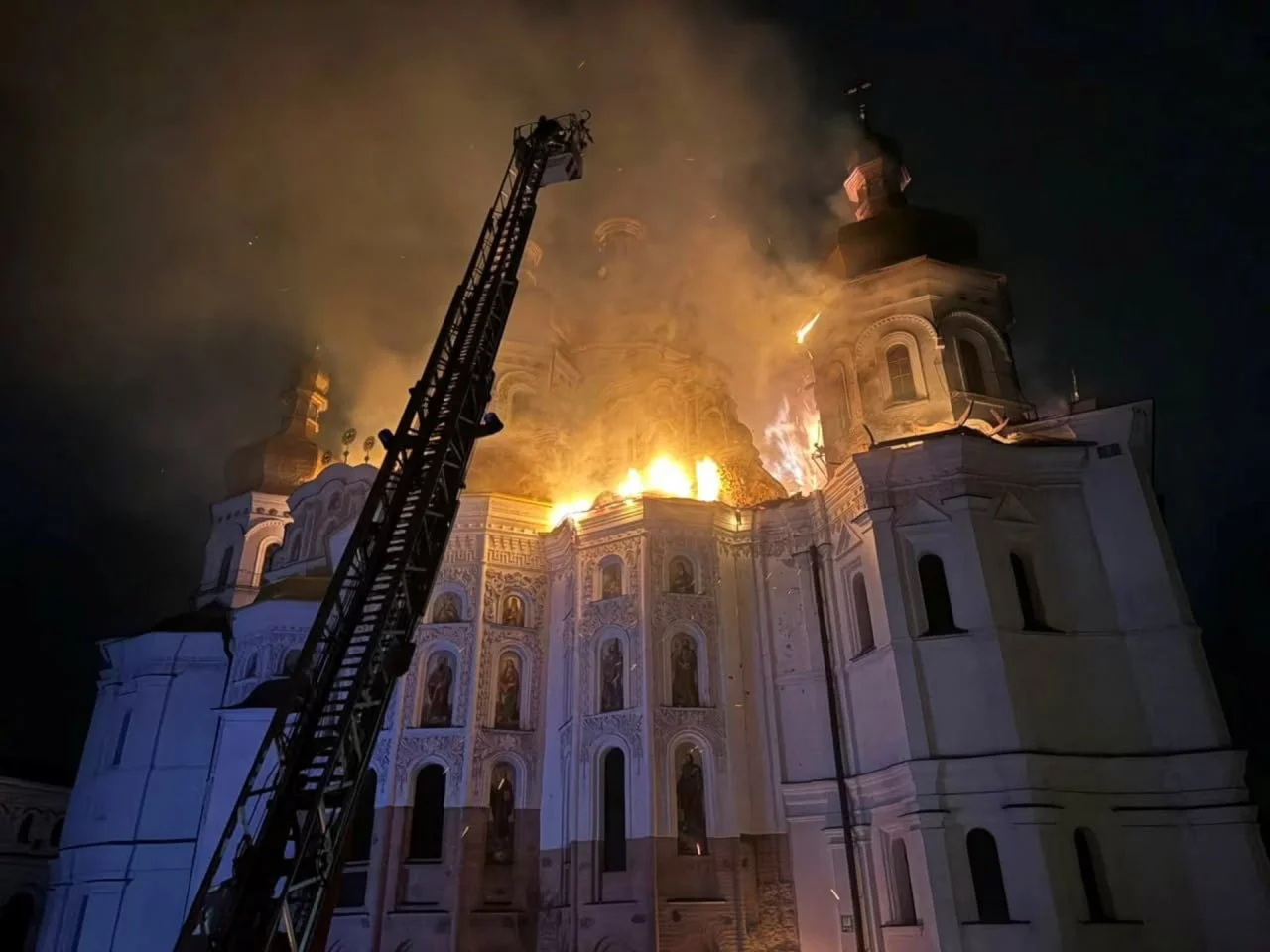
Among the targets was the Kyiv Pechersk Lavra — an 11th-century Orthodox monastery and UNESCO World Heritage site, one of the most sacred religious places in Ukraine. A fire broke out on the roof of the Assumption Cathedral, while a separate fire damaged the nearby Art Arsenal cultural complex. The attack killed several civilians and injured dozens, including children.
This strike on one of Ukraine's holiest sites is a vivid illustration of the pattern S. 4379 and H.R. 8433 seek to document and punish: the destruction of religious heritage as part of Russia's broader war against Ukraine.
Why Congress Must Act
Religious freedom is a human right. Targeting churches, clergy, and places of worship is a direct violation of international humanitarian law and the fundamental right to practice one's faith without fear.
Accountability deters further abuses. Documenting violations and sanctioning those responsible sends a clear signal that the destruction of sacred sites and persecution of believers will carry consequences.
U.S. leadership on religious freedom matters globally. As one advocate put it, the legislation provides essential accountability by requiring documentation of abuses and mandating sanctions on perpetrators, reinforcing U.S. leadership in promoting international religious freedom.
Take Action
Contact your Representative and U.S. Senators today and urge them to support S. 4379 and H.R. 8433, the Countering Russia's War on Faith Act.