
Striking the Source: How Ukraine's Deep Strikes Are Draining Russia's War Machine
A New Reach
This week, Ukraine demonstrated just how far its arm now extends.
On June 5, Ukrainian long-range drones struck the Ukhta oil refinery in Russia's Komi Republic, a facility located roughly 1,750 kilometers (about 1,090 miles) from the Ukrainian border, in one of the deepest strikes of the entire war.
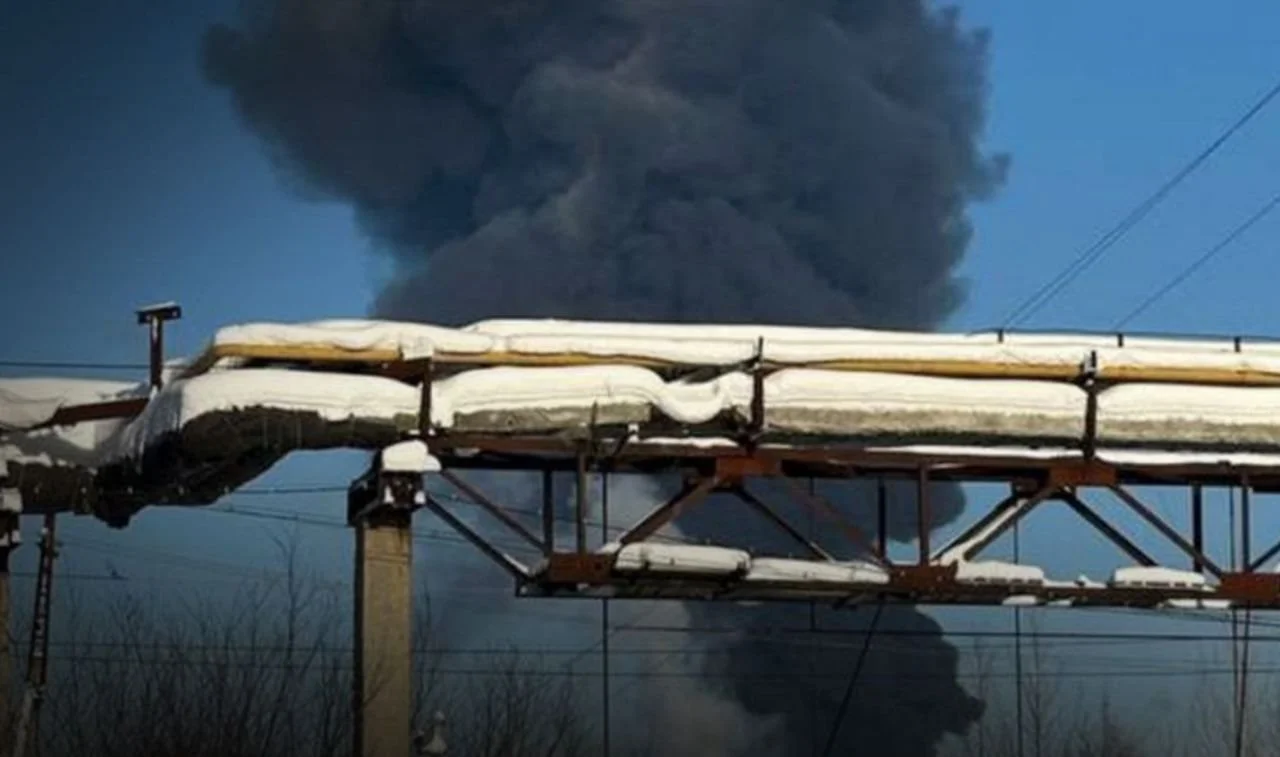
The refinery, part of Russia's state-owned Lukoil, processes around 4 million tons of oil annually and, according to Ukraine's General Staff, supplies Russia's military.
It was not an isolated event. Over recent days, Ukrainian forces have struck refineries and oil depots across Russia, from the Grushevaya depot near Novorossiysk to facilities in Samara, Saratov, and beyond.
This is a sustained, deliberate campaign, and it is reshaping the economics of Russia's war.
Why Oil? Why Now?
Oil and refined fuel are the financial engine of Russia's war. Refineries turn crude into the gasoline and diesel that move Russian tanks, trucks, and supply convoys, and into the export revenue that fills the Kremlin's war chest.
By striking refineries directly, Ukraine attacks both at once: the fuel that powers the front, and the money that funds it.
The strategy is having a measurable effect. According to data cited by Bloomberg, Ukrainian strikes have helped push Russian refinery throughput to its lowest level since 2009.
In May 2026 alone, Ukraine reportedly carried out at least 30 strikes on Russian oil facilities, hitting eight of the ten largest companies in the sector. At one point this spring, Reuters reported that nearly all major refineries in central Russia had been forced to shut down or cut production, affecting roughly a quarter of Russia's total refining capacity.
The Pain Reaches Ordinary Russia and Occupied Territory
The consequences are now visible at gas stations across Russia. Fuel shortages and rationing have spread to dozens of regions, and even Moscow and St. Petersburg have seen limits and record-high wholesale prices. The Russian government has repeatedly banned gasoline exports to keep fuel at home.
The situation is especially difficult in occupied Crimea, where, since late May, gasoline has reportedly been sold only via coupons, with drivers facing strict daily limits. Russian officials have even discussed raising fuel prices specifically to help finance air defenses for the refineries, an admission of just how much these strikes are costing them.
A Strategy Built on Innovation
What makes this campaign possible is Ukraine's rapidly advancing drone industry. Just a year or two ago, Ukraine rarely reached deep into Russia and almost never struck the same refinery repeatedly.
Now Ukrainian drones can reach targets well over 1,000 miles away, and hit them again and again, faster than Russia can repair the damage. This is Ukrainian ingenuity turning necessity into a strategic advantage.
Where the United States Comes In
Here is the crucial connection. Ukraine is doing extraordinary work to choke off the production side of Russia's oil economy. But Russia still earns enormous revenue from exporting crude, and that is where U.S. policy matters most.
As long as loopholes and waivers allow Russian oil to keep flowing to global markets, the Kremlin retains a financial lifeline that even the most successful refinery strikes cannot fully cut.
That is why legislation like the End Russian Oil Windfalls Act (H.R. 8222) is so important: it would terminate the licenses that permit limited transactions in Russian oil and impose stronger sanctions on Russian oil companies, closing the gap between Ukraine's battlefield success and Russia's continued export earnings.
Ukraine is striking the source.
The United States can help close the wallet.
The Bottom Line
Ukraine's deep-strike campaign is one of the clearest signs that the war is not stalemated, and that pressure on Russia is working.
Ukrainian innovation is draining the fuel and the funds that power Russia's aggression. To make that pressure decisive, the United States should match Ukraine's resolve by tightening the sanctions that limit Russia's oil revenue.