
Weekly Ukraine Defense Brief:June 1-8, 2026
On the ground, Ukrainian forces have largely blunted Russia’s spring–summer offensive while the drone war intensifies. Allied funding remains the center of gravity: NATO’s PURL mechanism is set for new contributions in June, and 2026 allied commitments have hit a record above $45 billion.
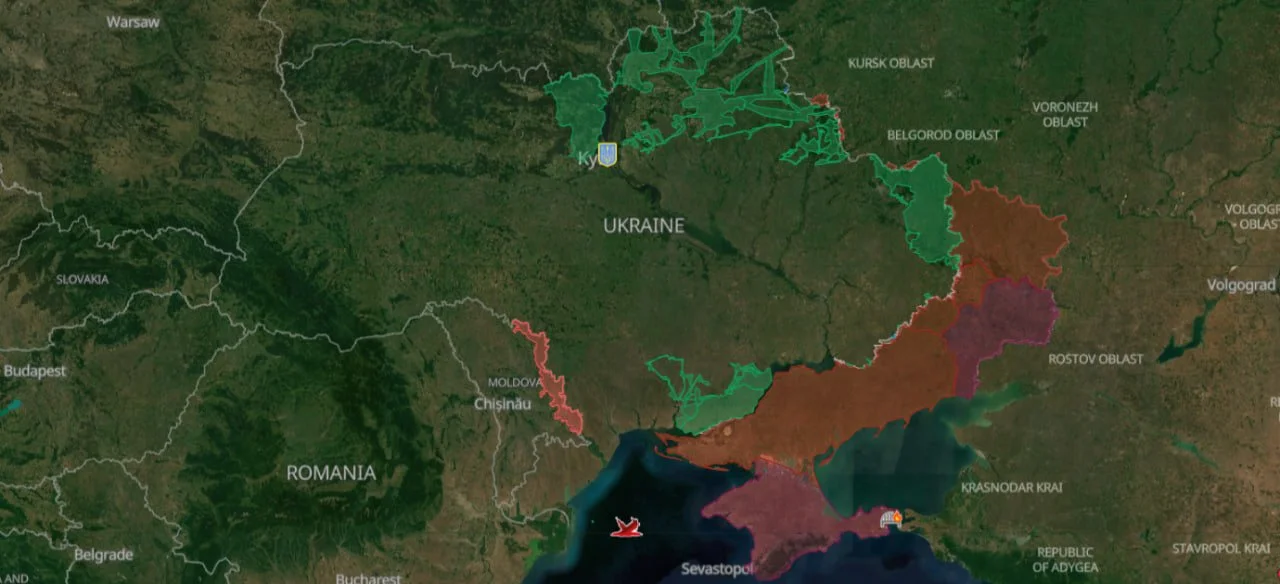
DeepState Map
Congressional Action
House Passes Ukraine Aid & Russia Sanctions
On Thursday, June 4, the House voted 226–195 to approve a combined Ukraine assistance and Russia sanctions package — the chamber’s first significant pro-Ukraine financial measure in more than two years. Eighteen Republicans crossed over to join Democrats; the bill was led by Rep. Gregory Meeks (D-NY), ranking member of the House Foreign Affairs Committee.
Principal provisions, as reported:
Up to $8 billion in loans for Kyiv to purchase U.S. military equipment.
Additional security/military assistance (reported in the range of several hundred million to ~$1.8 billion) plus $300 million annually in FY2026 and FY2027 to train and equip Ukrainian forces.
Assistance for the Baltic states (Estonia, Latvia, Lithuania).
Sanctions targeting Russia’s energy, mining, and financial sectors, plus secondary sanctions on foreign banks, firms, and governments that help Moscow evade existing restrictions.
A 500% tariff on Russian goods imported to the U.S. and a ban on imports of Russian crude oil.
Outlook. The measure now moves to the Senate, where it would need 60 votes to advance; the administration has previously blocked similar penalties, and the President is expected to veto the bill if it reaches his desk.
Staff should treat House passage as a political signal of cross-party support rather than a near-term change in policy.
Allied & NATO Assistance
Funding Remains the Center of Gravity
PURL: Following a Ukraine-NATO Council meeting, partners signaled new contributions to the Prioritized Ukraine Requirements List in June. Six countries have already committed over $2 billion through PURL, with six more reportedly prepared to join. The mechanism has supplied roughly 75% of missiles for Ukraine’s Patriot batteries and ~90% of interceptors for other air-defense systems since its 2025 launch.
Record 2026 commitments: Allies have agreed to transfer more than $45 billion in weapons and materiel during 2026 — a single-commitment record. Germany’s 2026 contribution of roughly €11.5 billion ($13.5B) prioritizes air defense (IRIS-T), drones, artillery shells, and Patriot interceptors.
U.S. cost posture: The administration maintains the U.S. will not fund the new assistance; it is to be financed by NATO allies, with some systems delivered to backfill European stocks sent forward to Ukraine. Note the supply constraint: complex systems such as Patriot batteries take roughly five to seven years to produce.
Battlefield Assessment
Offensive blunted: Per the June 1 ISW assessment, Ukrainian forces have largely halted Russia’s spring–summer 2026 offensive. Russian gains in May 2026 covered only a fraction of the territory taken in May 2025.
Net territory: Russian forces gained or infiltrated ~40.6 sq km between December 2025 and May 2026, but lost ~281.1 sq km of previously controlled territory over the same period.
Drone war intensifying: Ukraine mounted one of its largest drone attacks on Moscow and the surrounding regions of the war in May 2026; Ukrainian commands report drone strikes degraded Russian logistics and destroyed 105+ artillery systems in May.
Diplomatic Track
Negotiation efforts continue along several tracks, including the 2026 U.S.–Ukraine–Russia meetings in Geneva. A June 2 EU summit draft indicated the bloc is ready to “step up” its role in talks but maintains that a ceasefire must come first. Earlier 2026 commitments from France and the UK on security guarantees and potential troop/“military hub” contributions remain part of the backdrop.
Items to Watch
Senate disposition of the House bill (60-vote threshold) and any veto-override math.
Formal announcement of the next PURL contribution tranche, expected this month.
Air-defense interceptor supply — the binding constraint on Ukraine’s ability to counter Russian strikes.
Whether the spring–summer offensive resumes momentum after being stalled.
Methodology & caveat: This brief is an automated weekly summary compiled from open-source reporting for the week of June 1–8, 2026. Figures (e.g., specific dollar amounts in the House bill) vary slightly across outlets and are presented as reported; verify against primary documents before citing in official materials.
Not legal, financial, or official policy guidance.