
Why Is a Refinery Feeding Russia’s Missile Makers Still Not Sanctioned?
The new Graham sanctions law gives Treasury the tools to close a gap in America’s Russia sanctions. The first review is due October 18.
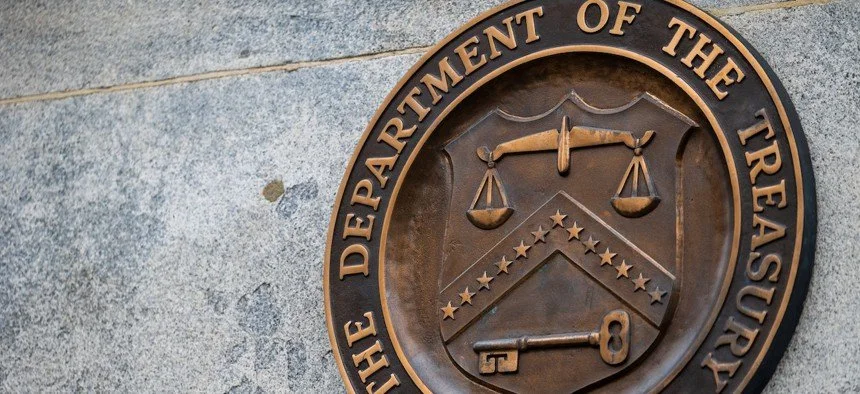
On September 18, the Lindsey O. Graham Sanctioning Russia and Iran Act became law after passing the Senate 86-11 and the House 262-159. Section 102 requires the administration to review foreign companies that supply Russia’s defense industry and to sanction those that do.
The first review is due on October 18, with new reviews every 180 days. One case shows clearly what this provision was written to address: Aughinish Alumina, Europe’s largest alumina refinery, and the Moscow trader that moves its output toward Russian weapons factories.
A Sanctions Map With a Missing Piece
The United States has already sanctioned five Russian defense manufacturers connected to this supply chain: the makers of the Iskander-M ballistic missile, the T-72 tank, self-propelled howitzers, KAMAZ military trucks, and guidance gyroscopes for the Kh-101 cruise missile. Yet the companies that supply them with raw material remain untouched.
Sanctioning the end users of a supply chain limits their access to Western finance, but it does not stop material from reaching their factories. Section 102 shifts the focus upstream, to the foreign companies that keep Russia’s arms production supplied. That is where sanctions can change what Russia is physically able to build.
From Limerick to the Front Line
Aughinish Alumina sits on the Shannon Estuary in County Limerick, Ireland. It refines bauxite into alumina, the white powder that smelters turn into aluminum, a core material for missiles, armored vehicles and military aircraft.
The refinery is owned by Rusal, Russia’s aluminum giant. Since the full-scale invasion of Ukraine, Russia has become its biggest customer. Exports to Russia roughly doubled between 2020 and 2024, to more than 826,000 tonnes. Rusal’s Krasnoyarsk smelter in Siberia receives about two-thirds of its alumina from Limerick.
An investigation by OCCRP and The Irish Times traced aluminum from Rusal’s smelters to a Moscow trader, Aluminium Sales Company, which bought more than $640 million of it between 2022 and 2025 and earned about a third of its revenue from defense contracts. Ukrainian investigators have linked the same chain to the plant that produces guidance gyroscopes for Kh-101 cruise missiles, which Russia continues to launch against Ukrainian cities.
Why the Law Fits This Case
Rusal is controlled by Oleg Deripaska, who has been on the Treasury’s sanctions list since April 2018 and was indicted in the United States in 2022 for sanctions evasion. In January 2019, Treasury lifted sanctions on Rusal and its parent company, En+, after Deripaska agreed to reduce his stake and give up control. A later Kremlin decree changed the rules for Western shareholders, and in 2026 Swedish authorities concluded that Deripaska again controls the group.
Section 102 applies to any foreign company that knowingly supplies goods relating to Russia’s defense industrial base, and the law defines “knowingly” to include what a company should have known. After years of public investigations into this supply chain, the case is clear. The first review is an opportunity to show that the new law works as Congress intended.
A Solution That Protects Ireland
This is not a measure against Ireland, a close friend of both the United States and Ukraine. The refinery employs hundreds of people in Limerick and supplies electricity to the Irish grid.
The American Ukraine Committee proposes pairing a designation with a time-limited license that would allow the refinery to be sold to a non-Russian owner. The plant keeps operating, and the jobs stay in Ireland. Only the Russian owner and the Russian defense customers are removed from the picture. Europe has discussed restrictions on the plant, and U.S. action under the new law can offer a practical path forward that serves both sides of the Atlantic.
What Congress Can Do Now
On September 30, the bipartisan leaders of the House Ukraine Caucus, Representatives Marcy Kaptur, Mike Quigley, Brian Fitzpatrick and Joe Wilson, wrote that “easing sanctions will embolden Russia and prolong the war,” and said they expect the first sanctions by October 18.
The committees that oversee the law (Foreign Affairs and Financial Services in the House, Foreign Relations and Banking in the Senate) can now ask Treasury in writing whether Aughinish Alumina and Aluminium Sales Company were considered in the first review. A letter from members of Congress to Secretary Scott Bessent is the most direct way to put this case on the record.
Sanctions Work Best at the Source
The strength of a sanctions policy is measured not by the number of names on a list, but by whether it changes what the targeted country can produce. Five Russian weapons makers are already sanctioned. Cutting off the refinery and the trader that supply them would turn that list into real pressure on Russia’s ability to build missiles and tanks. October 18 is the first test, and with reviews every 180 days, it will not be the last. Consistent enforcement is how this law will deliver results for Ukraine and for U.S. security.
How You Can Help
Contact your members of Congress and urge them to write to Treasury Secretary Bessent in support of sanctioning Aughinish Alumina and Aluminium Sales Company. It takes less than a minute.
Your voice carries special weight if you live in a state represented on the key committees: AR, CA, CT, FL, ID, IL, MD, MA, MS, NH, NJ, NY, NC, OH, PA, RI, SC, TN or TX. Write to stasya@amukr.org with your state and ZIP code, and we will send you direct contacts for your congressional offices along with the briefing materials.
Every voice counts. Stay with us:
💬 Join our WhatsApp community
📩 Get updates from Capitol Hill
❤️ Help us keep the pressure on