
Russian Diesel and the Law: What Happens on October 18?
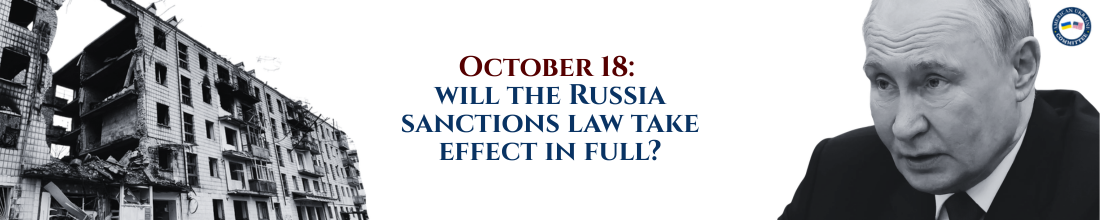
Russian diesel, banned from the U.S. market since 2022, may soon reach American and global buyers. On October 9, the administration announced a deal with Moscow to supply it. Two days later, seven senators from both parties said the decision conflicts with federal law.
And on October 18, the most comprehensive Russia sanctions law in years reaches its first major deadline.
Here is what happened, what the law requires, and why the coming week matters for Ukraine.
What Was Announced
After a phone call with Vladimir Putin, President Trump announced that Russia had agreed to supply diesel fuel to the American and global markets, describing the conversation as a "highly successful discussion."
According to the President, Russia will deliver over 300,000 tons immediately, 500,000 tons in November, 1 million tons after that, and up to 3 million tons more, depending on the condition of its refineries.
The Treasury Department issued a temporary license the same day. The Wall Street Journal reported that sanctions on Russian diesel exports will be suspended for about six months.
The stated goal is lower fuel prices. Lower costs for farmers, ranchers and truckers, the President wrote, are his "Greatest Priority." The national average diesel price stood at $6.23 per gallon on October 9, after a record $6.52 in September.
What the 2022 Law Says
In 2022, Congress passed the Ending Importation of Russian Oil Act with broad bipartisan support. It bans imports of Russian energy products into the United States, including petroleum products such as diesel.
The law sets clear conditions for lifting that ban. The President must certify to Congress that Russia:
has reached an agreement to withdraw its forces and halt hostilities, accepted by the government of Ukraine
poses no immediate military threat to any NATO member
recognizes the right of the people of Ukraine to choose their own government
The process is also defined. The administration must consult four congressional committees at least 45 days before any certification and explain its reasoning. The ban ends only 90 days after certification, and Congress can block it with a joint resolution of disapproval.
Seven Senators, Two Parties, One Message
On October 11, Senate Foreign Relations Committee Ranking Member Jeanne Shaheen (D-NH) was joined by Susan Collins (R-ME), Richard Blumenthal (D-CT), Lisa Murkowski (R-AK), Ron Wyden (D-OR), Thom Tillis (R-NC) and John Curtis (R-UT) in a joint statement on the legality of Russian diesel imports.
Four Republicans and three Democrats signed it.
The senators recalled that Congress banned Russian energy imports so that American dollars would not finance the war against Ukraine. They noted that the administration has not consulted Congress or submitted the explanation the law requires. Their conclusion was direct: the United States should not provide Putin with "a financial lifeline" while Russia continues to kill Ukrainian civilians.
Why October 18 Matters
The Lindsey O. Graham Sanctioning Russia and Iran Act became law on September 18, after passing the Senate 86 to 11. It gives the administration 30 days to put its measures into effect, which makes October 18 its first major deadline. The Act calls for:
blocking sanctions on major Russian financial institutions, including Sberbank, VTB and Gazprombank
sanctions on vessels of Russia's shadow fleet and those who support them
tariffs of up to 500% on Russian-origin goods
tariffs of up to 100% on the largest importers of Russian crude oil and natural gas
The President may waive these measures, but only by certifying to Congress that a waiver is in the national interest and explaining the basis for it. The Associated Press noted that the diesel deal raises questions about whether new sanctions will be imposed this month. On October 18, Congress should receive either full implementation or a written justification for any exception.
The Real Test Is Credibility
The diesel may never arrive. Russia has restricted its own diesel exports since early July, and Ukrainian strikes on Russian refineries continue to cut its output. Even the larger volumes announced on October 9 depend on the condition of Russian refineries. Energy analysts doubt Moscow can deliver what it promised, and one described the likely effect on prices as "not a needle mover."
Two policies are moving in opposite directions. In the same month, Washington is due to impose tariffs on the largest buyers of Russian oil and gas, while easing sanctions on Russian diesel. Buyers in India, China and the shadow fleet trade are watching which signal is stronger. Sanctions work only when markets believe they will last.
This is about process, not party. Lower fuel prices are a goal shared across the political spectrum. But both the 2022 law and the 2026 Act give Congress a defined role in any easing of Russia sanctions. Four Republicans and three Democrats have already asked for that role to be respected. The question now is whether a temporary and uncertain supply from Russia is worth weakening the sanctions framework Congress built over four years.
What Comes Next and How You Can Help
On October 18, the administration must either put the Graham Act into effect or explain any waiver to Congress. Congress returns to Washington after the November elections, but congressional offices are working now, and they are listening to their constituents.
Contact your Representative and Senators today and urge them to:
keep the diesel license temporary and restore full sanctions on Russian diesel;
ensure Congress reviews any significant easing of sanctions on Russia;
support full and timely implementation of the Sanctioning Russia and Iran Act;
Source: Ranking Member Shaheen and Six Bipartisan Senators' Statement on Legality of Imports of Russian Diesel Fuel, U.S. Senate Committee on Foreign Relations, October 11, 2026
Every voice counts. Stay with us:
💬 Join our WhatsApp community
📩 Get updates from Capitol Hill
❤️ Help us keep the pressure on