
350 Votes Defended Ukraine Funding. Now, Pass the Graham Sanctions Bill.
It takes two minutes. It could take the war closer to ending.
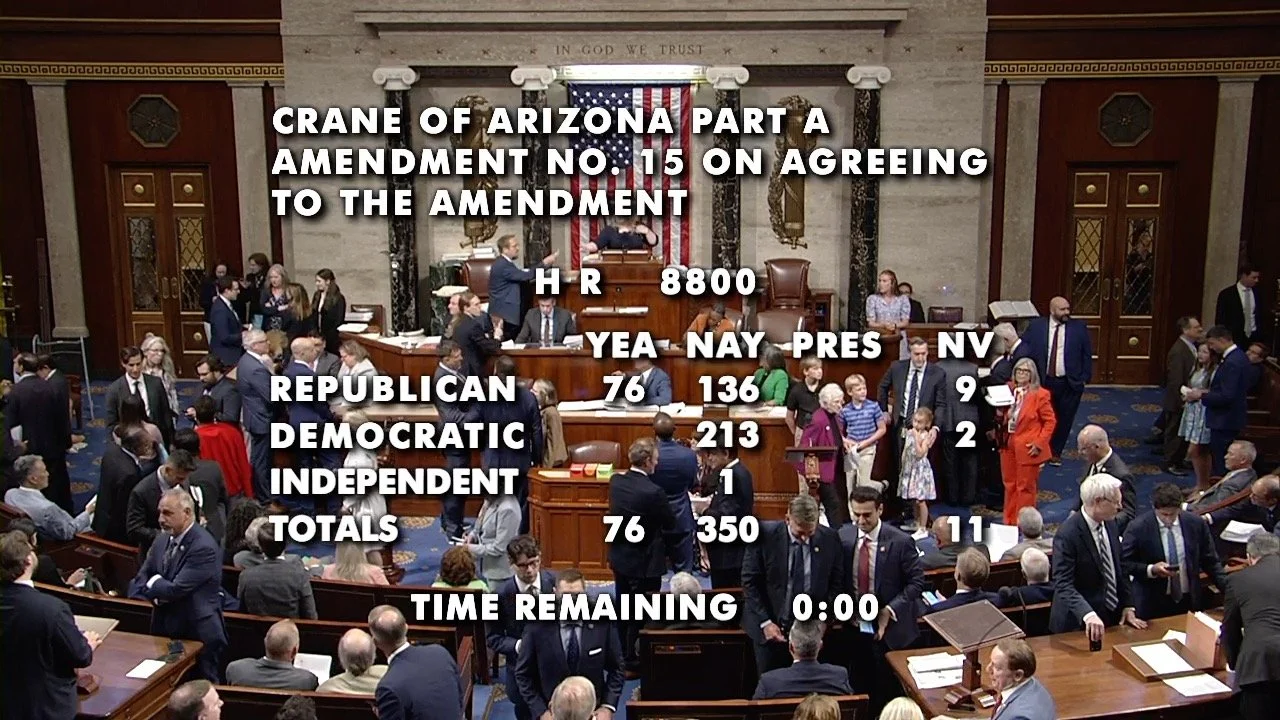
Congress sent an unmistakable signal this week: support for Ukraine remains strong, bipartisan, and durable, even four years into the war. The House voted 350-76 to reject an amendment that would have banned FY27 defense funding from being used to support Ukraine. Now the Senate has a chance to build on that momentum by passing the strongest Russia sanctions package ever introduced in Congress.
The House Vote:
A Resounding Bipartisan Defense of Ukraine
The amendment, offered to the FY27 National Defense Authorization Act, would have blocked defense funds from supporting Ukraine's fight against Russia's invasion. The House rejected it decisively: 350 members voted no, only 76 voted yes. The breakdown tells the real story. Among Republicans, 136 voted to reject the amendment against 76 in favor, meaning most Republicans stood with continued support for Ukraine. Among Democrats, the vote was nearly unanimous: 213 against the amendment, just 2 in favor.
Representative Don Bacon (R-NE), who highlighted the vote, put it plainly: "America must continue to stand with Ukraine as it fights Putin's illegal and failing war."
That sentiment, shared across party lines, is exactly the foundation Congress needs to finish the job on sanctions.
The Next Step: S. 5025, the Lindsey O. Graham Sanctioning Russia Act of 2026
If the NDAA vote shows Congress's will to keep helping Ukraine defend itself, S. 5025 is how Congress can help end the war faster. The bill, negotiated by the late Senator Lindsey Graham before his passing, now carries more than 60 bipartisan cosponsors and a procedural path toward a Senate floor vote before the August recess.
S. 5025 would impose mandatory sanctions on Russian leadership, the military, state banks, and the shadow fleet Moscow uses to evade existing restrictions, all within 30 days of enactment. It would also authorize tariffs of up to 100% on the largest foreign buyers of Russian oil and gas, targeting the revenue that finances the war directly.
Two Votes, One Message
Defense funding and sanctions legislation are different tools, but they serve the same purpose: making sure Russia's aggression fails and Ukraine's defense succeeds. The NDAA vote shows that a broad, bipartisan majority in the House still believes that. The Senate can now translate that same bipartisan spirit into law by passing S. 5025.
Momentum Should Be Used,
Not Left on the Table
A 350-76 vote is not a close call, it is a mandate. It confirms that support for Ukraine is not a fringe position in either party, and it removes any excuse for Washington to let momentum on sanctions stall. Senator Graham spent his final months building the coalition behind S. 5025. The House just showed, again, that the coalition for Ukraine is real and it is wide. The Senate should finish what both chambers have now made clear they want: sustained American support for Ukraine and real consequences for Russia.
Support the Lindsey O. Graham Sanctioning Russia Act of 2026
As the war in Ukraine continues, it is critical to severely restrict Moscow's war finances and force a conclusion to the conflict. The bipartisan Lindsey O. Graham Sanctioning Russia Act of 2026 would impose mandatory sanctions on Russian leaders, the military, and the energy sector, while placing heavy tariffs of up to 100% on the largest foreign buyers of Russian oil and natural gas.
60+ bipartisan cosponsors. One step from the Senate floor.