
As President Trump Refocuses on Ukraine, Allies Push for a Unified Front on Russia
With the immediate crisis in Iran behind him, President Trump is once again turning his attention to ending Russia's war against Ukraine, a shift that has left European allies both hopeful and wary as they gathered for the G7 summit in France.
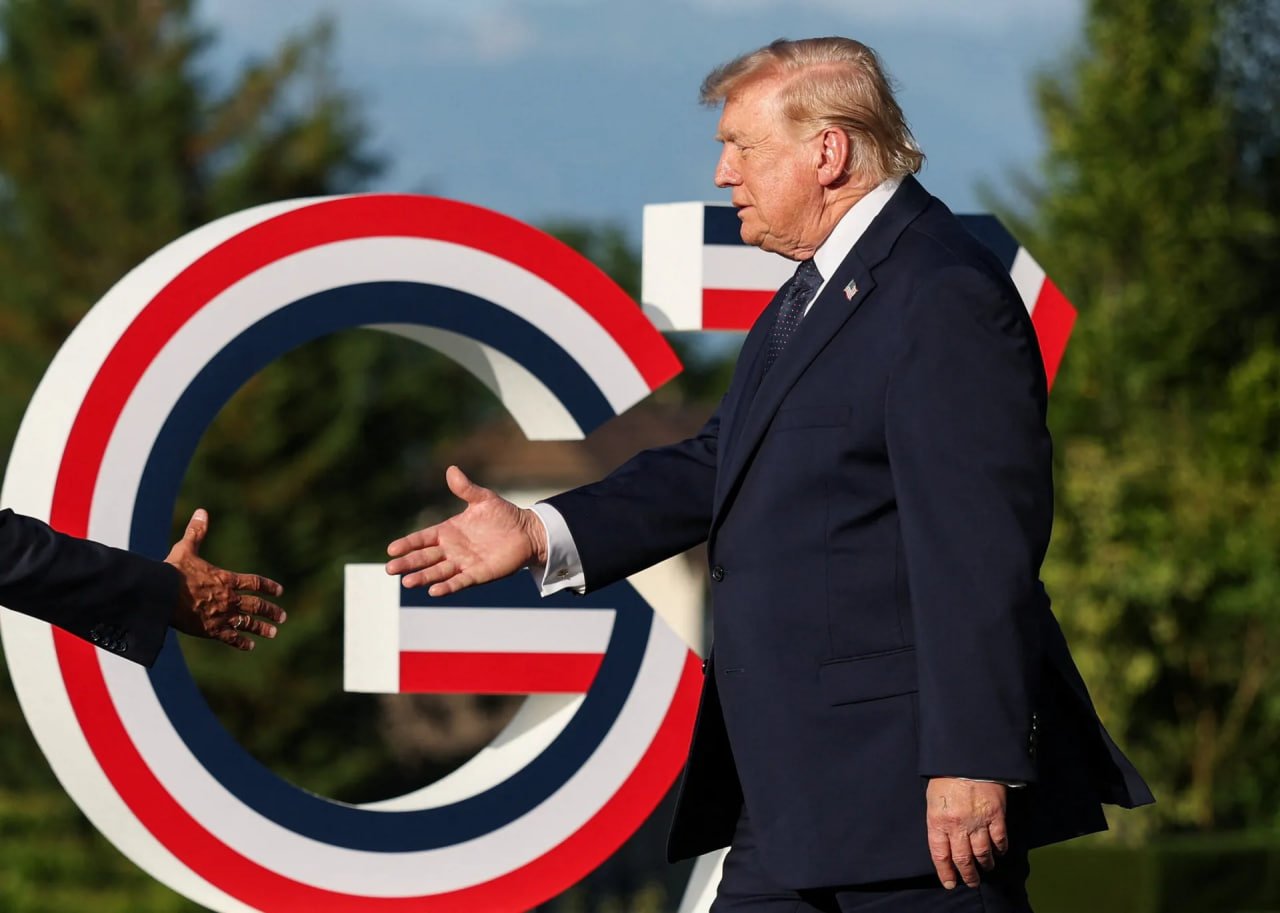
Photo: Isabel Infantes via Getty Images
Trump arrived in good spirits, telling reporters that things were going well before a friendly meeting with French President Emmanuel Macron. He then signaled his intention to use his newfound focus to push for a resolution to the war, reiterating concern over the scale of casualties being suffered each month.
While the sentiment was welcomed, it also raised a familiar worry among European officials: that a re-engaged American president might attempt to take the lead on negotiations without fully coordinating with allies who have spent years building a unified strategy of pressure on Moscow.
This concern is not new.
Throughout the war, European leaders have worked to maintain what they describe as a strategy of maximum pressure, sustained sanctions, military support, and a firm rejection of Russian demands for Ukrainian territorial concessions.
They now hope to bring the United States fully into alignment with that approach, rather than risk a separate American track that could weaken the collective position.
The stakes were underscored by European Commission President Ursula von der Leyen, who confirmed that the EU's financial support, roughly €90 billion, is currently covering about two-thirds of Ukraine's funding needs for this year and next.
She called on other G7 partners, implicitly including the United States, to help close the remaining gap. Von der Leyen also highlighted that the EU had just taken a major step forward by agreeing to open formal membership negotiations with both Ukraine and Moldova, framing it as recognition of Ukraine's progress and reform efforts.
European Council President António Costa reinforced the message of unity, noting that the war has now stretched on longer than World War I and that sustained, collective resolve among G7 nations remains essential to bringing it to a just end.
Yet signs of potential friction emerged even before formal talks began. President Trump revealed that he had spoken separately with both President Zelensky and President Putin over the weekend, expressing optimism that a resolution might be within reach. Reports also indicated that Trump's envoys would soon travel to Moscow for further discussions, a development that added to European unease about being sidelined in shaping the terms of any eventual settlement.
Two Unresolved Questions
Central to the diplomatic balancing act this week are two unresolved questions: how to bring genuine pressure on Russia to negotiate seriously, and who among Ukraine's allies should help shape the terms of any talks.
On the first point, the European Union is preparing a new package of sanctions targeting Russia's shadow fleet of oil tankers and reinforcing the existing price cap on Russian oil exports. However, the U.S. has taken a different approach in recent months, having eased certain energy-related sanctions amid global price pressures, a divergence that complicates efforts to present a fully unified front.
On the question of representation, Ukrainian and European officials have been clear that any future negotiations must include Europe not merely as an observer, but as a full partner with direct interests at stake.
Notably, France, Germany, and the United Kingdom have already taken initial steps toward direct engagement with Russian officials, reiterating long-standing demands: a complete and immediate ceasefire, strong security guarantees for Ukraine, and the current front line as the only acceptable starting point for any talks, explicitly ruling out Ukrainian territorial concessions.
The coming weeks will reveal whether the United States chooses to fully align with this approach or pursue a more independent path.
For Ukraine's allies, the message remains consistent: sustained pressure on Russia, anchored in sanctions and unwavering support for Ukraine's sovereignty, is the only path to a peace that does not reward aggression.
Source: Politico