
Ukraine Advances at Lyman as Russia Shifts to a Winter Strike Campaign
Key Takeaways
Ukraine's 3rd Army Corps completed the third stage of Operation Vivaldi on the Lyman front: 2,000 Russian personnel lost and more than 250 taken prisoner.
Russia is striking Ukraine's communications infrastructure, including the Kyivstar headquarters and data centres in Kyiv.
According to ISW, the Kremlin now relies on massive missile and drone strikes to try to force Ukraine to capitulate before spring 2027, while its ground offensive has stalled.
Russia is scaling up production of the S8000 Banderol, a low-cost jet-powered strike weapon built to overload Ukrainian air defense.
Ukrainian long-range strikes damaged at least five workshops at the Azov Optical-Mechanical Plant, a sanctioned producer of Russian missile components.
Frontline:
Operation Vivaldi Reaches a Turning Point
Brigadier General Andrii Biletskyi, commander of the 3rd Army Corps, reported that the third stage of Operation Vivaldi on the Lyman front in Donetsk Oblast cost Russian forces 2,000 personnel, with more than 250 Russian soldiers taken prisoner.
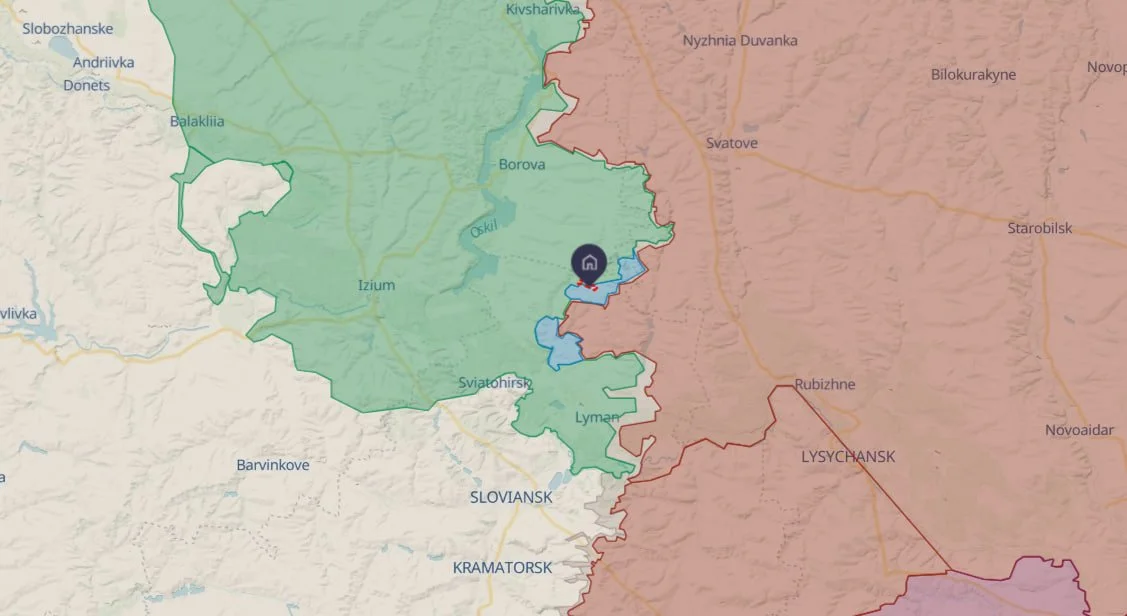
He described the result as "a turning point in the entire operation." The main objective was Nove, a key Russian hub on the bridgehead.
According to Biletskyi, whoever controls the high ground around the settlement holds the initiative on the bridgehead. Russian commanders expected the main Ukrainian effort along the Shandryholove and Zelena Dolyna axis and spent their reserves on counterattacks there. "The Russians slept through the real attack, which was focused on capturing Nove," he said.
To break through Russian defenses, the 3rd Army Corps used its own innovation: Soviet-era BTR-60 armored personnel carriers converted into robotic kamikaze vehicles and used against the strongest fortifications. "Russian troops surrendered in entire units, along with their officers, pilots and artillerymen," Biletskyi said.
President Volodymyr Zelenskyy had earlier reported "significant results" on the Lyman front as part of Operation Vivaldi, as well as successes by the Air Assault Forces during another active defense operation. The current situation on this axis can be followed on the DeepStateMap.
Russia Targets
Ukraine's Communications Network
On September 27, Russia struck the Kyiv headquarters of Kyivstar, Ukraine's largest mobile operator; the company reported no casualties.
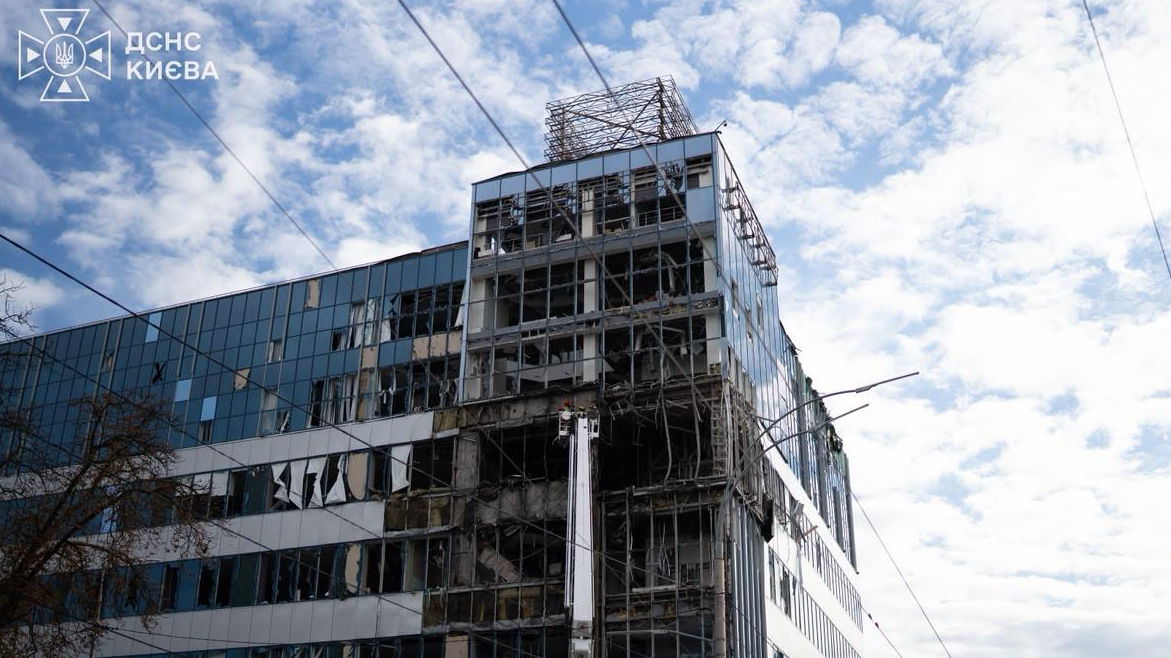
Russia's defense ministry also claimed a strike on a data centre belonging to Vodafone Ukraine, the country's second-largest mobile network.
President Zelenskyy said a data centre in Kyiv was hit twice that morning, wounding two children and an adult.
Over the past week, strikes on the data centres of Ukrainian internet providers caused outages for about 100,000 households in Kyiv and the surrounding region, according to Ukraine's Ministry of Digital Transformation. Foreign Minister Andrii Sybiha warned that Russia seeks "to disrupt the flow of information," noting that rapid alerts about missile and drone threats "save lives."
Attacks on civilians continued overnight on September 28. A strike on the Stolychnyi market near Kyiv killed two people and wounded nearly ten. Residential and office buildings and a gas station were hit in the Podilskyi, Shevchenkivskyi, and Obolonskyi districts, wounding three minors. In Kharkiv, a guided aerial bomb struck a residential high-rise, wounding at least 20 people.
Strategic Assessment:
The Kremlin's New Theory of Victory
In its September 27 assessment, the Institute for the Study of War (ISW) concluded that the Kremlin is shifting to massive, combined strikes with ballistic missiles and jet-powered drones to try to force Ukraine to surrender before spring 2027.

A prominent Kremlin-aligned military blogger conceded that the frontline has stalled, with almost no net Russian territorial gains in recent months as Ukraine conducts counteroffensives.
The campaign assumes that Ukraine cannot intercept jet-powered drones at scale, will face a shortage of Patriot interceptors against ballistic missiles this winter, and that its energy and critical infrastructure will not withstand the coming months of strikes. On September 25, Vladimir Putin said Ukraine "must feel" Russia's "retaliatory" strikes, signaling escalation into winter. ISW assesses that the Kremlin is unlikely to engage in serious ceasefire negotiations until this approach has run its course.
Defense Tech Watch: S8000 Banderol
Russia is scaling up serial production of the S8000 Banderol, a small jet-powered strike weapon developed by Kronshtadt JSC and first identified in Ukraine in 2025.
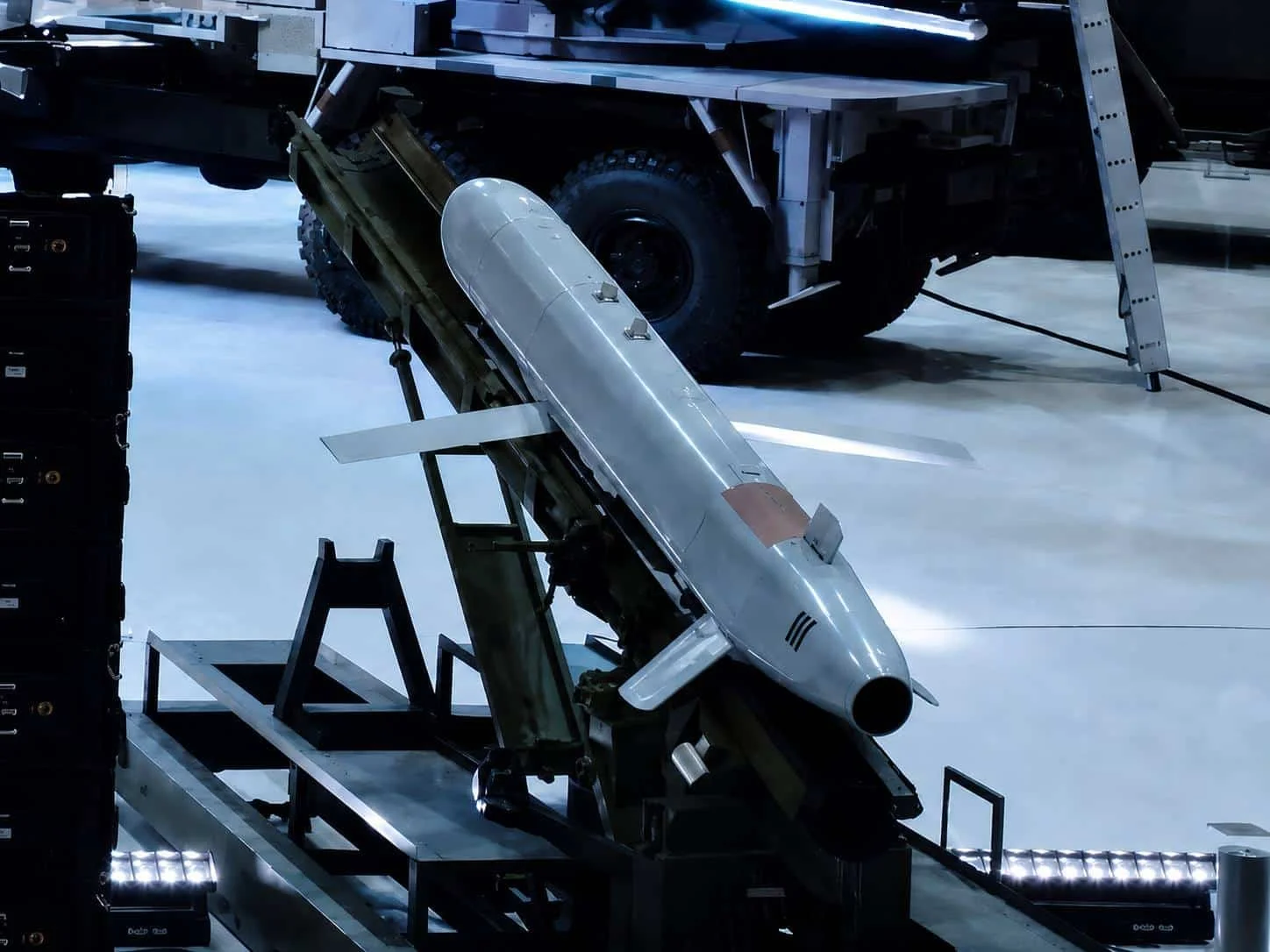
It sits between a cruise missile and a one-way attack drone, and is launched mainly from Orion UAVs and also from Mi-28 helicopters, so Russia can use it without strategic bombers. The weapon is far cheaper than a conventional cruise missile but fast enough to require sophisticated air defense.
At a reported capacity of 80 units per month, Russia could field nearly 1,000 additional long-range strike weapons per year, according to the Serpens Center. The goal is clear: to present more targets to Ukrainian air defense while preserving Russia's more expensive missile stock.
Ukraine Strikes Back:
Azov Optical-Mechanical Plant
On the night of September 25 to 26, the Security Service of Ukraine and the Ukrainian Navy struck the Azov Optical-Mechanical Plant in Russia's Rostov Oblast using Neptune cruise missiles and Ruta, Palianytsia, and Bars jet-powered drone missiles.
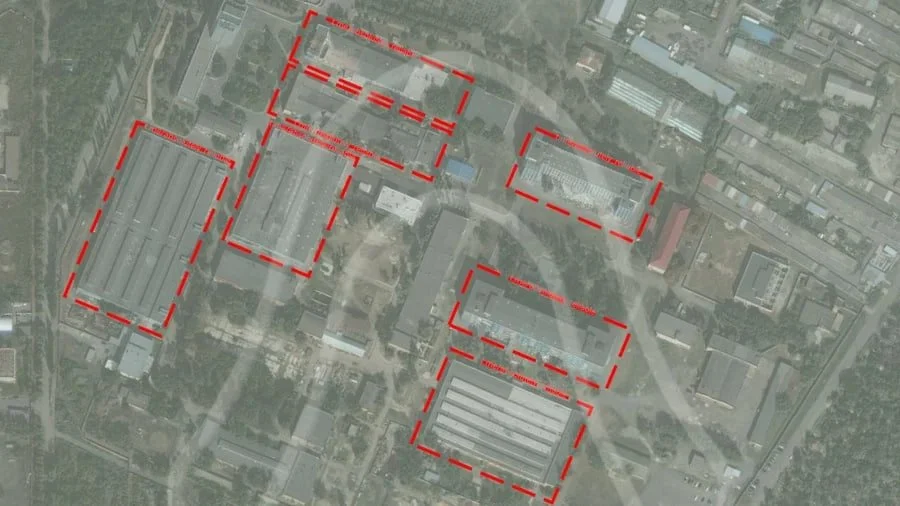
Satellite analysis by the OSINT project Absolutely Reliable Source confirmed damage to at least five workshops, including foundry, optics, assembly, electroplating, and machining facilities.
The plant is part of the Russian Tactical Missiles Corporation and produces guidance electronics for precision artillery, missile, and anti-tank weapons, radar homing heads for tactical guided missiles, and thermal imaging equipment. It is under sanctions imposed by the United States, Canada, Switzerland, the European Union, New Zealand, Japan, and Ukraine.
Why Unmanned Systems Cooperation Matters Now
This week's developments share one common thread: unmanned and low-cost precision systems are shaping the outcome of the war.
Ukraine broke through fortified positions near Nove with robotic kamikaze vehicles adapted from decades-old equipment, and reached a missile component plant deep inside Russia with domestically produced jet-powered drone missiles. At the same time, Russia is betting that mass-produced weapons such as the Banderol and jet-powered drones can outpace Ukraine's air defense this winter.
The side that innovates and scales faster will hold the advantage. Ukraine's battlefield experience is a direct source of knowledge for U.S. defense readiness, and structured cooperation on testing, production, and interoperability would benefit both countries. This is exactly what the H.R. 9550 Strategic Unmanned Systems Partnership Act would establish.
Support the H.R. 9550 Strategic Unmanned Systems Partnership Act
The legislation promotes joint innovation, technology sharing, and defense industrial cooperation that can enhance U.S. military readiness while supporting Ukraine's defense capabilities. Strengthening this partnership will help accelerate innovation, improve interoperability between allies, and reinforce America's long-term security interests.
Every voice counts. Stay with us:
💬 Join our WhatsApp community
📩 Get updates from Capitol Hill
❤️ Help us keep the pressure on