
The Day! Understanding H.R. 2913
Why This Moment Matters
After more than a year of delays, the Ukraine Support Act (H.R. 2913) is finally reaching the House floor. This is the moment supporters of Ukraine have been working toward - the chance to turn broad, bipartisan goodwill into concrete law.
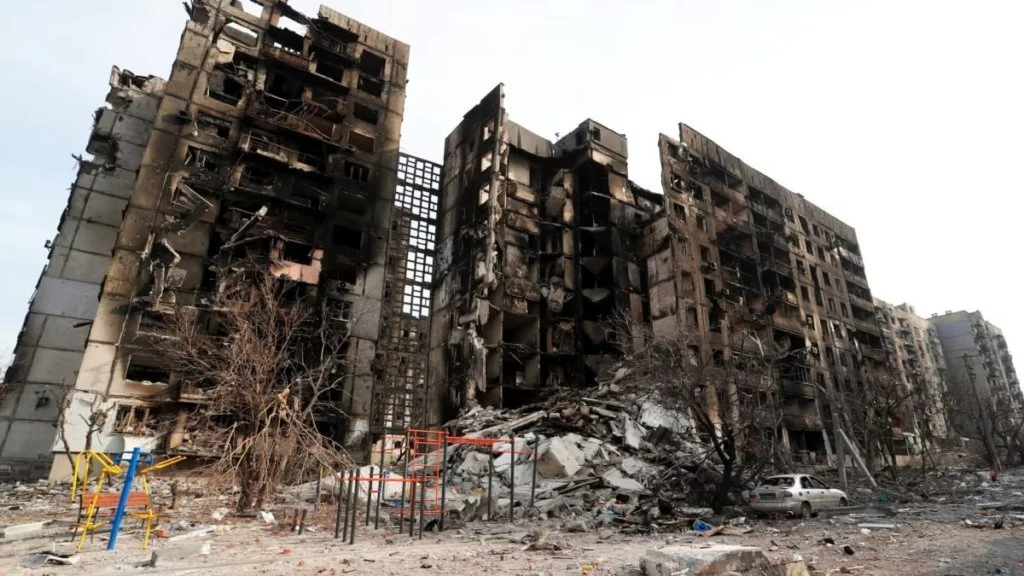
Photo: NYT
The timing could not be more urgent. Russia continues to fire thousands of drones and missiles at Ukrainian cities every month, and Ukraine has lost a major share of its power-generation capacity.
Ukraine is asking for the tools to defend itself. H.R. 2913 provides those tools.
What H.R. 2913 Actually Does
H.R. 2913 is not a single, narrow measure. It is a comprehensive, 91-page package spanning nine House committee jurisdictions, combining military, economic, and diplomatic tools into one coordinated law. According to the official summary from the Congressional Research Service, the bill works along two main tracks: providing assistance to Ukraine and establishing penalties for Russia.
Support for Ukraine includes
Defense support, reviving the President's authority to lend or lease defense articles to Ukraine and affected Eastern European countries through FY2028
Security and intelligence assistance, extending the Department of Defense's authority to provide security assistance and intelligence support to Ukrainian forces through 2027
Expanded military financing, authorizing up to $8 billion in direct loans for Ukraine and NATO allies under the Arms Export Control Act
Reconstruction, establishing a dedicated reconstruction trust fund for Ukraine, and prioritizing U.S. development finance support
Allied resilience, building the capacity of the militaries and border forces of the Baltic states, and supporting independent Russian-language media through Radio Free Europe/Radio Liberty
Penalties for Russia include:
Conditional, enforceable sanctions, the President must periodically determine whether Russia is waging a war of aggression, refusing to negotiate sincerely, or violating a peace agreement. If so, the bill requires penalties to follow.
Sweeping economic measures, property- and visa-blocking sanctions on Russian officials; sanctions on Russian companies in the oil and mining sectors; sanctions on Rosatom and its subsidiaries; and measures targeting certain Russian financial institutions
Guardrails against premature relief, limiting the ability to terminate existing Russia sanctions without cause
The Logic Behind the Bill
The design of H.R. 2913 reflects a clear strategic logic: help Ukraine defend itself, while making continued aggression costly for Russia, and tie the two together.
By linking sanctions to Russia's actual conduct, its willingness to negotiate and honor a genuine peace, the bill creates a powerful incentive structure. If Russia keeps fighting, the pressure increases. If Russia negotiates seriously, there is a path forward. This is "peace through strength" written into law: not an open-ended commitment, but a structured framework that rewards genuine diplomacy and penalizes continued violenceJust as importantly, the bill ensures that support for Ukraine does not depend on the politics of any single moment. By writing these tools into law across multiple committees and authorities, Congress makes American support durable and reliable.
The Scale of What Must Be Rebuilt
The reconstruction provisions in H.R. 2913 are not abstract. The damage Russia has inflicted on Ukraine is being documented in real time. Ukraine's "Anti-Corruption Headquarters" maintains an interactive Map of Destruction and Recovery, which has logged thousands of damaged or destroyed civilian objects — homes, schools, hospitals, and transport and social infrastructure — alongside the buildings Ukraine has already managed to repair.
The map tells two stories at once. The first is the staggering scale of destruction: thousands of sites, with infrastructure recovery needs alone estimated in the tens of billions of dollars. The second is more hopeful: Ukraine is already rebuilding, with thousands of objects restored even as the war continues. The reconstruction trust fund in H.R. 2913 is designed to support exactly this effort — and to ensure that Russia, the party responsible for the destruction, ultimately bears the cost.
Why This Day Is Different
For more than a year, H.R. 2913 sat stalled, not for lack of support, but because it never reached the floor. That changed through a rare and determined act of bipartisan leadership.
On May 13, 2026, a bipartisan discharge petition reached the 218 signatures required to force the bill onto the House floor, bypassing the usual bottlenecks. The effort was led by a remarkable bipartisan coalition, including Rep. Gregory Meeks (D-NY-5), Rep. Steny Hoyer (D-MD-5), Rep. Brian Fitzpatrick (R-PA-1), Rep. Marcy Kaptur (D-OH-9), Rep. Bill Keating (D-MA-9), Rep. Don Bacon (R-NE-2), and Rep. Kevin Kiley (R-CA-3).
As these lawmakers said when they secured the final signature: with the 218th signature, the Ukraine Support Act will finally come to the House floor for a vote.
The procedural fight is won. Now comes the vote that counts. This is the day the House can move from talking about supporting Ukraine to actually doing it.
The Bottom Line
H.R. 2913 represents the most comprehensive pro-Ukraine legislation in this Congress — defense, sanctions, reconstruction, and accountability in one coordinated package. It gives Ukraine the tools to defend itself, increases the pressure that pushes Russia toward a real peace, and makes American support durable.
The bill is at the floor.
Members of Congress are deciding.
This is the moment for every voice in support of Ukraine to be heard.
Sources:
Congress.gov — H.R. 2913, Ukraine Support Act: https://www.congress.gov/bill/119th-congress/house-bill/2913
Map of Destruction and Recovery, Anti-Corruption Headquarters: https://reukraine.shtab.net/