
Putin Revives Istanbul Talks: Real Shift or Pressure Tactic?
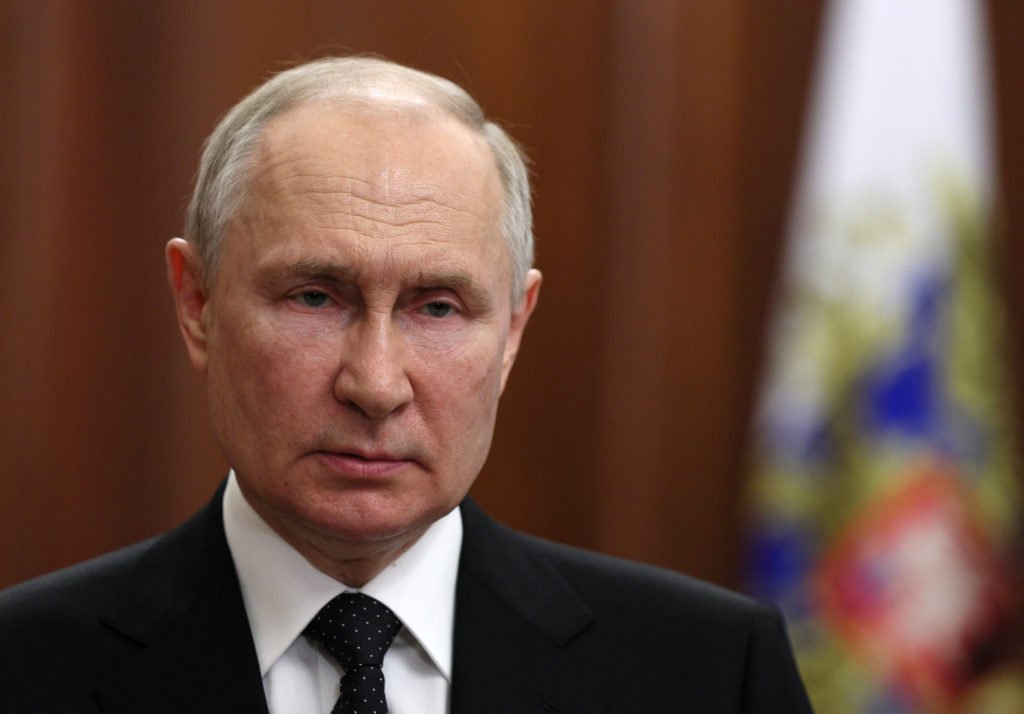
Russia's renewed reference to the 2022 Istanbul framework as a basis for negotiations with Ukraine has drawn significant attention. But…
But it arrives alongside contradictory diplomatic signals and unchanged military objectives. Ukraine's position on territorial integrity remains firm, and Washington's legislative response matters more than ever.
What Putin Said — and What He Didn't
At a government meeting, Russian President Vladimir Putin stated that Moscow is prepared to resume negotiations with Ukraine on the basis of the draft agreements discussed in Istanbul in 2022, suggesting that Kyiv had initially accepted those terms. The statement marked a significant reversal from a position articulated just hours earlier, in which Putin indicated he saw no grounds for dialogue at all.
Notably, the statement came with no offer of a ceasefire, no withdrawal of forces, and no acknowledgment of Ukraine's current conditions for talks. Instead, Putin simultaneously framed Ukraine's leadership in hostile terms and argued that battlefield conditions favor Russia — positioning any future negotiations as a consequence of military outcomes rather than a product of genuine diplomacy.
What the Istanbul Framework Actually Required of Ukraine
The Istanbul talks of spring 2022 — held in the earliest weeks of Russia's full-scale invasion — produced a draft framework, not a binding agreement, and they collapsed before reaching a conclusion.
Under the proposed terms, Ukraine would have been required to:
abandon its aspirations for NATO membership;
renounce nuclear weapons;
restrict the presence of foreign troops and weapons on its territory;
limit its armed forces to 85,000 personnel.
In return, Russia, the United States, the United Kingdom, France, and China were to serve as security guarantors. Moscow would have withdrawn from occupied territories acquired during the 2022 invasion — but not from Crimea — while the status of parts of the Donetsk and Luhansk regions would have been deferred to separate negotiations.
The framework collapsed amid shifting battlefield conditions and mounting documentation of Russian atrocities in previously occupied areas. It was never finalized or signed.
Why Kyiv Rejects This as a Starting Point
Ukraine's position has remained consistent throughout the conflict: any negotiations must be grounded in:
the principles of territorial integrity;
international law;
full withdrawal of Russian forces from occupied Ukrainian lands.
These conditions are reflected in President Volodymyr Zelensky's peace formula, which Kyiv has continued to present as the necessary foundation for a just resolution.
Returning to the 2022 Istanbul framework — particularly after Russian forces expanded their occupation of Ukrainian territory following the collapse of those talks — would effectively treat Moscow's military gains as a legitimate negotiating baseline. Kyiv has not accepted that premise, and its allied partners have supported that stance.
Earlier this month, President Zelensky proposed a direct face-to-face meeting with Putin in a neutral country. The Kremlin declined and suggested Zelensky should instead travel to Moscow — a response widely read as dismissive of any genuine diplomatic engagement.
Moscow's Mixed Diplomatic Signals
Putin's statement was part of a broader pattern of contradictory messaging from Moscow. On the same day, Russian Foreign Minister Sergei Lavrov expressed readiness to resume negotiations "where they left off," while dismissing Ukraine's conditions as unrealistic and attributing the lack of progress to Western interference.
The Kremlin also signaled a rare openness to dialogue with the European Union on the same day — a gesture that came as G7 leaders backed stronger sanctions and expanded air defense support for Ukraine. Russia simultaneously accused the United States of abandoning its role as an impartial mediator following those announcements.
This pattern — openness to talks paired with rejection of Ukraine's conditions and continued military operations — reflects a diplomatic posture that has remained structurally consistent even as its public tone has shifted.
Why the Istanbul Framework Is a Framing Device, Not a Peace Offer
The strategic significance of Putin's statement lies not in its openness to negotiations, but in its framing. By anchoring any future talks to the 2022 Istanbul draft, Moscow attempts to establish its military gains as a de facto starting point rather than as violations of international law requiring remedy.
This is precisely the logic that H.R. 1601, the Defending Ukraine's Territorial Integrity Act, is designed to counter. The legislation reinforces the U.S. commitment to the principle that borders cannot be changed by force — making clear that Washington will not accept a framework in which territorial conquest becomes the baseline for diplomacy.
The revival of the Istanbul framework is not a peace signal. It is an attempt to define the terms on which peace is discussed. That distinction matters enormously for U.S. policy.
Conclusion
As diplomatic signals from Moscow continue to shift — sometimes within the span of a single day — clear and consistent U.S. legislative leadership remains essential. Supporting H.R. 1601 ensures that Washington's position on Ukraine's territorial integrity is codified, durable, and credible — regardless of how Moscow frames its negotiating positions.
Source: Kyiv Post
Photo by Gavriil Grigorov/Sputnik/Kremlin via REUTERS