
30 Killed in Kyiv: What Can Washington Do Right Now?
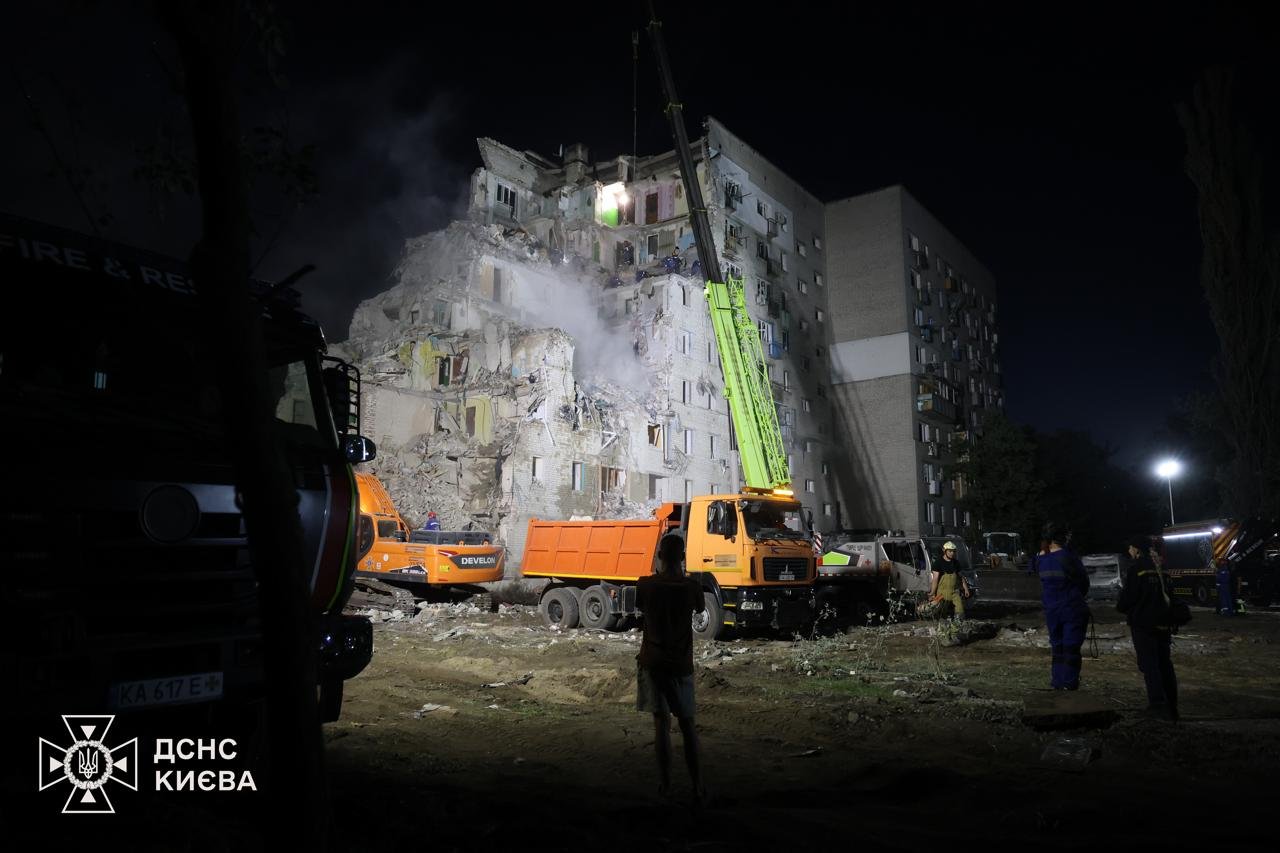
In the early hours of July 2, Russia carried out one of the largest air attacks of the war against Ukraine's capital. According to Ukrainian officials, at least 30 people were killed, and more than 90 were injured.
As the scale of the attack becomes clear, attention turns to the concrete policy tools available to the United States, both in supporting Ukraine's air defense and in strengthening accountability through legislation currently before Congress.
What Happened on July 2
The attack lasted approximately 11 hours and involved hundreds of drones and dozens of missiles. More than 50,000 residents sheltered in subway stations during the night. More than 30 locations across the city reported damage, including about 20 residential buildings, an ambulance station, a scientific institute, and a hotel.
President Zelensky reported that a single missile destroyed 64 apartments in one residential building. Kyiv Mayor Vitali Klitschko declared a day of mourning for Friday.
Ukraine's Most Urgent Need: Air Defense
Following the attack, President Zelensky noted a shortage of anti-ballistic systems and Patriot interceptors and appealed to partners, first and foremost the United States, for additional assistance. The availability of air defense systems directly affects the number of civilian casualties in attacks of this scale. The key question is how to fund these needs in a sustainable way.
The SABER Act: A Funding Mechanism Already Before Congress
The Seized Assets for Battlefield Equipment and Readiness (SABER) Act, introduced in June with bipartisan support in both chambers of Congress, would authorize the use of confiscated Russian sovereign assets to purchase military equipment and defense services for Ukraine.
The legislation builds on the existing REPO Act, which currently permits frozen Russian sovereign assets to be used for humanitarian assistance and reconstruction.
The SABER Act would expand these uses, allowing the assets to directly strengthen Ukraine's ability to defend itself, including against attacks like the one on July 2.
The SABER Act answers the question in the headline in a structurally sound way. Rather than relying on additional American taxpayer funding, the legislation would ensure that Russia helps bear the financial cost of the war it started by redirecting seized Russian sovereign assets toward Ukraine's defense.
This approach connects cause and consequence: the same state that launches missiles at residential buildings in Kyiv would fund the systems that protect those buildings. It reduces the fiscal burden on the United States, creates a funding mechanism independent of annual appropriations cycles, and reinforces the principle that aggression carries financial consequences for the aggressor. The bipartisan support behind the bill in both chambers demonstrates a shared commitment to strengthening Ukraine's security while increasing economic pressure on the Kremlin.
Conclusion
The deadliest attack on Kyiv this year has a practical policy answer available right now. Congress can act on the SABER Act, strengthening Ukraine's defense at Russia's expense.
Source: The New York Times