
Who Wrote Ukraine's Independence and Paid With 27 Years?
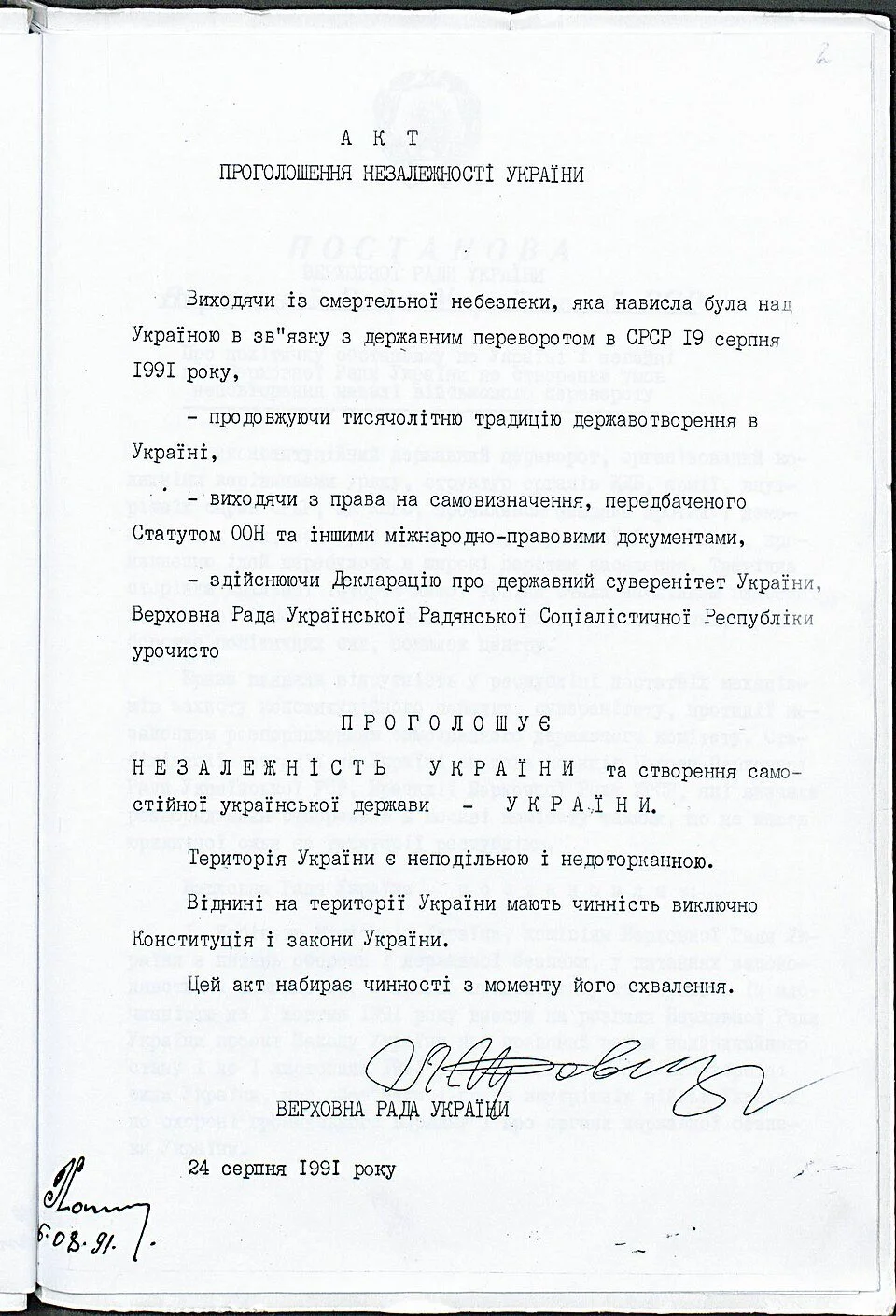
On August 24, 1991, the chairman of Ukraine's parliament read a short document aloud, the deputies voted by constitutional majority, and a nation that had spent years under foreign rule declared itself an independent state.
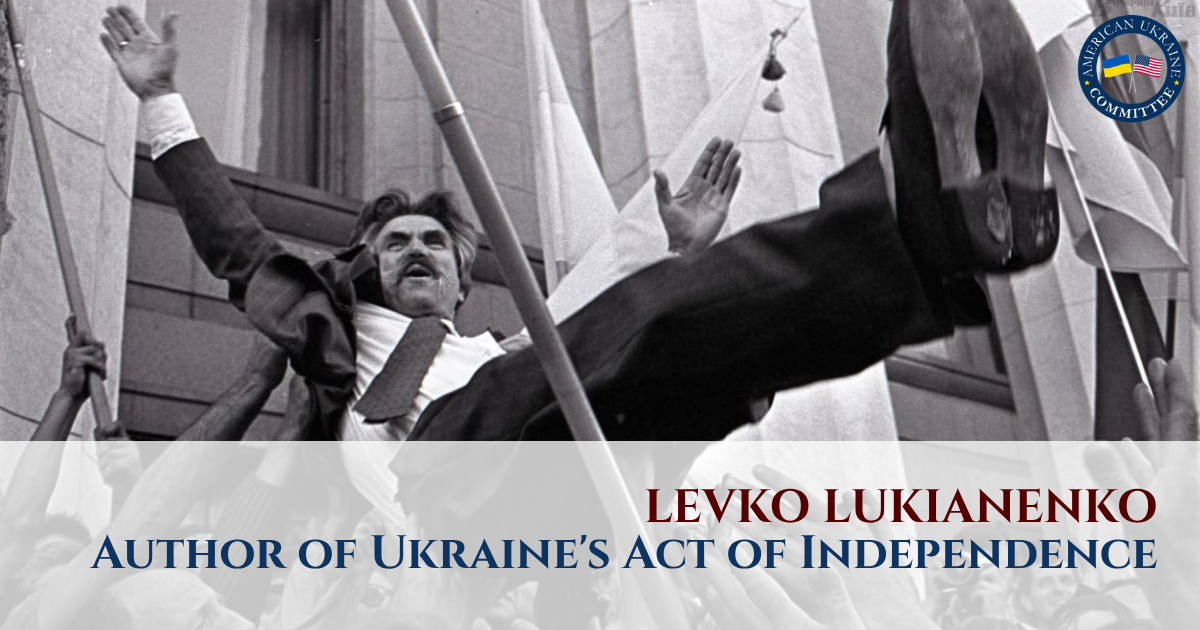
Outside the parliament building, the crowd lifted a gray-haired man onto their shoulders and tossed him into the air. He had earned the celebration more than almost anyone in the room. The words being voted into history were his own, and he had already spent 27 years in Soviet camps, prisons, and exile for daring to believe them. His name was Levko Lukianenko.
Thirty-five years later, on Ukraine's Independence Day, his story is worth returning to, not as a monument, but as an argument about what independence actually is.
The Man Who Wrote It Down
By his own account, the decisive moment came a day early.
On August 23, at a meeting of the parliamentary opposition, other deputies were proposing a cautious path: pass one law, then another, each expanding the sovereignty of the republic step by step.
Lukianenko proposed something else entirely: to proclaim Ukraine an independent state outright. The colleagues agreed, and he sat down to write the Act of Proclamation of Independence himself.
His original draft spoke of the restoration of Ukrainian statehood. During the debate, someone objected: which Ukrainian state, exactly, were they restoring?
The question threatened to drag the room into a divisive argument over history and could have sunk the whole effort. So a single word was changed: from restoration to proclamation.
It sounds like a technicality. It was, in fact, the instinct of a serious political mind: Lukianenko understood that a clean declaration would unite where a contested historical framing would splinter. He wanted the vote to pass, not to win a debate.
The next day, the document was read to the full parliament. The communist deputies asked for a recess, met on their own to decide whether to vote yes, and finally returned and did. A constitutional majority carried it. For a man who had spent his life imagining exactly this scene, it was, in his words, an enormous celebration.
The Price Of a Signature
That celebration had a cost, and it is worth stating plainly.
Lukianenko was first arrested in 1961. A regional court sentenced him to death for helping to found the Ukrainian Workers' and Peasants' Union. The execution was commuted to fifteen years, which he served in full, walking free only in 1976. He was arrested again in 1977, this time for his work with the Ukrainian Helsinki Group, and sentenced to ten years in strict-regime camps followed by five years of internal exile. He was released in 1987.
Across those decades in captivity, he was marched some 23,000 kilometers in prison transit and held 45 hunger strikes. Twenty-seven years, all told, spent behind wire and bars and in remote exile, for the single idea that Ukraine had the right to govern itself.
This is the detail that reframes everything about the 1991 vote. For most of the deputies in that hall, independence was a decision. For Lukianenko, it was a debt finally being paid. His freedom was never handed to him. He bought it, at a price most people would not survive.
"We Did Not Become Independent"
The most striking thing Lukianenko said in his later years was not triumphant. Looking back, he argued that in 1991 it would have been more accurate to proclaim not independence but self-reliance.
The difference matters. Ukraine gained the power to form its own government and stopped taking its officials from Moscow, but the old apparatus, he said, remained in place and continued working to pull the country back into the Kremlin's orbit. The years that followed were therefore not a settled peace but a long contest between two forces: one pushing toward genuine sovereignty, the other trying to reverse it.
Still Winning It
Lukianenko lived to see that lesson return with brutal clarity. He described the war with Russia as the continuation of the very struggle he had begun, the fight to turn 1991's declaration into a durable, defended fact. Slow, he said, but leading toward victory.
The best way to honor Ukraine's founders is to defend what they declared. Respect for sovereignty and territorial integrity is a cornerstone of international law, and the principle that borders cannot be changed by force is exactly what Lukianenko spent his life defending. Contact your Representative today and urge support for H.R. 1601, the Defending Ukraine's Territorial Integrity Act.
Happy 35th, Ukraine.
Slava Ukraini!
Sources: Lukianenko's account of the 1991 vote, from his own interview; biographical details via Hromadske Radio.